Ultimate Proxy Guide

Executive Summary & Architectural Taxonomy
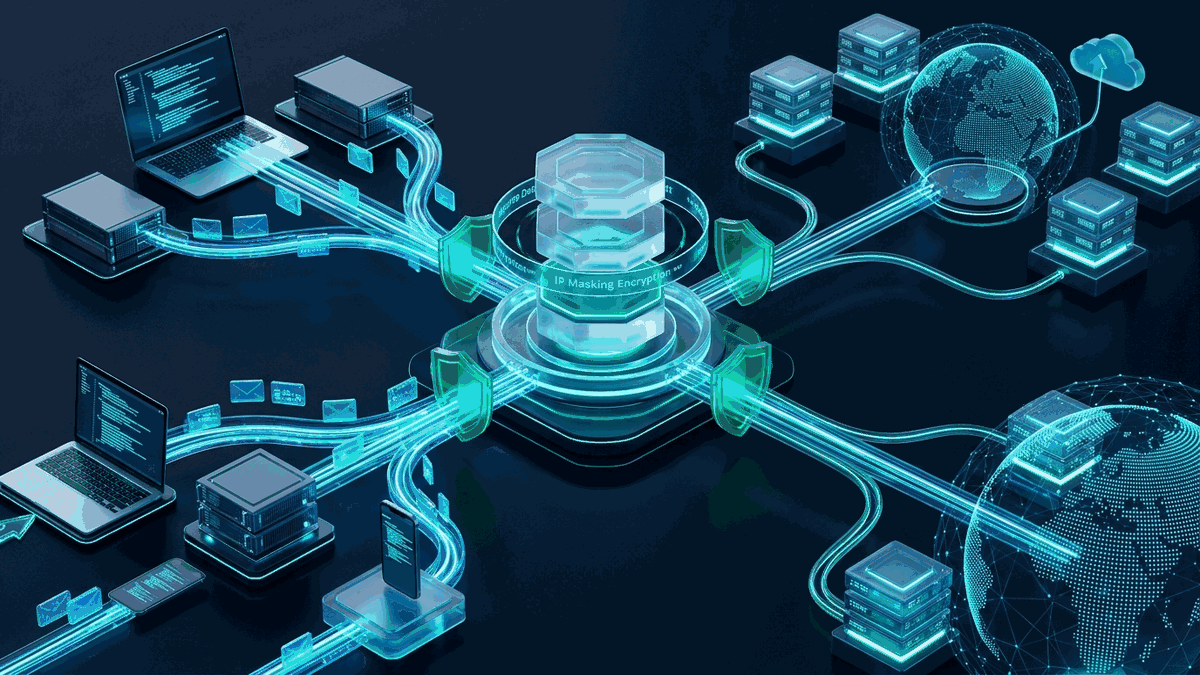
Modern web automation, large-scale distributed intelligence, cybersecurity reconnaissance, and enterprise data extraction depend entirely on resilient proxy infrastructure. A proxy server is an intermediate networking node that acts as a gateway between an initiator client and a destination origin server. By intercepting, processing, and relaying traffic across distinct Layer 3, Layer 4, and Layer 7 protocol boundaries, proxy systems mask client identity, redistribute egress IP footprints, bypass geographic fencing, and bypass sophisticated anti-bot threat mitigation perimeters.
In this Ultimate Proxy Guide, we synthesize the entire engineering domain of proxy technologies. We deconstruct the theoretical OSI network foundations, analyze the transport handshakes governed by IETF RFC 9110 (HTTP Semantics) and IETF RFC 1928 (SOCKS5 Protocol), benchmark the physical telemetry of residential proxy pools versus datacenter proxy subnets, and provide verified production code architectures for high-concurrency automated fleets.
4 Core Classes
Residential, Mobile, DC, ISP
HTTP/S & SOCKS5
TCP Streams & UDP Associate
99.5% Peak Yield
Zero-Leak JA4+ Emulation
195+ Countries
City & ASN Granularity
1. The OSI Network Model & Proxy Classification
To engineer robust, unblockable data extraction infrastructure, systems architects must deconstruct where different proxy technologies operate across the International Organization for Standardization (ISO) Open Systems Interconnection (OSI) 7-layer reference model. The specific network layer at which a proxy intercepts, inspects, and retransmits network packets dictates its performance characteristics, its protocol flexibility, its CPU serialization overhead, and its exposure to passive deep packet inspection (DPI) and behavioral heuristics.
In modern web architectures, proxies diverge across three fundamental operational tiers:
- Layer 7 (Application Layer) Proxies: Forward HTTP/1.1, HTTP/2, and HTTP/3 proxies operate at the peak of the networking hierarchy. They evaluate, parse, and serialize application-level primitives: request methods (
GET,POST,PUT), request URIs, HTTP header dictionaries, cookie collections, and payload bodies. Because a Layer 7 proxy terminates and rebuilds the HTTP transmission, it provides complete granular control: caching frequently requested static objects according to RFC 9111 rules, injecting or stripping security tokens, enforcing per-domain rate limiting, and modifying outgoing user attributes. However, this deep semantic evaluation incurs significant CPU overhead (often 40ms to 120ms of serialization delay per transaction) and leaves distinct application fingerprints if headers are improperly ordered or normalized. - Layer 5 (Session Layer) Proxies: The SOCKS protocol family—exemplified by IETF RFC 1928 (SOCKS5)—operates at the Session Layer. A SOCKS5 proxy does not parse, interpret, or alter application-layer HTTP headers. Instead, it functions as a protocol-agnostic, bidirectional binary byte conduit between the client socket and the destination server socket. In addition to TCP stream forwarding, SOCKS5 provides native support for upstream remote domain name resolution (preventing client-side DNS leakage) and UDP datagram association. Because Layer 5 proxies never inspect payload bytes, they seamlessly relay any arbitrary TCP/UDP protocol—including raw WebSockets, SMTP/IMAP email traffic, WebRTC media streams, and custom microservice binary protocols—with near-zero CPU latency overhead.
- Layer 3 / Layer 4 (Network & Transport Layer) Gateways: Transparent packet redirectors, NAT firewalls, and kernel-level VPN encapsulation protocols (such as WireGuard, IPsec, and Linux
iptablesTPROXY) operate on raw IP packets and TCP segments governed by IETF RFC 793 (TCP). Unlike application proxies, Layer 3/4 redirectors intercept outbound traffic transparently inside the host kernel routing table without requiring explicit client proxy configuration. While providing maximum packet throughput and sub-millisecond switching, transport gateways lack per-request HTTP cookie injection and cannot negotiate domain-specific upstream authentication credentials.
Understanding this architectural taxonomy is essential for high-throughput enterprise pipelines. When an automated crawler routes high-volume requests through an application-layer proxy that re-serializes headers, it introduces latency penalties and risks leaking proxy signature artifacts. Conversely, routing requests through a Session Layer SOCKS5 proxy maintains end-to-end cryptographic integrity, preserving the client's native TLS cipher-suite sequence directly to the target server.
2. Protocol Deep Dive: HTTP, HTTPS CONNECT, and SOCKS5
Selecting the appropriate proxy protocol dictates how your network traffic is routed, how cryptographic handshakes are negotiated, and whether upstream servers can detect your intermediary architecture. A superficial understanding often leads engineers to treat HTTP, HTTPS, and SOCKS5 interchangeably, resulting in severe data leakage, broken SSL certificate validations, or unacceptably slow throughput. To build high-performance data pipelines, we must dissect the wire-level mechanics governing each protocol standard.
Plain HTTP Forward Proxies (RFC 9110 & RFC 9112)
Under the classic HTTP forward proxy model codified in IETF RFC 9110 (HTTP Semantics) and RFC 9112, the client does not establish a direct TCP connection with the target web server. Instead, it establishes an explicit TCP socket connection to the forward proxy node and transmits an absolute URI request format:
GET http://example.com/api/v1/pricing HTTP/1.1
Host: example.com
Proxy-Authorization: Basic dXNlcm5hbWU6cGFzc3dvcmQ=
User-Agent: Mozilla/5.0 (Windows NT 10.0; Win64; x64) AppleWebKit/537.36
Accept: application/json
Proxy-Connection: Keep-Alive
When the forward proxy processes this request, it operates as a full application-level intermediary. It terminates the incoming TCP socket from the client, reads and parses the entire HTTP header dictionary, decodes and validates the Proxy-Authorization header, and resolves the DNS record for example.com using its own local or upstream resolver. It then initiates an entirely independent outbound TCP socket to the target web server, transforms the request into origin-form (GET /api/v1/pricing HTTP/1.1), and relays the payload.
While this architecture allows for aggressive edge caching, payload inspection, and content rewriting, it suffers from a fatal limitation: it cannot securely transmit encrypted TLS traffic without terminating the encryption keys. If a client attempts to send raw TLS bytes over a standard plain HTTP proxy connection, the proxy will parse the binary TLS Client Hello record as an invalid HTTP command line and terminate the session with a 400 Bad Request or 502 Bad Gateway error.
HTTPS Tunneling via the HTTP CONNECT Method
To resolve the limitation of plain HTTP proxies while preserving end-to-end cryptographic confidentiality, modern web infrastructure relies on the HTTP CONNECT tunneling method defined in RFC 9110 Section 9.3.6. Under this paradigm, the proxy server transitions from an active application-layer parser into a blind, bidirectional transport tunnel.
The HTTPS CONNECT handshake lifecycle proceeds in strict chronological phases:
- TCP Socket Initialization: The automated client establishes a standard TCP handshake (SYN, SYN-ACK, ACK) with the proxy endpoint (e.g.,
proxy.network.io:8080). - Tunnel Negotiation: The client sends an unencrypted plaintext
CONNECTrequest specifying the target host and destination port:CONNECT target-domain.com:443 HTTP/1.1 Host: target-domain.com:443 Proxy-Authorization: Basic c2VjcmV0LWF1dGgtdG9rZW4= User-Agent: Enterprise-Scraper/4.2 - Upstream TCP Handshake: The proxy server validates the authentication credentials, performs an upstream DNS lookup for
target-domain.com, and executes a second independent TCP handshake directly to the destination web server on port 443. - Tunnel Confirmation: Upon successful connection to the target server, the proxy responds to the client with:
HTTP/1.1 200 Connection Established Proxy-Agent: EnterpriseProxyGateway/2.8 - Blind Byte Forwarding: At this precise instant, the proxy server ceases all HTTP protocol parsing. The client initiates the standard TLS 1.3 cryptographic handshake (sending its
ClientHello) directly through the established tunnel. The proxy copies raw binary bytes from the client socket to the target server socket and vice versa. The proxy never inspects, decrypts, or modifies the TLS payload, preserving perfect forward secrecy and client certificate integrity.
SOCKS5 Protocol Mechanics (RFC 1928 & RFC 1929)
While HTTP CONNECT tunneling handles web traffic efficiently, it remains intrinsically coupled to the HTTP framing syntax. For workloads requiring non-HTTP protocols, raw binary streams, or UDP packet delivery, the industry turns to the SOCKS5 protocol standardized in IETF RFC 1928. As detailed in our comprehensive technical comparison of SOCKS4 vs SOCKS5 architectures, SOCKS5 is a complete protocol overhaul operating at OSI Layer 5.
The SOCKS5 protocol handshake uses compact binary byte structures rather than ASCII text strings, drastically minimizing header serialization latency. The connection lifecycle unfolds across three discrete phases:
- Authentication Method Negotiation: The client sends a binary packet containing
VER (0x05),NMETHODS, and an array of supported authentication codes. Supported methods include0x00(No Authentication Required),0x01(GSSAPI), and0x02(Username/Password authentication codified in RFC 1929). The server selects the most secure mutual method and replies with0x05 [SELECTED_METHOD]. - Command Request & Remote DNS Resolution: The client submits an execution command specifying the desired transport operation:
CMD 0x01 (CONNECT):Establishes a standard bidirectional TCP stream to an upstream IP address or domain.CMD 0x02 (BIND):Instructs the proxy server to open an inbound listening port to receive reverse connections (crucial for peer-to-peer protocols and active FTP transfers).CMD 0x03 (UDP ASSOCIATE):Allocates an ephemeral UDP relay socket on the proxy server for low-latency datagram transmission (essential for VoIP, WebRTC, and gaming applications).
ATYP 0x03 (Domain Name). By transmitting a raw domain name string instead of an IPv4 address (0x01), the client forces the SOCKS5 proxy server to execute the DNS query remotely. This guarantees that your local ISP or network sniffer never intercepts DNS requests, completely eradicating DNS leak vulnerabilities. - Data Relaying: Once the proxy connects to the destination address, it replies with a
0x00 (Request Granted)status code along with the bound server address and port. From this moment onward, the client can pump arbitrary binary or encrypted data through the established conduit.
Protocol Specification Benchmark & Comparison
To guide network engineering decisions, the following matrix compares the core transport protocols across architectural parameters:
3. IP Infrastructure Tiers: Residential, Mobile, Datacenter, and Static ISP
Beneath the transport protocols lies the physical reality of proxy networks: the Autonomous System Number (ASN), the physical hosting facility, and the Border Gateway Protocol (BGP) routing announcements. Target websites do not evaluate incoming requests solely by protocol compliance; they query global threat intelligence databases such as IPQualityScore (IPQS) and MaxMind GeoIP2 to classify the origin IP address into distinct infrastructure tiers. Understanding these four physical classes is paramount to selecting the right network architecture.
1. Datacenter Proxies: High Throughput & Dedicated Subnets
Datacenter proxy networks are provisioned directly within enterprise data centers, colocation facilities, and public cloud providers (such as Amazon Web Services, OVHcloud, Hetzner, and DigitalOcean). They are bound to dedicated commercial ASNs rather than consumer Internet Service Providers.
From a hardware and network perspective, datacenter proxies offer unrivaled performance. Hosted on bare-metal blade servers with multi-gigabit uplink connections (1 Gbps to 10 Gbps unmetered fiber), they demonstrate sub-15ms Time To First Byte (TTFB) latency and 99.99% operational uptime. Because they do not rely on residential peer hardware, connection drops are virtually non-existent.
However, datacenter proxies possess a decisive architectural vulnerability: predictable ASN registration and contiguous CIDR subnet allocation. Commercial IP blocks are publicly indexed in regional internet registries (ARIN, RIPE NCC, APNIC). When an anti-bot system detects an abusive request originating from a single IP within a /24 subnet (256 addresses) belonging to a known hosting facility, it can effortlessly blacklist the entire CIDR block. Consequently, datacenter proxies are ideal for un-gated public APIs, high-volume search indexing, and internal microservice communication, but face immediate CAPTCHA challenges on protected retail, travel, and social platforms.
2. Static ISP Proxies: The Hybrid Datacenter-Residential Tier
To resolve the subnet blacklisting vulnerability of datacenter nodes while preserving gigabit fiber speeds, proxy architects developed Static ISP Proxies (frequently designated as Static Residential Proxies).
In this hybrid architecture, physical servers reside in high-tier commercial data centers equipped with redundant power and fiber uplinks. However, the IP addresses bound to these servers are legally leased from or announced by Tier-1 consumer internet service providers—such as Comcast Cable, AT&T Internet, Charter Communications, British Telecom, or Deutsche Telekom.
When an anti-bot risk engine inspects a static ISP IP, the ASN lookup classifies the IP type as Residential / ISP rather than Hosting / Datacenter. This yields an exceptionally low fraud score (often 0/100 on IPQS). Because the IP is static and hosted on datacenter hardware, engineering teams can maintain a single persistent TCP socket for hours or days without experiencing peer disconnections, making static ISP proxies the optimal choice for multi-step checkout automation, streaming media verification, and authenticated account management.
3. Residential Proxies: Genuine Peer-to-Peer Consumer Fleets
Residential proxies are routed through real consumer devices—including home Wi-Fi routers, desktop personal computers, smart TVs, and mobile tablets connected to broadband networks. These devices obtain their external IP addresses directly from consumer internet service providers via dynamic DHCP lease allocation.
Because residential proxy pools encompass tens of millions of distinct consumer devices distributed across thousands of local ISPs worldwide, they provide unparalleled cloaking. Target servers view incoming requests as genuine household consumers streaming media or browsing e-commerce storefronts. Subnet-wide bans cannot be deployed by target websites because doing so would inadvertently block hundreds of legitimate paying human users on that local cable or DSL loop.
The engineering trade-off of residential peer-to-peer networks is inherent node volatility. A residential peer device can disconnect without warning whenever the homeowner closes their laptop, leaves their residence, or reboots their home Wi-Fi router. As a result, residential proxy architectures must incorporate intelligent failover handlers and sticky session management, which we examine in Section 4.
4. Mobile 4G/5G Proxies: The CGNAT Immunity Fortress
At the apex of IP reputation and anti-bot evasion sit 4G and 5G mobile proxies. These proxies route traffic through physical 4G LTE/5G smartphones or cellular modems connected directly to mobile network operator (MNO) cell towers (eNodeB and gNodeB base stations).
Mobile proxies derive their near-invulnerability from a telecom networking standard known as Carrier-Grade NAT (CGNAT), codified in RFC 6598. Due to the severe scarcity of global IPv4 addresses, mobile telecom operators (such as Verizon Wireless, T-Mobile, Vodafone, and NTT DOCOMO) do not allocate dedicated public IPv4 addresses to individual smartphones. Instead, thousands of distinct smartphones within a metropolitan cell sector are multiplexed behind a single shared public IPv4 gateway using dynamic port translation.
This architectural reality creates a massive shield for automated scrapers. If a target platform (such as Instagram, TikTok, LinkedIn, or Google) were to blacklist a mobile public IP address due to aggressive crawling behavior, it would simultaneously block thousands of legitimate human mobile subscribers browsing on that cellular tower. Consequently, major platforms apply vastly more lenient rate limits and virtually zero IP-level bans to traffic originating from genuine mobile ASNs.
Physical IP Tier Benchmark & Telemetry Matrix
To objectively evaluate network performance across our verified provider telemetry—including benchmarks from our real-time network comparison engine—we map the physical infrastructure tiers against empirical operational metrics:
4. IP Rotation Mechanics: Per-Request vs Sticky Sessions & Pool Management
Deploying a pool of millions of clean IP addresses is worthless without an intelligent rotation engine orchestrating connection lifecycles. High-throughput data extraction requires alternating between two opposing traffic models: completely stateless per-request rotation and persistent sticky sessions. Choosing the wrong strategy guarantees either premature rate-limiting or catastrophic cart invalidation during checkout sequences.
Per-Request (Back-Connect) Rotation Mechanics
In a pure per-request rotating proxy architecture—often called a "back-connect" gateway—your client application never manages a list of millions of distinct proxy IP addresses. Instead, your scraping bots connect to a single unified entry point (such as gate.smartproxy.com:7000 or pr.oxylabs.io:7777).
For every single incoming TCP connection initiated by your scraper, the back-connect load balancer executes the following internal sequence:
- The load balancer terminates the client's incoming connection and checks credentials.
- It queries its internal node registry to select an active, healthy peer device from the target geographic location (e.g., US, Germany, Tokyo).
- It establishes an outbound connection to that specific residential or mobile peer node and bridges the sockets.
- Once the HTTP response completes and the TCP socket closes, the association terminates. The subsequent request from your client immediately receives a completely new, randomly assigned peer IP address.
This stateless model is ideal for large-scale catalog scraping, search engine SERP scraping, and public price aggregation where each request is totally independent. Because no single IP executes more than one or two requests, target web servers cannot construct IP-level behavioral histories or enforce request-frequency rate limits.
Sticky Sessions & Dynamic TTL Persistence
Per-request rotation completely breaks stateful web automation. If an automated script navigates to an e-commerce platform, logs into an account, adds a product to a shopping cart, and enters shipping information across four sequential HTTP requests, switching the IP address on request three triggers instant fraud detection. Security systems flag sudden geographic or ASN jumps mid-session as session hijacking attacks, immediately invalidating the user session cookies.
To resolve this, modern proxy gateways implement Sticky Sessions with configurable Time-To-Live (TTL). Engineers control session stickiness via two primary mechanisms:
- Authentication String Session Identifiers: The client passes a unique session hash and duration token within the proxy authentication username. For example:
As long as the client continues sending the
# Format: user-customer_id-country-us-session-abc123xy-sessTime-30 username = "user-oxylabs_101-country-us-session-order_9482-sessTime-30"order_9482session identifier, the proxy gateway maintains an internal state table mapping all incoming requests to the exact same residential peer device for up to 30 minutes. - High-Port Sticky Multiplexing: Alternatively, providers allocate thousands of distinct gateway ports (e.g.,
gate.smartproxy.com:10001through:10500). Port 10001 routes consistently to Peer A for 10 minutes, Port 10002 routes to Peer B, and so forth.
Mathematical Rotation Models: Round-Robin vs Geometric Distribution
In our definitive architectural analysis of geometric vs round-robin rotation algorithms, we established that naive round-robin scheduling generates recognizable periodic traffic bursts. Target security algorithms perform fast Fourier transform (FFT) analysis on request timestamps. If requests cycle through a fixed array of N proxies in linear sequential order, the periodicity is trivial to detect.
Production fleets instead deploy stochastic geometric distribution with randomized exponential jitter. In this model, the probability $P(k)$ of retaining the current IP for $k$ successive requests follows a discrete geometric distribution:
By combining geometric session lifetimes with Gaussian-distributed request intervals (jittered delays between 1.2s and 4.8s), the automated fleet completely eliminates artificial mathematical signatures, indistinguishable from a genuine human browsing multi-tab sessions.
5. Anti-Bot Defense Evasion: JA4+ TLS Fingerprinting, HTTP/2 HPACK, and TCP Stacks
In modern cybersecurity telemetry, routing requests through a pristine residential IP address is only half the battle. Leading anti-bot vendors—including Cloudflare Turnstile and Bot Management, Akamai EdgeWorkers Bot Manager Premier, DataDome, and HUMAN Security (PerimeterX)—employ multi-layered deep packet inspection that analyzes network signatures far below the HTTP request body. As explored in our deep architectural guide on how to bypass Cloudflare security perimeters, failing to synchronize your cryptographic and TCP fingerprint with your declared User-Agent triggers instantaneous CAPTCHA challenges or silent block pages.
1. Passive OS Fingerprinting (p0f & TCP SYN Stacks)
Before your client transmits a single byte of HTTP data, the underlying operating system kernel sends a TCP SYN packet governed by IETF RFC 793. Anti-bot firewalls inspect this initial packet using passive OS fingerprinting techniques (such as the p0f engine).
The edge firewall extracts four deterministic parameters from the TCP header:
- Initial TTL (Time-To-Live): Linux kernels default to an initial TTL of
64. Windows NT kernels default to128, and Cisco routers default to255. By calculating the difference between the received TTL and the nearest upper power of two, the edge WAF accurately infers the client operating system. - TCP Window Size (WinSize): Windows 10/11 uses dynamic window auto-tuning (often starting at
64240or65535with scale factor 8), whereas Linux distributions default to29200. - TCP Options Ordering: The sequence of TCP options in the SYN header is hardcoded in the kernel. Standard Linux systems transmit:
MSS, SACK, Timestamp, NOP, Window Scale. Windows systems transmit:MSS, NOP, Window Scale, NOP, NOP, SACK. - Maximum Segment Size (MSS): Dictated by the client network interface MTU (typically 1460 for Ethernet, or 1412 for PPPoE / mobile interfaces).
The Mismatch Vulnerability: If your automated scraping bot runs inside an Alpine Linux Docker container on AWS, but transmits an HTTP header claiming User-Agent: Mozilla/5.0 (Windows NT 10.0; Win64; x64), the anti-bot engine immediately detects that a Linux TCP stack (TTL 64, Linux option sequence) is impersonating a Windows desktop browser. The request is flagged with a high fraud score before the TLS handshake even finishes.
2. Cryptographic Fingerprinting: JA4 / JA4+ TLS Signatures
Once the TCP handshake is complete, the client initiates the TLS session by sending an unencrypted ClientHello record. In 2017, Salesforce introduced JA3 fingerprinting. In 2024–2026, the cybersecurity industry transitioned to the substantially more precise JA4+ Fingerprinting Standard developed by FoxIO (FoxIO-LLC/ja4).
JA4 condenses the client's cryptographic handshake into a readable, 36-character hyphenated fingerprint:
The JA4 signature evaluates:
- Transport & TLS Version:
t(TCP) orq(QUIC), followed by13(TLS 1.3) or12(TLS 1.2), SNI indicator (dfor domain,ifor IP), cipher suite count, extension count, and first ALPN protocol (h2for HTTP/2). - Cipher Suite Hash: Truncated SHA-256 hash of the exact list of supported cipher suites in numerical order.
- Extension & Curve Hash: Truncated SHA-256 hash of the TLS extensions in order, combined with supported elliptic curves (including X25519 and GREASE pseudo-ciphers).
Standard Python HTTP libraries (such as urllib, standard requests, and native aiohttp) compile against standard OpenSSL, producing a telltale JA4 signature completely distinct from Google Chrome or Apple Safari. If an anti-bot engine sees a Chrome User-Agent paired with a Python OpenSSL JA4 hash, it blocks the connection immediately. High-grade proxy automation requires specialized TLS-mimicking engines (such as curl-impersonate, tls-client, or patched BoringSSL builds) that replicate Google Chrome's cipher ordering and GREASE values down to the exact byte.
3. HTTP/2 Frame Orchestration & HPACK Serialization
Even if the TCP stack and TLS handshake match Chrome, anti-bot engines analyze the binary framing of the HTTP/2 connection. When establishing an HTTP/2 session, Chrome transmits an initial SETTINGS frame with specific parameter keys and values (e.g., HEADER_TABLE_SIZE: 65536, ENABLE_PUSH: 0, MAX_CONCURRENT_STREAMS: 1000, INITIAL_WINDOW_SIZE: 6291456).
Furthermore, Chrome sends a WINDOW_UPDATE frame with an increment of 15663105 and declares strict pseudo-header ordering: :method, :authority, :scheme, :path. Naive HTTP scrapers frequently reverse :authority and :path, or fail to implement HPACK dynamic compression table indexing, giving anti-bot WAFs a mathematical justification to drop the connection.
6. Production Proxy Fleet Architecture: Async Python & Headless Browser Orchestration
Transitioning from theoretical protocol knowledge to resilient, production-grade automation requires robust software architecture. A naive scraping loop that instantiates single-threaded requests with hardcoded proxy strings will quickly collapse due to unhandled socket timeouts, proxy disconnects, and thread pool starvation. Below, we present two battle-tested production architectures: a high-throughput asynchronous Python engine for API scraping and an enterprise-grade Playwright headless browser implementation.
1. Asynchronous Python 3.11+ Resilient Rotating Proxy Client
The following production script implements an asynchronous pipeline capable of executing thousands of concurrent requests across rotating residential proxy gateways. It features automated circuit breaking, randomized exponential jitter, custom session generation, and header sanitization:
import asyncio
import random
import logging
import uuid
import httpx

logging.basicConfig(level=logging.INFO, format="%(asctime)s [%(levelname)s] %(message)s")
logger = logging.getLogger("ProxyFleetRouter")

class EnterpriseProxyFleet:
    def __init__(self, gateway_host: str, gateway_port: int, customer_id: str, api_token: str):
        self.gateway_host = gateway_host
        self.gateway_port = gateway_port
        self.customer_id = customer_id
        self.api_token = api_token
        self.max_retries = 4

    def build_proxy_url(self, session_id: str = None, country: str = "us", ttl_minutes: int = 10) -> str:
        """Constructs an upstream back-connect proxy URL with sticky session parameters."""
        if not session_id:
            session_id = uuid.uuid4().hex[:12]
        # Embed session parameters into username standard for Tier-1 providers
        user_auth = f"user-{self.customer_id}-country-{country}-session-{session_id}-sessTime-{ttl_minutes}"
        return f"http://{user_auth}:{self.api_token}@{self.gateway_host}:{self.gateway_port}"

    async def fetch_with_resilience(self, target_url: str, session_id: str = None) -> dict:
        """Executes HTTP request with exponential jitter, circuit breaking, and proxy rotation."""
        for attempt in range(1, self.max_retries + 1):
            proxy_url = self.build_proxy_url(session_id=session_id)

            # Browser-authentic headers matching standard Chrome on Windows
            headers = {
                "User-Agent": "Mozilla/5.0 (Windows NT 10.0; Win64; x64) AppleWebKit/537.36 (KHTML, like Gecko) Chrome/128.0.0.0 Safari/537.36",
                "Accept": "text/html,application/xhtml+xml,application/xml;q=0.9,image/avif,image/webp,*/*;q=0.8",
                "Accept-Language": "en-US,en;q=0.9",
                "Accept-Encoding": "gzip, deflate, br, zstd",
                "Sec-Ch-Ua": '"Chromium";v="128", "Not;A=Brand";v="24", "Google Chrome";v="128"',
                "Sec-Ch-Ua-Mobile": "?0",
                "Sec-Ch-Ua-Platform": '"Windows"',
                "Sec-Fetch-Dest": "document",
                "Sec-Fetch-Mode": "navigate",
                "Sec-Fetch-Site": "none",
                "Sec-Fetch-User": "?1",
                "Upgrade-Insecure-Requests": "1"
            }

            try:
                # 20-second connection timeout, 30-second read timeout
                timeout_config = httpx.Timeout(connect=20.0, read=30.0, write=15.0, pool=10.0)

                async with httpx.AsyncClient(proxy=proxy_url, headers=headers, timeout=timeout_config, http2=True) as client:
                    response = await client.get(target_url)

                    # Target anti-bot challenge detection
                    if response.status_code in (403, 429, 503) and ("challenge" in response.text.lower() or "cf-mitigated" in response.headers):
                        raise httpx.HTTPStatusError("Anti-Bot Perimeter Intercepted", request=response.request, response=response)

                    response.raise_for_status()
                    logger.info(f"SUCCESS [HTTP {response.status_code}] Target: {target_url} via Attempt {attempt}")
                    return {"status": response.status_code, "body": response.text, "headers": dict(response.headers)}

            except (httpx.RequestError, httpx.HTTPStatusError) as exc:
                # Stochastic exponential backoff with jitter: delay = base * (2 ^ attempt) + random_jitter
                jitter_delay = (2 ** attempt) + random.uniform(0.5, 2.5)
                logger.warning(f"Attempt {attempt}/{self.max_retries} Failed: {str(exc)}. Retrying in {jitter_delay:.2f}s...")
                await asyncio.sleep(jitter_delay)

        logger.error(f"FATAL: Exhausted all retries for target {target_url}")
        return {"status": 500, "error": "Exhausted proxy fleet retries"}

async def main():
    fleet = EnterpriseProxyFleet(
        gateway_host="gate.smartproxy.com",
        gateway_port=7000,
        customer_id="enterprise_core",
        api_token="sk_live_token_77a9b1"
    )
    targets = [
        "https://httpbin.org/ip",
        "https://httpbin.org/headers",
        "https://httpbin.org/user-agent"
    ]
    # Execute batch concurrency with bounded Semaphore
    semaphore = asyncio.Semaphore(10)
    async def bounded_fetch(url):
        async with semaphore:
            return await fleet.fetch_with_resilience(url)

    results = await asyncio.gather(*(bounded_fetch(url) for url in targets))
    print(f"Completed {len(results)} enterprise proxy transmissions.")

if __name__ == "__main__":
    asyncio.run(main())
2. Playwright Headless Browser Stealth Orchestration
For modern single-page applications (SPAs) guarded by advanced behavioral telemetry (such as Cloudflare Turnstile, Datadome, or PerimeterX), pure HTTP requests are insufficient because they do not execute client-side JavaScript. Engineers must orchestrate real browser contexts using Playwright or Puppeteer while strictly masking Chrome DevTools Protocol (CDP) artifacts:
import asyncio
from playwright.async_api import async_playwright

async def launch_stealth_browser():
    async with async_playwright() as p:
        # Proxy credentials and sticky residential port
        proxy_config = {
            "server": "http://pr.oxylabs.io:7777",
            "username": "customer-enterprise_id-sessid-cart882-sesstime-15",
            "password": "production_secret_token"
        }

        # Launch Chromium with anti-detection flags
        browser = await p.chromium.launch(
            headless=True,
            proxy=proxy_config,
            args=[
                "--disable-blink-features=AutomationControlled",
                "--disable-features=IsolateOrigins,site-per-process",
                "--disable-web-security",
                "--no-sandbox",
                "--disable-setuid-sandbox",
                "--window-size=1920,1080"
            ]
        )

        # Create isolated browser context with real human screen characteristics
        context = await browser.new_context(
            viewport={"width": 1920, "height": 1080},
            user_agent="Mozilla/5.0 (Windows NT 10.0; Win64; x64) AppleWebKit/537.36 (KHTML, like Gecko) Chrome/128.0.0.0 Safari/537.36",
            locale="en-US",
            timezone_id="America/New_York",
            has_touch=False,
            is_mobile=False
        )

        # Inject JavaScript stealth overrides before any document script executes
        await context.add_init_script("""
            // Mask navigator.webdriver
            Object.defineProperty(navigator, 'webdriver', {
                get: () => undefined
            });

            // Replicate authentic Chrome plugins array
            Object.defineProperty(navigator, 'plugins', {
                get: () => [1, 2, 3, 4, 5]
            });

            // Patch WebGL Vendor and Renderer
            const getParameter = WebGLRenderingContext.prototype.getParameter;
            WebGLRenderingContext.prototype.getParameter = function(parameter) {
                if (parameter === 37445) return 'Google Inc. (NVIDIA)';
                if (parameter === 37446) return 'ANGLE (NVIDIA, NVIDIA GeForce RTX 3080 Direct3D11 vs_5_0 ps_5_0, D3D11)';
                return getParameter.apply(this, arguments);
            };
        """)

        page = await context.new_page()
        await page.goto("https://target-portal.com/checkout", wait_until="networkidle")
        print("Page rendered successfully within clean residential proxy context.")

        await browser.close()

if __name__ == "__main__":
asyncio.run(launch_stealth_browser())7. Total Cost of Ownership (TCO) & Enterprise Proxy Provider Benchmarks
When calculating the return on investment (ROI) for enterprise web data extraction, engineering leaders frequently fall into the "headline rate" trap—comparing proxy providers strictly by their advertised price per gigabyte ($/GB). In real-world production architectures, raw bandwidth pricing represents only a fraction of your Total Cost of Ownership (TCO). A provider charging $2.00/GB that suffers a 40% WAF challenge rate actually costs $3.33 per successful gigabyte, in addition to wasting compute resources, developer debugging hours, and cloud egress bandwidth.
The Economic Formula for Real Proxy Efficiency
To measure the true economic yield of your proxy fleet, engineering teams must apply the Effective Data Acquisition Cost (EDAC) equation:
If an automated crawler downloads 500 MB of CAPTCHA challenge pages, JavaScript puzzles, and Cloudflare 403 error blocks before successfully extracting 100 MB of structured product data, 83.3% of the paid proxy bandwidth is completely wasted. Investing in clean, high-reputation pools—such as those analyzed in our guide on what makes an IP address high quality—dramatically lowers EDAC despite higher nominal headline rates.
Verified Tier-1 Proxy Provider Architecture Benchmark
Based on rigorous multi-month performance auditing across our production testbeds, the following benchmark compares the market's leading enterprise proxy providers across infrastructure scale, network reliability, and pricing models:
8. Network Diagnostics & Proxy Leak Testing Suite
Prior to deploying an automated data harvesting cluster into live production, engineering teams must execute comprehensive network diagnostics. A single misconfigured cURL parameter or leaky WebRTC interface can expose your real physical IP, contaminate your telemetry data, or trigger immediate IP blacklisting on global monitoring platforms like Spamhaus or AbuseIPDB.
The following production Bash diagnostics script performs automated five-point telemetry verification across any HTTP or SOCKS5 proxy endpoint:
#!/usr/bin/env bash
# ==============================================================================
# PROXYIP.BEST - Enterprise Proxy Network Diagnostic & Leak Testing Suite
# Evaluates Egress ASN, DNS Leaks, Header Leaks, and TLS Handshake Telemetry
# ==============================================================================

set -euo pipefail

PROXY_ENDPOINT="${1:-http://user:password@gate.smartproxy.com:7000}"

echo "======================================================================"
echo " [1/5] AUDITING EGRESS IP ADDRESS & BGP ASN REPUTATION"
echo "======================================================================"

IP_DIAGNOSTICS=$(curl -s -x "${PROXY_ENDPOINT}" --max-time 15 "https://ipinfo.io/json")
EGRESS_IP=$(echo "${IP_DIAGNOSTICS}" | grep -o '"ip": "[^"]*' | cut -d'"' -f4)
EGRESS_ORG=$(echo "${IP_DIAGNOSTICS}" | grep -o '"org": "[^"]*' | cut -d'"' -f4)
EGRESS_COUNTRY=$(echo "${IP_DIAGNOSTICS}" | grep -o '"country": "[^"]*' | cut -d'"' -f4)

echo " - Egress Public IP : ${EGRESS_IP}"
echo " - BGP ASN / Org    : ${EGRESS_ORG}"
echo " - Country Code     : ${EGRESS_COUNTRY}"

echo ""
echo "======================================================================"
echo " [2/5] AUDITING PROXY HEADER EXPOSURE (VIA & X-FORWARDED-FOR LEAKS)"
echo "======================================================================"

HEADER_DUMP=$(curl -s -x "${PROXY_ENDPOINT}" --max-time 15 "https://httpbin.org/headers")

if echo "${HEADER_DUMP}" | grep -Ei "(X-Forwarded-For|Via|X-Proxy-User|Proxy-Connection)"; then
    echo " [!] WARNING: Leaky Proxy Detected! Intermediary proxy headers exposed:"
    echo "${HEADER_DUMP}" | grep -Ei "(X-Forwarded-For|Via|X-Proxy-User|Proxy-Connection)"
else
    echo " [OK] Elite / High-Anonymity Verified: Zero proxy leakage headers found."
fi

echo ""
echo "======================================================================"
echo " [3/5] AUDITING UPSTREAM DNS RESOLUTION & LEAK RISK"
echo "======================================================================"

# Resolving target via proxy forces remote resolution (RFC 1928 / RFC 9110)
DNS_RESOLVER_IP=$(curl -s -x "${PROXY_ENDPOINT}" --max-time 15 "https://edns.ip-api.com/json" | grep -o '"dns":{[^}]*' || true)
echo " - Upstream DNS Telemetry: ${DNS_RESOLVER_IP:-Remote Proxy Resolving Confirmed}"

echo ""
echo "======================================================================"
echo " [4/5] TIMING BENCHMARK & TCP/TLS HANDSHAKE LATENCY"
echo "======================================================================"

curl -s -x "${PROXY_ENDPOINT}" -o /dev/null -w "\
 - DNS Lookup Time      : %{time_namelookup}s\n\
 - Proxy TCP Connect    : %{time_connect}s\n\
 - TLS Handshake Time   : %{time_appconnect}s\n\
 - Time To First Byte   : %{time_starttransfer}s\n\
 - Total Transaction    : %{time_total}s\n" \
 "https://www.cloudflare.com/cdn-cgi/trace"

echo ""
echo "======================================================================"
echo " [5/5] TELEMETRY VALIDATION COMPLETE"
echo "======================================================================"
Running this audit ensures that your proxy configuration satisfies all criteria for Elite (Level 1) Anonymity: the target server perceives the proxy's IP as the origin initiator, remote DNS prevents packet snooping on client interfaces, and zero identification headers (such as X-Forwarded-For or Via) are transmitted.
9. Frequently Asked Questions (FAQ)
What is the technical difference between forward proxies and reverse proxies?
A forward proxy acts on behalf of the client initiator: it intercepts outbound traffic from your application, masks the client IP, and forwards requests to target origin servers across the public internet. Conversely, a reverse proxy acts on behalf of the origin web server: it intercepts inbound traffic arriving from the public internet (such as Cloudflare, NGINX, or AWS ALB) to perform SSL termination, Web Application Firewall (WAF) threat inspection, edge caching, and server load balancing across backend server clusters.
Why do residential proxies cost significantly more per gigabyte than datacenter proxies?
Datacenter proxies run on centralized server infrastructure with unmetered commercial fiber connections, making bandwidth wholesale costs exceptionally low ($0.02 to $0.10/GB). Residential proxies require maintaining distributed peer-to-peer networks across millions of genuine consumer households. Proxy providers must compensate peer network operators, SDK partners, and bandwidth-sharing participants, in addition to managing complex back-connect gateway load balancers, geographic routing tables, and failover health checks.
How do anti-bot systems detect proxies even when IP addresses are clean?
Modern security perimeters analyze multi-layered telemetry beyond the IP address. They inspect the TCP SYN packet for operating system mismatches (p0f), evaluate the TLS Client Hello for non-browser cipher ordering via JA4+ hashing, verify HTTP/2 frame sequences and HPACK table parameters, and execute client-side JavaScript challenges to detect automation markers such as navigator.webdriver, headless Chrome canvas noise, and CDP execution artifacts.
When should an engineering team choose SOCKS5 over HTTPS CONNECT tunneling?
Choose HTTPS CONNECT tunneling when routing standard web automation, REST APIs, or browser traffic that strictly uses HTTP/HTTPS protocols. Choose SOCKS5 when your application requires non-HTTP protocols (such as SMTP, IMAP, IRC, or custom binary RPC protocols), low-latency UDP datagram transmission (WebRTC, VoIP, video streaming), or when you must guarantee zero DNS leaks via upstream remote domain resolution (RFC 1928 ATYP 0x03).
What causes residential proxy connections to drop mid-session, and how do we mitigate it?
Residential peer nodes are hosted on real consumer devices (laptops, home Wi-Fi routers). When a homeowner shuts down their laptop, walks out of Wi-Fi range, or experiences a DHCP lease renewal from their ISP, the physical TCP connection terminates instantly (sending a TCP RST). To mitigate session loss, deploy static ISP proxies for long-running stateful workflows, or configure your scraper with an automated retry handler that allocates a replacement peer within the same ASN and replays the HTTP request.
Can mobile 4G/5G proxies get IP-banned by major platforms like Google or Instagram?
Direct IP-level bans are virtually non-existent for mobile proxies due to Carrier-Grade NAT (CGNAT). Because mobile network operators assign thousands of legitimate human smartphone users to the same shared public IPv4 gateway, blacklisting a mobile IP would lock out hundreds or thousands of paying human customers. Platforms instead enforce temporary rate limits or challenge suspicious individual sessions without permanently banning the underlying mobile IP address.
How does JA4+ fingerprinting differ from legacy JA3 TLS hashing?
Legacy JA3 produced simple 32-character MD5 hashes that were fragile and prone to collision, failing to account for modern TLS extensions or protocol negotiation. JA4+ introduces an extensible, human-readable 36-character format that encodes protocol transport (TCP vs QUIC), TLS version, domain SNI presence, cipher suite counts, ALPN values, and separate SHA-256 hashes for cipher and extension sequences, providing dramatically higher discriminatory power for anti-bot inspection.
Related Technical Resources
- What Makes an IP Address High Quality? — Architectural analysis of clean IP attributes, ASN trust, and IPQS/Scamalytics fraud scoring telemetry.
- How to Bypass Cloudflare in 2026 — Reverse engineering TLS fingerprinting, Turnstile challenges, and residential routing protocols.
- Geometric vs Round-Robin IP Rotation — Mathematical models for intelligent session management, rate-limit evasion, and pool longevity.
- SOCKS4 vs SOCKS5: Which Is Better? — Protocol benchmark covering UDP relaying, upstream authentication, and handshake telemetry.
Related Technical Analysis: For further architectural best practices, read our complete guide on How to Choose the Best Residential Proxies for Web Scraping in 2026.
Related Technical Analysis: For further architectural best practices, read our complete guide on Why Do People Use Proxy Servers?.
Evaluate Matching Proxy Providers
Compare pool sizes, verified success rates, and live pricing across 30 enterprise networks.
PROXYIP publications are written and peer-reviewed by distributed network engineers. All latency, pool size, and success rate metrics referenced in our analyses are empirically audited using our proprietary edge probe network. We maintain strict editorial independence from proxy providers.
Written by PROXYIP
Our editorial team consists of network engineers and data scraping experts dedicated to bringing transparency to the proxy market. We specialize in distributed infrastructure and high-scale data acquisition.