How to Choose the Best Residential Proxies for Web Scraping in 2026
Web scraping has undergone a massive transformation. As we navigate the digital landscape of 2026, the battle between data extraction crawlers and anti-scraping systems has reached unprecedented levels of complexity. Traditional data harvesting techniques that succeeded just a few years ago are now obsolete. Today, target websites employ advanced artificial intelligence, behavioral analysis, and biometric fingerprinting to distinguish human users from automated bots.
At the center of this battle is the IP address. If your scraper uses an easily identifiable IP address, it will be flagged and blocked within milliseconds. This is where residential proxies become indispensable. Unlike datacenter proxies, which originate from secondary servers and are easily blacklisted, residential proxies are real IP addresses assigned by Internet Service Providers (ISPs) to genuine households. To the target server, request traffic originating from a residential proxy looks identical to that of a regular person browsing the web from their living room.
However, not all residential proxies are created equal. Choosing the wrong provider or configuration can lead to bloated budgets, low success rates, and potential legal complications. This comprehensive guide outlines everything you must evaluate when learning how to choose residential proxies for scraping in the modern era.
Why Residential Proxies are Crucial for Web Scraping in 2026
To understand why residential proxies are essential, we must examine the defensive systems protecting modern websites. The internet is no longer a collection of static pages; it is a dynamic ecosystem guarded by sophisticated web application firewalls (WAFs) and bot detection algorithms. These systems analyze incoming requests in real-time, scrutinizing the network background of every visitor to initiate a target server block at the first sign of automation.
Residential vs Datacenter Proxies for Web Scraping: The 2026 Breakdown
Historically, developers favored datacenter proxies because of their high speeds and low costs. When comparing residential vs datacenter proxies for web scraping, datacenter IPs are far more vulnerable to detection. While datacenter proxies remain useful for basic tasks and target websites with minimal security, they are highly ineffective for complex scraping projects in 2026. Datacenter IPs are owned by cloud hosting corporations and are grouped in consecutive subnets. When a security system detects malicious or automated behavior from one datacenter IP, it frequently blacklists the entire range of neighboring IPs, rendering the whole block useless.
Residential proxies, conversely, use IPs routed through consumer ISPs like Comcast, Verizon, BT, or Deutsche Telekom. Because these IPs are assigned to residential homes, blocking them is a high-risk action for web administrators. If a website blocks a residential IP range, it risks blocking thousands of genuine customers who share those IPs through dynamic allocation. Consequently, residential proxies enjoy much higher trust scores, allowing your scraping bots to bypass standard anti-bot barriers unnoticed.
The Evolution of Anti-Scraping Defenses
Modern anti-bot systems have moved beyond simple rate limiting. In 2026, security platforms analyze complex variables including TLS fingerprints, HTTP/2 settings, Canvas rendering, and behavioral patterns. Most importantly, they analyze the Autonomous System Number (ASN) of incoming traffic. Datacenter ASNs are flagged immediately. Residential ASNs, associated with consumer internet services, bypass these initial filters, giving your scrapers the necessary foundation to execute successful requests.
In the current scraping landscape, the reputation of your IP address is your most valuable asset. Without a clean, residential-based IP address, even the most sophisticated headless browser configurations will fail to bypass modern anti-bot systems.
Core Factors to Consider When Choosing Residential Proxies
When selecting a proxy provider, do not look only at the price. The technical architecture, geographic distribution, and routing mechanisms of the proxy pool are critical factors that directly influence the performance of your web scraping projects.
Proxy Pool Size and IP Diversity
The size of a provider's proxy pool is a key metric. A larger pool means you can distribute your requests across more unique IP addresses, reducing the likelihood of any single IP being rate-limited or blocked. However, raw numbers can be misleading. You need to ask how many of those IPs are active at any given moment.
IP diversity is equally important. Your proxy pool should feature wide geographic coverage across countries, regions, and specific cities, supported by advanced IP geolocation targeting. If you are scraping localized data, such as search engine results or e-commerce prices that vary by region, you need a provider that allows precise targeting. Make sure your provider supports:
- Country-Level Targeting: Accessing content specific to individual nations.
- State and City-Level Targeting: Essential for highly localized pricing, real estate listings, and regional search results.
- ASN Targeting: Selecting specific internet providers to bypass complex, ISP-specific blocks.
IP Rotation Mechanisms and Session Management
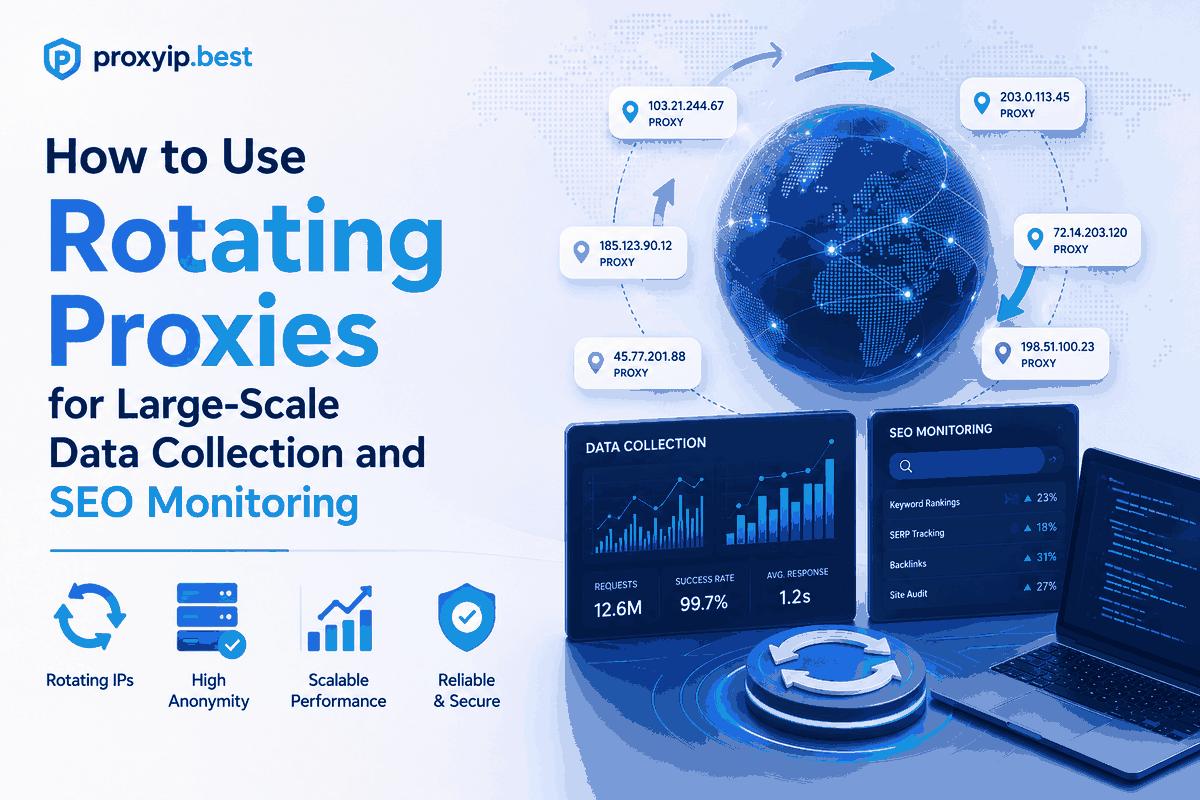
Web scraping requires different types of proxy configurations depending on the target site. Finding the best proxy rotation strategy for web scrapers depends heavily on the structure of the target website. You need to ensure your provider offers both rotating and sticky session configurations to optimize your data collection pipelines.
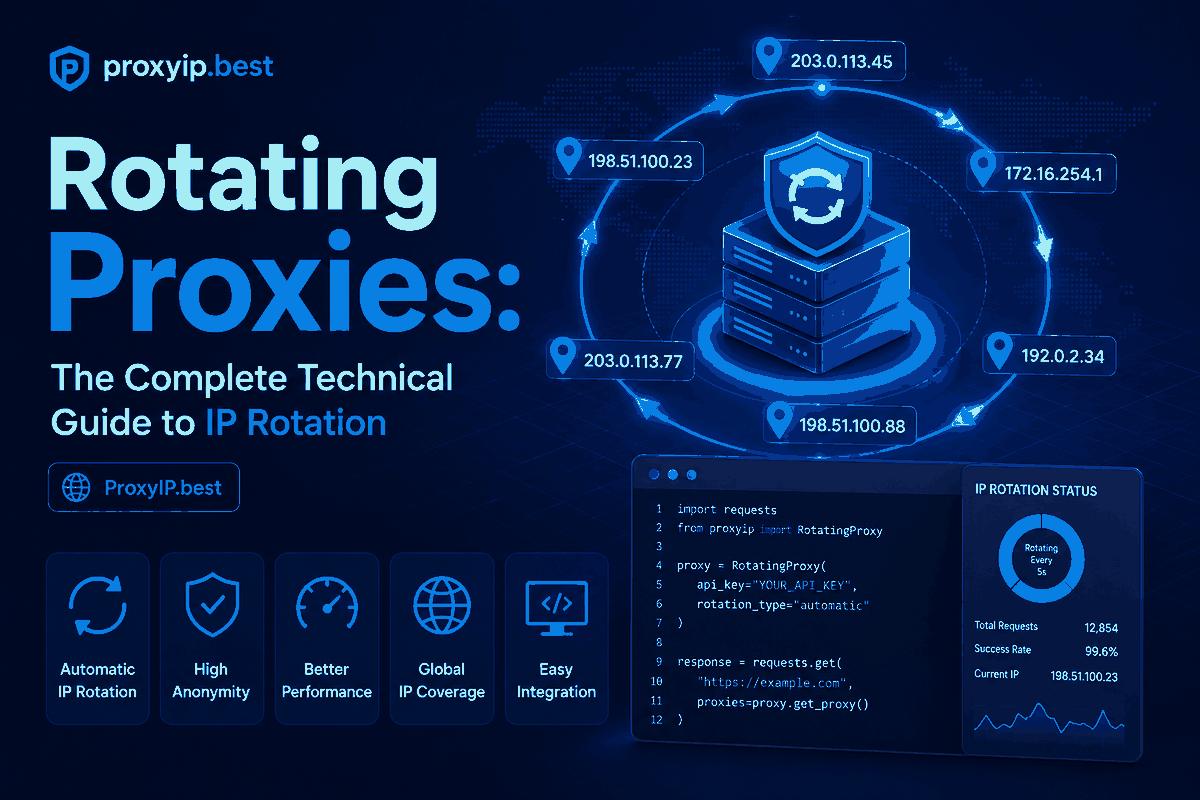
Rotating residential proxies automatically change the IP address with every request. This is ideal for high-volume data extraction where you scrape thousands of pages rapidly, and no persistent login session is required. Each request looks like it comes from a completely different user, preventing the target server from linking the requests to a single bot.
Sticky sessions, also known as session persistence, allow you to keep the same IP address for a specified duration, typically from 1 to 30 minutes. This is crucial when you need to log into an account, add items to a shopping cart, or navigate a multi-step checkout process. If your IP changes mid-session, the website will flag the session as suspicious and force a logout or trigger a CAPTCHA. Therefore, robust session stickiness is crucial for multi-step scraping workflows.
Protocol Support: HTTP, HTTPS, and SOCKS5
Ensure that the provider supports the protocols required for your scraping stack. HTTP and HTTPS are standard for basic web crawling, but SOCKS5 is increasingly necessary for advanced scraping in 2026. SOCKS5 proxies operate at a lower network level, allowing them to handle any traffic type, including TCP and UDP. This is particularly useful when scraping behind complex firewalls or when your scraping tools rely on non-standard network protocols. Moreover, look for providers that offer seamless API integration to programmatically manage your proxy settings, rotate IPs on demand, and monitor bandwidth usage.
Sourcing Ethics and Legal Compliance
The legal landscape surrounding web scraping and data privacy has tightened significantly. In 2026, using ethically sourced proxies is not just a moral choice; it is a business requirement. You must confirm how your proxy provider acquires their residential IPs.
Reputable providers obtain residential IPs ethically by compensating users who opt into their proxy network via software development kits (SDKs) embedded in partner applications. These users are aware their bandwidth is being shared and are compensated, usually through ad-free app experiences or direct payments. Avoid providers that use botnets, malware, or hidden browser extensions to hijack user bandwidth, as these practices can expose your organization to severe legal liabilities and lead to low-quality, highly suspicious IP addresses.
Evaluating Performance and Reliability
A large, ethically sourced proxy pool is useless if it is slow or constantly drops connections. You need to run tests to evaluate the performance and reliability of the proxies before committing to a long-term contract.
Response Time and Latency
Residential proxies are inherently slower than datacenter proxies because the traffic must travel through a real home internet connection before reaching the target server. However, the latency should still be within acceptable limits. High latency can cause your scraping scripts to time out, reducing your overall scraping speed. Compare the average response times of different providers under load to ensure they can handle your scraping volume.
Success Rates and IP Quality
The success rate of your requests is a critical metric for measuring proxy quality. A high success rate means fewer failed requests, less wasted bandwidth, and faster data collection. If a provider's IPs have poor reputation scores, they will trigger CAPTCHAs, block screens, or slow rate limits immediately upon connection, drastically lowering your success rate and forcing you to rely heavily on expensive CAPTCHA solving systems. Look for providers that offer clean, high-quality IPs with low fraud scores.
Bandwidth and Pricing Structure
Residential proxies are typically billed based on bandwidth consumption (per gigabyte) rather than per IP address. This is because residential IPs are dynamic and cannot be dedicated to a single user indefinitely. When evaluating pricing, consider the following:
- Pay-As-You-Go vs. Monthly Commitments: Pay-as-you-go is excellent for small projects or irregular scraping tasks, while monthly commitments offer lower per-gigabyte rates for high-volume operations.
- Data Expiration: Check if your purchased bandwidth expires at the end of the billing cycle or rolls over to the next month.
- Hidden Costs: Make sure there are no extra charges for targeting specific cities, using SOCKS5 protocols, or executing concurrent requests.
Best Practices for Implementing Residential Proxies in Web Scraping
Even the best residential proxies will fail if they are implemented incorrectly. To maximize your success rates and protect your proxy investment, follow these best practices for implementation.
Respecting Rate Limits and Robots.txt
Just because residential proxies allow you to bypass anti-bot systems does not mean you should abuse the target servers. Flooding a website with requests can degrade its performance, leading to aggressive countermeasures and potential legal issues. Respect the rate limits specified in the website's robots.txt file, or implement intelligent delay mechanisms to pace your requests naturally.
Mimicking Human Behavior with Headless Browsers
Modern anti-bot systems look at more than just the IP address. They examine the entire browser footprint. If your scraper sends requests with missing headers, mismatched TLS configurations, or robotic mouse movements, it will be blocked regardless of how clean your residential IP is. Use headless browsers like Playwright, Puppeteer, or Selenium, and configure them to mimic realistic human behavior by simulating scrolling, random pauses, and natural mouse paths.
Monitoring and Handling Proxy Failures
Residential IPs are dynamic and can go offline at any time if the home user shuts down their device or disconnects from the internet. Your scraping architecture must be designed to handle these inevitable drops. Implement robust error handling that detects connection failures, automatically retries failed requests using a new proxy, and flags consistently problematic IPs so they can be temporarily removed from your local rotation pool.
Frequently Asked Questions (FAQ)
Are residential proxies legal for web scraping?
Yes, using residential proxies for web scraping is legal in most jurisdictions, provided you are extracting publicly available data and not violating laws such as the Computer Fraud and Abuse Act (CFAA) in the United States or copyright regulations. However, the legality also depends on how the proxies are sourced. Always ensure your provider uses ethically sourced, consensual IP addresses to avoid legal risks.
What is the difference between static and rotating residential proxies?
Static residential proxies, also known as ISP proxies, provide you with a dedicated residential IP address that does not change. This is ideal for managing social media accounts or performing tasks that require a long-term, consistent identity. Rotating residential proxies automatically assign a new IP address from the pool for each request or session, making them the preferred choice for large-scale web scraping projects.
How many residential proxies do I need for web scraping?
The number of proxies you need depends on the scale of your scraping project and the security level of the target website. For small projects scraping a few thousand pages, a small pool of a few hundred rotating IPs is sufficient. For enterprise-level scraping involving millions of pages daily on highly secured platforms, you will need access to a pool containing millions of IPs to distribute the load effectively and avoid detection.
Why do my residential proxies keep getting blocked?
If your residential proxies are getting blocked, the issue is likely not the IP address itself but your browser footprint or request behavior. Anti-bot systems look for indicators like inconsistent HTTP headers, lack of JavaScript execution, or unrealistic request speeds. Ensure you are using modern headless browsers, managing your TLS fingerprints, and spacing your requests to mimic human browsing patterns.
What is proxy sticky session?
A sticky session is a configuration that keeps your traffic routed through the same residential IP address for a set period, rather than rotating it with every request. This is necessary for scraping workflows that require logging in, maintaining a session state, or completing multi-step forms where changing the IP mid-process would result in an immediate session termination.
Conclusion
Choosing the best residential proxies for web scraping in 2026 requires a balanced evaluation of pool size, targeting capabilities, performance metrics, and ethical sourcing practices. As anti-bot systems become more sophisticated, the quality of your proxies and the refinement of your scraping behavior are the determining factors in whether your data collection projects succeed or fail.
By partnering with a transparent provider that offers a diverse, ethically sourced residential pool, and by implementing robust session management and human-mimicking browser setups, you can build a resilient scraping infrastructure capable of harvesting high-quality data at scale, even from the most heavily protected web properties.
Written by PROXYIP
Our editorial team consists of network engineers and data scraping experts dedicated to bringing transparency to the proxy market. We specialize in distributed infrastructure and high-scale data acquisition.