Why Do People Use Proxy Servers?

Executive Summary: The Strategic Value of Proxy Intermediation
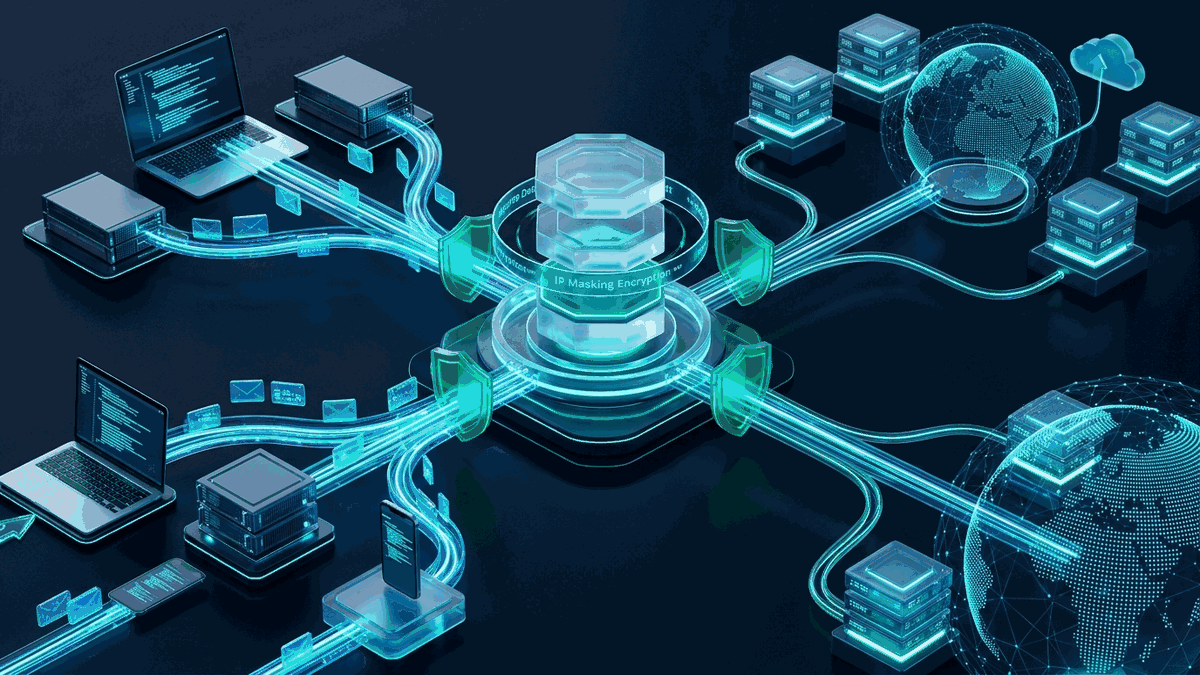
At its core, a proxy server is an intermediate networking node that intercepts, evaluates, and forwards bidirectional application traffic between a client device and an origin server. While the fundamental concept originated in early academic caching architectures, proxy servers have evolved into critical infrastructure for modern enterprise operations, cybersecurity defense, and automated data intelligence. In 2026, global internet traffic intermediation accounts for billions of daily requests, driven by four distinct enterprise pillars: digital identity obfuscation, distributed data extraction, corporate governance and threat prevention, and geo-distributed latency optimization.
Whether an engineering team is extracting competitive retail telemetry across millions of product endpoints, a Fortune 500 security operations center (SOC) is inspecting egress traffic for data loss prevention (DLP), or a brand protection analyst is auditing fraudulent ad cloaking in Tokyo, proxy servers provide the architectural abstraction necessary to control identity, geographic location, and protocol telemetry. This comprehensive technical guide unpacks the mechanics of forward proxying, examines 12 real-world enterprise use cases, benchmarks architectural performance trade-offs, and provides production integration scripts.
1. The Core Mechanics: How Forward Proxy Intermediation Works
To understand why millions of organizations and developers rely on proxy infrastructure, one must inspect the transport and application layer socket interactions governed by RFC 9110 HTTP Semantics and the RFC 1928 SOCKS5 Protocol. Under standard direct networking, a client device initiates a direct TCP three-way handshake (SYN ➔ SYN-ACK ➔ ACK) with the destination server's public IP address. In doing so, the client irrevocably reveals its source IP address, Autonomous System Number (ASN), geographic ISP coordinates, and default operating system TCP window signatures.
A forward proxy decouples this direct coupling by acting as a bidirectional socket gateway. When a client application configures an HTTP CONNECT or SOCKS5 tunnel, the networking path bifurcates into two distinct, independent TCP sessions:
- Client-to-Proxy Session: The client establishes an encrypted transport session to the proxy node (e.g. `pr.proxyip.best:10001`). Within this channel, the client transmits an authentication header and instructs the proxy gateway where it wishes to route outbound traffic.
- Proxy-to-Origin Session: The proxy server terminates the incoming client connection, strips identifying source telemetry (such as `X-Forwarded-For` or `Client-IP` headers in elite anonymous configurations), binds to an outbound network interface, and opens an independent TCP handshake with the target origin server.
From the perspective of the target origin server, the client does not exist. The origin server's network stack observes only the proxy server's IP address, ASN, and TLS handshake profile. By controlling this intermediary boundary, organizations gain the programmatic ability to rewrite headers, emulate geographic coordinates, cache static payloads, rate-limit outgoing sessions, and inspect payloads for malicious signatures.
When evaluating the protocol layer, engineering teams often decide between SOCKS and HTTP proxies. As analyzed in our protocol deep dive on SOCKS4 vs SOCKS5: Which Is Better?, SOCKS5 operates at Layer 5 (Session Layer), transparently forwarding arbitrary TCP and UDP payloads without modifying packet headers. HTTP forward proxies operate at Layer 7 (Application Layer), enabling deep inspection and manipulation of HTTP/HTTPS requests, caching policies, and authentication headers.
1.1 Header Forensics: Elite vs Anonymous vs Transparent Proxies
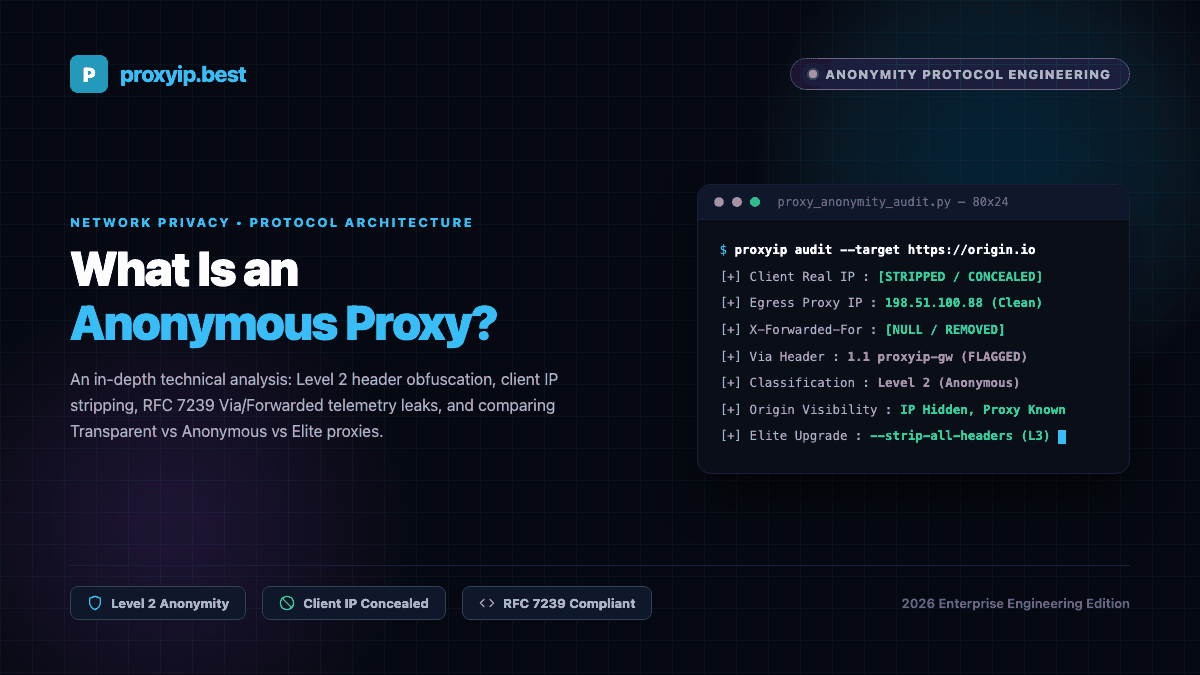
Not all forward proxies provide the same degree of identity concealment. In network forensics and security auditing, proxies are strictly categorized into three discrete anonymity tiers based on the exact HTTP headers transmitted to the origin destination:
- Level 1 — Elite / High Anonymity Proxies (Transparent to Origin): An elite proxy strips all traces of intermediate routing. The origin server receives only the proxy's IP address within the
REMOTE_ADDRsocket variable. Crucially, headers such asVia,X-Forwarded-For,X-Real-IP, andForwardedare completely scrubbed from the request payload. Furthermore, elite proxies ensure the TCP/IP stack matches the claimed client operating system. Anti-bot engines and fraud scanners cannot detect that proxy intermediation is occurring based on header inspection alone. - Level 2 — Anonymous / Distorting Proxies: An anonymous proxy successfully conceals the client's genuine public IP address but explicitly advertises its intermediary nature. The proxy transmits an altered or synthetic
X-Forwarded-Forheader (frequently containing an invented private RFC 1918 address or a secondary gateway IP) while preserving theViaheader (e.g.Via: 1.1 squid-proxy-gate). While the origin cannot identify the client's true IP, the connection is instantly flagged as proxied traffic, triggering heightened WAF scrutiny and CAPTCHA challenges. - Level 3 — Transparent Proxies (Zero Anonymity): A transparent proxy provides zero identity concealment. It directly forwards the client's true public IP address within the
X-Forwarded-Forheader while declaring its hostname in theViaheader. Transparent proxies are deployed exclusively for local network caching, school content filtering, and corporate bandwidth monitoring, rather than identity obfuscation or web scraping.
2. The Four Cardinal Motivation Quadrants
Why do people and organizations introduce this intermediary layer into their network architecture? While individual use cases vary from sneaker copping to corporate espionage defense, all proxy deployments fall into four overarching strategic quadrants:
- Quadrant 1 — Privacy & Digital Identity Obfuscation: Masking real IP coordinates to prevent behavioral tracking, ISP data harvesting, targeted cyber-stalking, and corporate IP deanonymization.
- Quadrant 2 — Enterprise Governance & Security Compliance: Providing security operations centers with egress traffic visibility, implementing Data Loss Prevention (DLP) filters, blocking malicious command-and-control (C2) domains, and enforcing acceptable workplace usage policies.
- Quadrant 3 — Distributed Data Intelligence & Web Scraping: Overcoming target rate-limits, evading anti-bot Web Application Firewall (WAF) blocks, and harvesting public price and catalog data at scale across thousands of concurrent sessions.
- Quadrant 4 — Performance Optimization, Caching & Geo-Testing: Caching heavy static assets to conserve WAN bandwidth, verifying localized international content and advertising, and auditing CDN routing behavior across 195+ sovereign countries.
2.1 Passive TCP/IP Stack & TLS JA4 Fingerprint Correlation
A critical reason modern enterprises and scrapers utilize specialized proxy gateways rather than generic hosting VPSs is the risk of passive TCP/IP stack fingerprinting (commonly executed via tools like p0f). When an automated scraper operating on a Linux cloud server sends an HTTP request claiming to be Google Chrome on Windows 11 via its Layer 7 User-Agent header, advanced WAFs inspect the underlying Layer 4 TCP SYN packet attributes:
- TCP Initial Window Size & MSS: Windows 11 typically advertises an initial window size of 65,535 or 64,240 with specific TCP options (SACK, Timestamps, NOP, WScale). Linux kernels frequently default to 29,200 or 14,600. An anomalous mismatch between the Layer 7 browser string and Layer 4 TCP packet flags triggers an immediate automated bot score penalty.
- TLS 1.3 ClientHello & JA4 Fingerprinting: Beyond the TCP stack, anti-bot engines analyze the exact sequence of cipher suites, supported elliptic curves, and TLS extensions advertised in the TLS ClientHello packet. A genuine residential or mobile proxy terminates or relays packets through authentic OS network stacks, ensuring strict cryptographic harmony with human browsing profiles.
- WebRTC ICE Candidate Leakage: Modern web browsers integrate WebRTC for real-time peer-to-peer audio and video communication. By default, WebRTC transmits Session Description Protocol (SDP) packets that probe all local network interfaces via STUN/TURN binding requests. If a browser routes HTTP traffic through a standard proxy but fails to restrict WebRTC, the STUN binding request will leak the user's real ISP IP address directly to the origin web application through JavaScript execution, completely neutralizing the proxy's protection.
3. Web Scraping & Large-Scale Data Extraction
Web scraping represents the single largest commercial driver of the global proxy market. In today's digital economy, real-time public web data powers price optimization algorithms, airline fare prediction models, financial sentiment analysis, and the foundational training corpuses for generative artificial intelligence. However, web servers are actively defended by anti-bot mitigation engines—such as Cloudflare Bot Management, Akamai Bot Manager, and DataDome—as documented in our guide on How to Bypass Cloudflare in 2026.
When an automated data pipeline initiates hundreds of requests per second from a single server IP, anti-bot engines instantly flag the request velocity, issuing HTTP 429 (Too Many Requests), presenting Cloudflare Turnstile challenges, or applying TCP resets. If the scraper operates on a hosting provider such as AWS or DigitalOcean, the target's WAF identifies the ASN as commercial hosting and aggressively penalizes the traffic, regardless of how slowly the requests are paced.
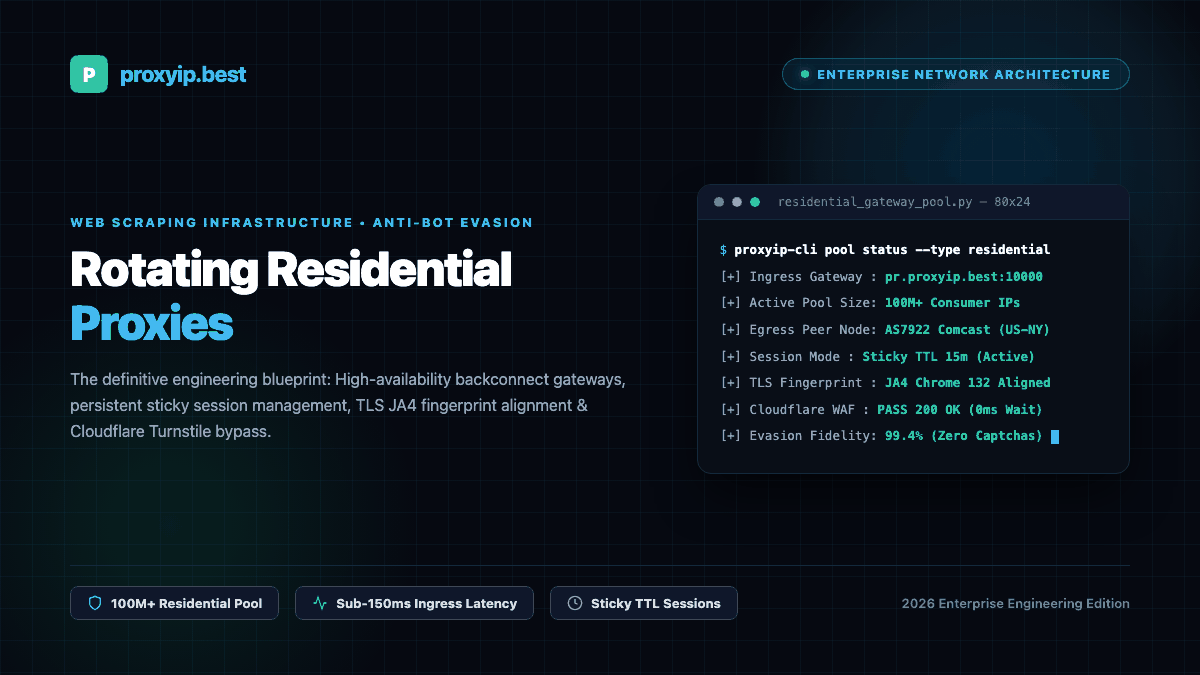
To circumvent these velocity and reputation gates, data engineering teams utilize a residential proxy pool consisting of millions of real consumer IP addresses assigned by residential ISPs (Comcast, AT&T, Verizon). By combining an intelligent proxy gateway with mathematical rotation algorithms—detailed in our research on Geometric vs Round-Robin IP Rotation—each outbound scraping request is dispatched through a completely distinct residential peer. From the target WAF's perspective, the incoming traffic appears as thousands of organic, geographically dispersed human shoppers browsing concurrently.
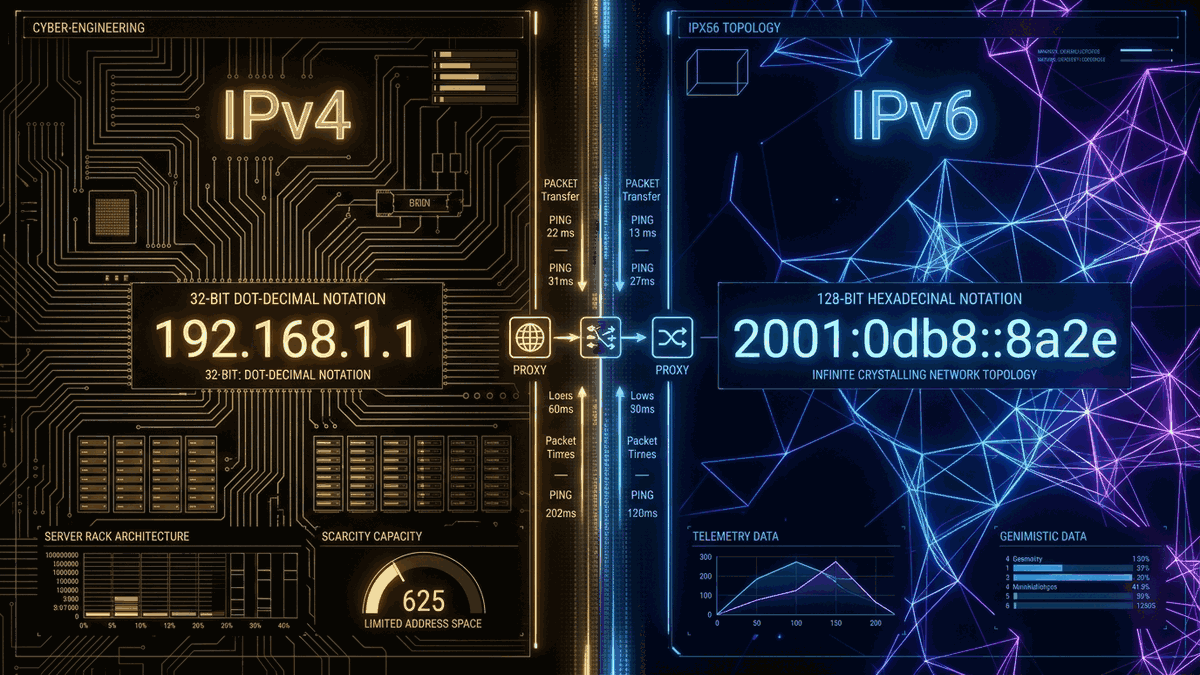
Furthermore, protocol architecture plays a pivotal role in scraping economics. As explored in our benchmark report on IPv4 vs IPv6 Proxies, scrapers targeting dual-stack endpoints like Google Search SERPs can drastically reduce bandwidth leasing overhead by routing high-velocity queries across vast IPv6 /64 subnets rather than expensive IPv4 allocations.
4. Enterprise Security, Access Control, and DLP Gateways
Within enterprise corporate networks, forward proxy servers serve as the frontline perimeter defense against malware infiltration, data exfiltration, and non-compliant employee browsing. When an employee workstation or automated server on a corporate LAN requests an external internet resource, all outbound egress traffic is forcefully routed through an enterprise Secure Web Gateway (SWG) proxy—such as Zscaler Internet Access, Palo Alto Networks Prisma, or BlueCoat/Symantec ProxySG.
These corporate forward proxies execute critical cybersecurity governance functions aligned with OWASP Security Governance standards:
- SSL/TLS Forward Decryption & Deep Packet Inspection (DPI): Over 95% of corporate web traffic is encrypted under TLS. Malicious threat actors routinely hide command-and-control (C2) beaconing, remote access trojans (RATs), and stolen database dumps within encrypted HTTPS tunnels. An enterprise forward proxy utilizes a trusted corporate root Certificate Authority (CA) installed on managed endpoints to terminate the TLS handshake, decrypt the application payload, inspect it with sandboxed antivirus engines, and re-encrypt the traffic before forwarding it to the internet.
- Data Loss Prevention (DLP): Corporate proxies inspect outbound HTTP POST payloads and multi-part file uploads for sensitive data patterns, including Social Security numbers, credit card sequences, unencrypted source code, and proprietary customer records, blocking unauthorized transmission to unauthorized cloud storage providers (such as personal Dropbox or Mega accounts).
- Threat Intelligence Feeds & DNSBL Filtering: By integrating real-time threat intelligence from organizations like Spamhaus Threat Intelligence and VirusTotal, forward proxies immediately terminate outbound connections directed toward newly registered malicious domains, zero-day phishing sites, and known botnet infrastructure.
- Granular Role-Based Access Control (RBAC): Network administrators enforce strict filtering policies, restricting engineering teams to approved repository endpoints (GitHub, Docker Hub) while blocking high-risk peer-to-peer (P2P), gambling, or anonymous pastebin services.
5. Geo-Targeting, Ad Verification, and Fraud Prevention
In modern ad-tech ecosystems, billions of dollars are lost annually to digital advertising fraud, malicious affiliate cloaking, and geo-compliance violations. Digital advertising exchanges and programmatic Real-Time Bidding (RTB) networks rely on geographic IP geolocation to deliver hyper-targeted campaigns. Rogue affiliate networks exploit this dynamic through "cloaking"—detecting when a compliance crawler or corporate ad verification bot is auditing an ad, and serving a benign, approved landing page, while serving malicious redirect scripts or pirated content to genuine human users in specific metropolitan cities.
To uncover cloaking and protect multi-million-dollar brand campaigns, global brands and cybersecurity agencies deploy specialized 4G/5G mobile proxies and residential networks. By routing automated verification crawlers through genuine cellular CGNAT nodes located in London, Tokyo, Berlin, and New York, ad analysts observe the exact visual advertising creatives and redirect chains displayed to actual mobile consumers.
Similarly, international e-commerce platforms and travel booking engines utilize dynamic currency and pricing algorithms based on the visitor's geographic IP address. A flight reservation or SaaS software subscription purchased from an IP in Brazil or India may be priced 40% lower than the identical service viewed from Switzerland or California. Market intelligence firms utilize proxies to map dynamic pricing surfaces across global markets, ensuring comprehensive competitive visibility.
In social media management and brand marketing, managing dozens of client accounts (Instagram, TikTok, LinkedIn, Facebook) from a single office IP address triggers automated multi-accounting alarms. Fraud scoring engines—such as IPQualityScore Proxy Detection API—calculate joint entropy scores across shared browser environments and IP clusters. By dedicating an isolated, static residential or mobile proxy to each individual client profile, marketing agencies isolate session fingerprints and eliminate association bans.
5.1 Interception Proxies in Mobile App Security & Reverse Engineering
Beyond automated web scraping, proxy servers are indispensable tools for mobile application penetration testers, reverse engineers, and threat analysts. Modern mobile applications (iOS and Android) interact with backend cloud microservices via undocumented REST and GraphQL APIs. Because mobile apps communicate over encrypted HTTPS, analysts cannot observe API contracts or authentication tokens on the wire using standard packet sniffers like Wireshark.
To inspect this communication, security researchers configure the mobile device to route all network egress through a local interception proxy—such as Burp Suite Professional, OWASP ZAP, or Mitmproxy. By installing the proxy's custom root CA certificate onto the mobile device's system trust store (or utilizing dynamic binary instrumentation tools like Frida to hook native SSL validation routines such as SSL_CTX_set_custom_verify and bypass SSL Certificate Pinning), the proxy terminates the app's outbound TLS session, displays the decrypted JSON payloads for interactive tampering and security auditing, and dispatches the validated request to the production backend.
This architectural pattern allows security teams to identify critical vulnerabilities—such as Broken Object Level Authorization (BOLA), unauthenticated administrative endpoints, and hardcoded API secret keys—before malicious threat actors discover and exploit them in production environments.
6. Architectural Comparison: Proxy Servers vs Virtual Private Networks (VPNs)
A frequent architectural point of confusion among developers is the operational distinction between proxy servers and Virtual Private Networks (VPNs). While both technologies intercept internet communication and conceal the client's public IP address, their OSI layer binding, encryption boundaries, and concurrency scalability are fundamentally different.
- OS-Level vs Application-Level Scope: A VPN operates at the network layer (OSI Layer 3), establishing an encrypted virtual network adapter (such as a `tun0` or `utun` interface) inside the operating system kernel via protocols like WireGuard, IPsec, or OpenVPN. Consequently, 100% of all outgoing host traffic—including system background updates, DNS lookups, and background daemon sockets—is forced through the single VPN tunnel. In contrast, proxy servers operate at the transport/session layer (OSI Layer 4/5) or application layer (Layer 7). Proxies bind strictly on a per-socket or per-process basis. A Python scraper can route 5,000 distinct scraping threads through 5,000 individual rotating proxy endpoints simultaneously, while your primary browser maintains direct, unproxied local connectivity.
- Encryption Boundaries & Overhead: VPNs mandate military-grade symmetric encryption (such as ChaCha20-Poly1305 or AES-256-GCM) on every single packet leaving the host. While optimal for encrypting unencrypted traffic across hostile public Wi-Fi hotspots, this introduces substantial CPU cryptographic overhead and packet header bloat, reducing maximum throughput in high-concurrency web crawling. Proxies typically utilize lightweight HTTP CONNECT tunneling, allowing end-to-end TLS encryption to pass directly between the client and destination origin server without double-encryption performance penalties.
- Rotation Elasticity: VPN architectures are designed for persistent, long-lived host connections. Switching an IP address on a VPN requires renegotiating cryptographic handshakes and re-establishing kernel routing tables—a process requiring 2 to 5 seconds of network downtime. Proxy gateways support ephemeral per-request rotation: an automated scraper can receive a completely fresh, authenticated residential IP on every single sub-millisecond HTTP request without dropping active client sockets.
7. Comparing the Six Major Proxy Architectures
Depending on your operational requirements, selecting the appropriate proxy category dictates whether your project achieves 99.9% uptime or suffers immediate anti-bot blacklisting. You should systematically compare proxy architectures against your budget and target complexity:
For in-depth analysis on provider reputations and IP pool architectures, consult our reviews of Bright Data enterprise pool and Oxylabs network infrastructure, as well as our foundational framework on What Makes an IP Address High Quality?.
8. Production Engineering: Integration Patterns & Diagnostics
Deploying proxies in production systems requires robust handling of connection pools, session timeouts, automated failover, and diagnostic profiling. Below are three tested enterprise implementation scripts.
8.1 Python Resilient Rotating SOCKS5 Scraper with Session Retries
This production Python script configures a resilient HTTP connection pool utilizing SOCKS5 proxy tunneling with automated backoff and proxy rotation upon encountering rate limits:
import requests
from requests.adapters import HTTPAdapter
from urllib3.util.retry import Retry
import time

def create_proxy_session(proxy_endpoint, max_retries=3):
    session = requests.Session()

    # Configure resilient retry strategy for transient 429/502/503 errors
    retries = Retry(
        total=max_retries,
        backoff_factor=1.5,
        status_forcelist=[429, 500, 502, 503, 504],
        raise_on_status=False
    )

    adapter = HTTPAdapter(max_retries=retries, pool_connections=50, pool_maxsize=50)
    session.mount("http://", adapter)
    session.mount("https://", adapter)

    # Route via SOCKS5 proxy (supporting remote DNS resolution)
    session.proxies = {
        "http": proxy_endpoint,
        "https": proxy_endpoint
    }

    session.headers.update({
        "User-Agent": "Mozilla/5.0 (Windows NT 10.0; Win64; x64) AppleWebKit/537.36 (KHTML, like Gecko) Chrome/126.0.0.0 Safari/537.36",
        "Accept-Language": "en-US,en;q=0.9"
    })

    return session

if __name__ == "__main__":
    # Example residential proxy rotating port (Bright Data / Oxylabs)
    PROXY = "socks5h://customer-tenant_102:secret_token@pr.proxyip.best:10001"

    sess = create_proxy_session(PROXY)
    print("[+] Dispatched test request through residential proxy pool...")

    try:
        start = time.time()
        res = sess.get("https://api64.ipify.org?format=json", timeout=12)
        elapsed = time.time() - start

        if res.status_code == 200:
            data = res.json()
            print(f"  [SUCCESS] Egress Peer IP: {data.get('ip')}")
            print(f"  [METRIC] Round-Trip Latency: {elapsed * 1000:.1f}ms")
        else:
            print(f"  [WARN] Non-200 Status Code: {res.status_code}")
    except Exception as exc:
        print(f"  [ERROR] Proxy Request Failed: {exc}")
8.2 Node.js / Playwright Browser Automation with Geo-Emulation
When extracting dynamic Single Page Applications (SPAs) or conducting ad verification, the browser environment must synchronize its internal timezone and geolocation APIs with the proxy's egress IP address to avoid triggering anti-bot entropy mismatches:
const { chromium } = require('playwright');

async function executeGeoTargetedAudit(countryCode = 'gb') {
  // Pass targeted ISO country code to proxy gateway via username parameter
  const proxyUser = `customer-tenant_102-country-${countryCode}`;
  const proxyPass = 'secret_token';
  const proxyUrl = `http://${proxyUser}:${proxyPass}@pr.proxyip.best:20001`;

  const browser = await chromium.launch({
    headless: true,
    proxy: { server: proxyUrl }
  });

  // Emulate London, UK browser coordinates and locale
  const context = await browser.newContext({
    geolocation: { latitude: 51.5074, longitude: -0.1278 },
    permissions: ['geolocation'],
    locale: 'en-GB',
    timezoneId: 'Europe/London',
    userAgent: 'Mozilla/5.0 (Macintosh; Intel Mac OS X 10_15_7) AppleWebKit/537.36 (KHTML, like Gecko) Chrome/126.0.0.0 Safari/537.36'
  });

  const page = await context.newPage();

  try {
    console.log(`[+] Navigating through ${countryCode.toUpperCase()} residential proxy node...`);
    await page.goto('https://proxyip.best/api/track', { waitUntil: 'domcontentloaded', timeout: 15000 });

    const pageTitle = await page.title();
    console.log(`  [PASS] Page Title: ${pageTitle}`);
    console.log(`  [VERIFIED] Successfully audited localized UK e-commerce interface.`);
  } catch (error) {
    console.error(`  [FAIL] Browser automation error: ${error.message}`);
  } finally {
    await browser.close();
  }
}

executeGeoTargetedAudit('gb');
8.3 Low-Level cURL Diagnostic Command for Proxy Profiling
Use this command-line snippet to verify whether a proxy gateway leaks identifying HTTP headers or exhibits TCP connect latency bottlenecks:
# Benchmark proxy handshake latency and inspect outgoing headers
curl -s -v -w "\n--- Proxy Telemetry ---\n\
DNS Resolution Time:  %{time_namelookup}s\n\
TCP Connect to Proxy: %{time_connect}s\n\
TLS Handshake (App):  %{time_appconnect}s\n\
Time to First Byte:   %{time_starttransfer}s\n\
Total Execution Time: %{time_total}s\n\
HTTP Status Code:     %{http_code}\n" \
-x "http://customer-tenant_102:secret_token@pr.proxyip.best:10001" \
"https://httpbin.org/headers"9. Strategic Conclusion: The Invisible Engine of the Modern Web
Proxy servers are far more than a tool for circumventing internet filters. In 2026, proxy infrastructure serves as the fundamental abstraction layer that enables the modern digital economy to function. Without forward proxies, enterprise web scraping pipelines would collapse under anti-bot blockades, corporate security teams would be blind to encrypted malware exfiltration, and international brands would have zero visibility into localized ad fraud across global markets.
Whether your objective is personal digital privacy, multi-account social orchestration, or enterprise competitive intelligence, selecting the proper proxy architecture—and understanding how intermediate network gateways handle authentication, rotation, and protocol translation—is an essential core competency for any modern systems architect.
Frequently Asked Questions (FAQ)
What is the primary difference between a forward proxy and a reverse proxy?
A forward proxy sits in front of client devices (browsers, scraping bots, corporate laptops) and intercepts outbound requests to the internet, hiding the client's identity from destination servers. A reverse proxy sits in front of origin web servers (e.g., Cloudflare, Nginx), intercepting inbound traffic from the public internet to provide load balancing, SSL termination, DDoS protection, and web application firewall (WAF) filtering.
Why do web scrapers use residential proxies instead of datacenter proxies?
Datacenter proxies originate from commercial cloud providers (AWS, DigitalOcean, Hetzner) whose Autonomous System Numbers (ASNs) are easily identified and blocked by anti-bot firewalls like Cloudflare and DataDome. Residential proxies originate from consumer Internet Service Providers (Comcast, AT&T), meaning scraping requests appear indistinguishable from legitimate human shoppers, eliminating IP-based blocking.
Can a proxy server decrypt HTTPS traffic?
Standard forward proxies operating via the HTTP CONNECT method do not decrypt HTTPS traffic; they establish an encrypted tunnel and pass encrypted TLS packets directly between client and origin server. However, enterprise Secure Web Gateways (SWG) can decrypt and inspect HTTPS traffic by installing a trusted corporate root Certificate Authority (CA) on managed workstations, allowing the proxy to perform deep packet inspection for malware and data loss prevention (DLP).
Is using a proxy server legal?
Yes, using proxy servers is completely legal worldwide for legitimate operational purposes, including web scraping of public data, corporate security inspection, brand protection, privacy defense, and performance caching. However, using proxies to engage in illegal activities—such as credential stuffing, hacking, distributing malware, or violating copyright statutes—remains strictly illegal regardless of proxy usage.
What is the difference between a proxy server and a VPN?
A proxy server operates at the application or session layer (OSI Layer 4/5 or 7) and is configured on a per-application basis, allowing developers to route thousands of concurrent connections through thousands of distinct rotating IPs simultaneously. A VPN operates at the network layer (OSI Layer 3), encrypting 100% of the operating system's traffic through a single virtual network adapter, binding the entire machine to one static IP.
How do proxies prevent social media multi-accounting bans?
Social platforms (Instagram, Facebook, TikTok) track IP reputation and assign fraud scores when multiple unrelated accounts log in from the same IP address or datacenter subnet. By assigning an isolated, dedicated 4G/5G mobile or static residential proxy to each individual account profile, the platform observes unique, authentic consumer telemetry, eliminating account linking and shadowbans.
Related Technical Resources
- What Makes an IP Address High Quality? — Architectural analysis of clean IP attributes and IPQS/Scamalytics fraud scoring.
- How to Bypass Cloudflare in 2026 — Reverse engineering TLS fingerprinting, Turnstile challenges, and residential routing.
- Geometric vs Round-Robin IP Rotation — Mathematical models for intelligent session management and rate-limit evasion.
- SOCKS4 vs SOCKS5: Which Is Better? — Protocol benchmark covering UDP relaying, authentication, and handshake telemetry.
Evaluate Matching Proxy Providers
Compare pool sizes, verified success rates, and live pricing across 30 enterprise networks.
PROXYIP publications are written and peer-reviewed by distributed network engineers. All latency, pool size, and success rate metrics referenced in our analyses are empirically audited using our proprietary edge probe network. We maintain strict editorial independence from proxy providers.
Written by PROXYIP
Our editorial team consists of network engineers and data scraping experts dedicated to bringing transparency to the proxy market. We specialize in distributed infrastructure and high-scale data acquisition.