SOCKS4 vs SOCKS5: Which Is Better?


SOCKS4 vs SOCKS5: Which Is Better?
Executive Summary
- Protocol Hierarchy: SOCKS5 (IETF RFC 1928) is an expanded evolution of SOCKS4, introducing UDP relay capabilities, flexible authentication negotiation, IPv6 addressing, and native domain name resolution.
- UDP & Real-Time Support: SOCKS4 operates strictly over TCP connection streams. SOCKS5 introduces the
UDP ASSOCIATEcommand, enabling proxying for DNS queries, video streaming, VoIP, WebRTC, and real-time gaming. - Authentication Framework: SOCKS4 relies on basic unauthenticated User-ID fields. SOCKS5 establishes a formal negotiation handshake supporting method-independent authentication, including username/password credentials (RFC 1929) and GSS-API (RFC 1961).
- Encryption Reality: Neither SOCKS4 nor SOCKS5 provides payload encryption by default. Both protocols function at Layer 5 (Session Layer) as agnostic socket forwarders. Confidentiality requires higher-layer TLS/HTTPS transport encryption.
- DNS Leak Protection: Standard SOCKS4 requires client-side DNS resolution to IPv4 addresses before proxy connection. SOCKS4a and SOCKS5 allow remote proxy-side DNS resolution, eliminating local DNS leaks.
Introduction: SOCKS5 vs SOCKS4 Protocol Hierarchy
SOCKS5 is generally the more capable protocol because it adds features that SOCKS4 lacks, including authentication mechanisms, UDP support, and broader addressing capabilities. However, SOCKS4 can still be sufficient for simple TCP-based proxying when those additional features are unnecessary.
When selecting a proxy protocol for web scraping, network administration, privacy routing, or enterprise automation, understanding the distinction between SOCKS4 and SOCKS5 is critical. While both belong to the SOCKS (Socket Secure) family of internet protocols, SOCKS5 was engineered specifically to solve the architectural bottlenecks, security limitations, and transport constraints of SOCKS4.
To understand where SOCKS fits within broader network architectures, explore our foundational guides on what a proxy server is, how proxy servers work, and types of proxy servers explained.
SOCKS4 vs SOCKS5: Quick Answer
Quick Answer: SOCKS5 is superior for most modern applications because it supports UDP traffic, flexible authentication methods (such as username and password), IPv6 addressing, and proxy-side DNS resolution. SOCKS4 only supports unauthenticated TCP traffic and IPv4 addresses. However, SOCKS5 is not inherently faster or encrypted by default; protocol choice depends on application requirements, network transport needs, and provider compatibility.
SOCKS4 vs SOCKS5 Comparison
The following feature matrix provides an immediate side-by-side comparison of the core protocol parameters governing SOCKS4 and SOCKS5.
| Feature | SOCKS4 | SOCKS5 |
|---|---|---|
| TCP Support | Yes (CONNECT and BIND) | Yes (CONNECT and BIND) |
| UDP Support | No | Yes (via UDP ASSOCIATE) |
| Authentication | Limited / Basic (User-ID header string) | Supports Negotiated Auth (None, User/Pass, GSS-API) |
| IPv4 Support | Yes (Native 32-bit IP format) | Yes (Address Type 0x01) |
| IPv6 Support | Limited / Not Native | Supported (Address Type 0x04) |
| DNS Handling | Client-side IP resolution (SOCKS4a adds domain extension) | Supports Proxy-Side Remote DNS via Domain Addressing (0x03) |
| Encryption | No inherent encryption | No inherent encryption |
| Protocol Flexibility | Lower | Higher |
| Modern Application Support | Lower (Legacy systems) | Higher (Industry standard) |
| Typical Use | Basic TCP proxying on legacy networks | Modern web scraping, automation, gaming, streaming |
What Is a SOCKS Proxy?
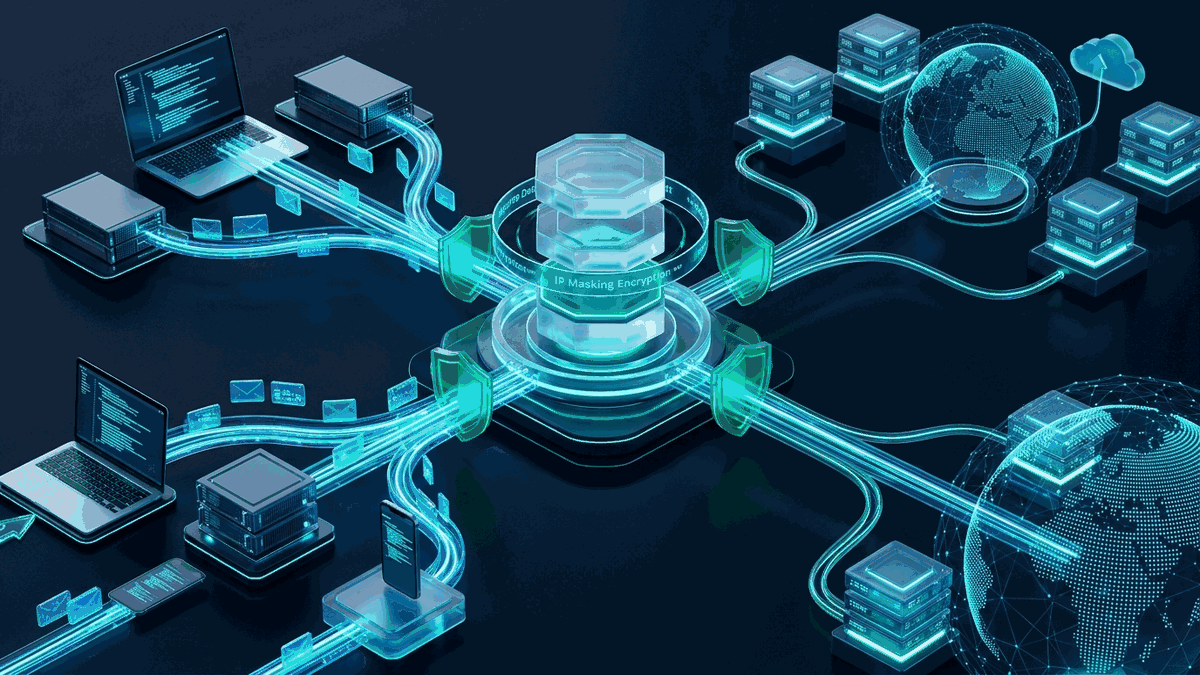
SOCKS stands for Socket Secure. It is an internet protocol that routes network packets between a client application and a destination server through an intermediary proxy server. Unlike HTTP proxies that inspect, parse, and rewrite Layer 7 application headers, a SOCKS proxy operates at Layer 5 (Session Layer) of the OSI model.
+-------------------+        SOCKS Protocol Handshake        +-------------------+        Destination Connection        +--------------------+
| Client App        |  ===================================>  | SOCKS Proxy       |  =================================>  | Target Server      |
| (Browser/Scraper) |  <===================================  | (Layer 5 Gateway) |  <=================================  | (Web/API/Database) |
+-------------------+         TCP/UDP Binary Stream          +-------------------+          Raw Socket Bytes            +--------------------+
Because SOCKS operates at the session layer, it is completely application-agnostic. A single SOCKS proxy endpoint can relay HTTP, HTTPS, FTP, SMTP, POP3, SSH, database connections, and custom socket protocols without modifying the underlying data payload.
It is vital to emphasize: SOCKS is a proxy routing protocol, not an encryption protocol. Neither SOCKS4 nor SOCKS5 automatically encrypts your network traffic between the client and proxy server.
What Is SOCKS4?
Developed in the early 1990s by David Koblas at Computer Sciences Corporation (CSC), SOCKS4 was designed to allow workstations inside secure corporate firewalls to access external IPv4 networks without granting full IP-level routing.
SOCKS4 is a minimalistic binary protocol operating exclusively over TCP. It requires clients to transmit connection requests containing the destination server's 32-bit IPv4 address and 16-bit port number, alongside an optional arbitrary User-ID string for crude access identification.
Key Characteristics of SOCKS4
- TCP-Only Architecture: SOCKS4 cannot relay UDP packets, rendering it incompatible with UDP-based applications.
- Strict IPv4 Addressing: The standard SOCKS4 packet header allocates exactly 4 bytes for the destination IP address, preventing native IPv6 support.
- Lack of Authentication Handshake: SOCKS4 lacks method negotiation; access controls rely solely on source IP whitelisting or static User-ID strings.
- Client-Side DNS Requirement: Standard SOCKS4 requires the client application to resolve domain names to IPv4 addresses locally before establishing a connection.
How SOCKS4 Works
The SOCKS4 connection workflow follows a straightforward 5-step sequence over an established TCP socket.
SOCKS4 Connect Request Packet Format:
+----+----+----+----+----+----+----+----+----+----+....+----+
| VN | CD | DSTPORT |      DSTIP        | USERID       |NULL|
+----+----+----+----+----+----+----+----+----+----+....+----+
  1    1     2            4              variable        1   (Bytes)
- Client Connection: The client opens a standard TCP connection to the SOCKS4 proxy server (typically on port 1080).
- Request Packet Transmission: The client sends a SOCKS4 request header containing:
VN(Version Number):0x04CD(Command Code):0x01for TCP CONNECT or0x02for TCP BINDDSTPORT: Destination port number (2 bytes)DSTIP: Destination IPv4 address (4 bytes)USERID: Variable-length null-terminated string
- Proxy Destination Handshake: The proxy server receives the packet and attempts to establish an outbound TCP connection to the specified destination IPv4 address and port.
- Proxy Reply: The proxy returns an 8-byte status packet. If the connection succeeded,
CDreturns0x5A(Request Granted). If rejected, it returns failure codes (0x5B,0x5C, or0x5D). - Data Relaying: Once granted, the proxy transparently relays raw bytes bidirectionally between the client and destination.
What Is SOCKS4a?
To overcome SOCKS4's critical flaw—requiring clients to perform local DNS resolution before sending requests—NEC introduced the SOCKS4a extension.
In environments where client devices lack direct internet DNS access or when users wish to prevent local DNS leaks, client-side resolution is impossible or undesirable. SOCKS4a allows the client to delegate DNS name resolution to the SOCKS proxy server.
How SOCKS4a Differs from Standard SOCKS4
SOCKS4a modifies the destination IP field in the request header. If the client cannot resolve a domain name locally, it sets the first three bytes of DSTIP to 0.0.0 and the fourth byte to any non-zero value (e.g., 0.0.0.1). This invalid IPv4 destination signals to the proxy that a domain name string is appended after the null-terminated USERID string.
Upon receiving a SOCKS4a packet, the proxy server parses the domain name, resolves the IP address using its own upstream DNS resolver, and connects to the target server. While SOCKS4a added domain resolution, it did not add UDP support, IPv6 addressing, or modern authentication negotiation.
What Is SOCKS5?
Standardized by the IETF in 1996 under RFC 1928, SOCKS5 was created as a major architectural overhaul to meet modern internet networking requirements.
SOCKS5 retains the application-agnostic session-layer benefits of SOCKS4 while introducing comprehensive transport, security, and addressing extensions.
Core Capabilities Introduced in SOCKS5
- UDP Relay Support: Full support for UDP datagram relaying via the
UDP ASSOCIATEcommand, enabling real-time streaming, gaming, WebRTC, and DNS proxying. - Extensible Authentication Framework: Formal authentication sub-negotiation supporting Anonymous Access, Username/Password (RFC 1929), and GSS-API (RFC 1961).
- Versatile Address Types (ATYP): Native support for IPv4 addresses (
0x01), fully qualified domain names (0x03), and 128-bit IPv6 addresses (0x04). - Proxy-Side DNS Resolution: Built-in remote domain resolution (SOCKS5h) without relying on SOCKS4a hacks.
How SOCKS5 Works
Unlike SOCKS4's single-step request, a SOCKS5 connection involves a formal multi-stage negotiation process.
Detailed Connection Phases
- Authentication Method Negotiation:
The client opens a TCP socket to the SOCKS5 server and sends a version/method selection packet:
+----+----------+----------+
|VER | NMETHODS | METHODS  |
+----+----------+----------+
|0x05|   1-255  | 1-255 B  |
+----+----------+----------+
The server replies selecting a mutually supported method (e.g.,
0x00for No Auth,0x02for Username/Password). - Authentication Sub-negotiation (If Required):
If Method
0x02is selected, the client initiates the RFC 1929 username/password handshake, transmitting credentials. The server verifies credentials and returns status0x00(Success). - Command Request:
The client sends the connection request specifying the target command and address type:
+----+-----+-------+------+----------+----------+
|VER | CMD |  RSV  | ATYP | DST.ADDR | DST.PORT |
+----+-----+-------+------+----------+----------+
|0x05| 1 B | 0x00  | 1 B  | Variable |   2 B    |
+----+-----+-------+------+----------+----------+
CMD:0x01(CONNECT),0x02(BIND), or0x03(UDP ASSOCIATE)ATYP:0x01(IPv4),0x03(Domain Name), or0x04(IPv6)
- Proxy Connection & Response:
The proxy connects to the destination target (or binds a UDP port) and returns a status reply (
REP=0x00for Success). - Data Relaying:
Bi-directional data payload stream flows transparently through the proxy gateway.
SOCKS4 vs SOCKS5 Authentication
Authentication mechanisms represent one of the sharpest practical differences between SOCKS4 and SOCKS5.
SOCKS4 Identification Limitations
SOCKS4 does not feature an authentication handshake. It only permits an arbitrary USERID string field within the header. Standard SOCKS4 proxies cannot reject connections based on passwords, cryptographic tokens, or negotiated sub-protocols. Consequently, commercial SOCKS4 proxy providers must rely almost exclusively on client IP address whitelisting.
SOCKS5 Flexible Authentication Framework
SOCKS5 defines an extensible method negotiation handshake. During initial connection, the client presents a list of supported authentication method IDs:
0x00: NO AUTHENTICATION REQUIRED0x01: GSSAPI (Generic Security Services API)0x02: USERNAME/PASSWORD (IETF RFC 1929)0x03to0x7F: IANA ASSIGNED METHODS0x80to0xFE: PRIVATE METHODS (Custom Provider Auth)
This allows commercial proxy providers to issue authenticated SOCKS5 endpoints using standard username:password credentials, enabling seamless integration across desktop software, headless scrapers, and mobile applications without needing static IP whitelisting.
SOCKS4 vs SOCKS5 DNS Resolution
DNS handling determines whether your client device leaks domain lookup queries to your local Internet Service Provider (ISP) or local network router.
Local vs. Proxy-Side DNS Resolution
When an application attempts to connect to example.com through a proxy, it must resolve the domain to an IP address.
- Local DNS Resolution (SOCKS4 Default): The client operating system queries its local DNS server (e.g., local router or ISP DNS) to resolve
example.comto an IPv4 address. The client then sends the resolved IP address to the SOCKS4 proxy. This exposes destination website domain names to local network snoopers and DNS logging systems. - Proxy-Side DNS Resolution (SOCKS5 / SOCKS4a): The client transmits the raw domain string (e.g.,
example.comvia Address Type0x03in SOCKS5) directly to the proxy server. The proxy server performs the DNS lookup on its remote network. This prevents local DNS leaks and circumvents local DNS-based censorship filters.
For detailed comparisons between protocol-level proxying and network-wide DNS routing, see our guide on SOCKS5 vs HTTP proxies.
SOCKS4 vs SOCKS5 UDP Support
The ability to relay UDP datagrams is a fundamental architectural divide separating SOCKS4 and SOCKS5.
SOCKS4 was engineered strictly for connection-oriented TCP streams. However, modern internet traffic relies heavily on connectionless User Datagram Protocol (UDP) for real-time performance.
Why UDP Support Matters
- DNS Queries: Standard DNS queries operate over UDP port 53. SOCKS5's
UDP ASSOCIATEcommand allows proxying raw UDP DNS packets. - Voice over IP (VoIP) & WebRTC: Video calls (Zoom, Skype, Discord) and WebRTC peer-to-peer connections rely on UDP for minimal latency. SOCKS4 breaks WebRTC audio/video streams.
- Live Streaming & Gaming: Online multiplayer games transmit high-frequency player coordinates over UDP datagrams. SOCKS5 allows game clients to route UDP game traffic through low-latency proxies.
SOCKS4 vs SOCKS5 IPv4 and IPv6 Support
As IPv4 address space exhausts globally, IPv6 compatibility is increasingly essential for enterprise network architecture.
Standard SOCKS4 headers allocate exactly 4 bytes (32 bits) for destination IP addresses, restricting protocol framing exclusively to IPv4. SOCKS4a introduced domain string forwarding, allowing proxies to resolve IPv6 addresses on the backend, but the client-to-proxy protocol header itself cannot specify raw 128-bit IPv6 destination bytes.
SOCKS5 solves this by introducing explicit Address Type (ATYP) flags in the binary command header:
ATYP 0x01: 4-Byte IPv4 AddressATYP 0x03: Length-prefixed Domain Name stringATYP 0x04: 16-Byte (128-bit) native IPv6 Address
This renders SOCKS5 natively compatible with dual-stack and IPv6-only network environments.
Does SOCKS5 Encrypt Traffic?
Critical Security Rule
No. SOCKS5 itself is NOT an encryption protocol. Neither SOCKS4 nor SOCKS5 provides payload encryption by default. SOCKS proxies relay raw socket bytes between the client and destination. If you transmit unencrypted HTTP text over a SOCKS5 proxy, any network sniffer along the path can read your data payload.
Proxying vs. Authentication vs. Encryption
To avoid dangerous security misunderstandings, clarify these distinct networking concepts:
- Proxying: Routing network socket traffic through an intermediary IP address to mask client origin.
- Authentication: Verifying client identity to grant proxy access (e.g., verifying SOCKS5 username/password).
- Payload Encryption: Cryptographically scrambling data content so third parties cannot inspect payloads.
To secure data payloads passing through a SOCKS proxy, application-layer encryption (such as HTTPS/TLS or SSH tunneling) must be active over the SOCKS socket. For full system-wide encrypted tunnels, read our detailed report on Proxy vs VPN.
Is SOCKS5 More Secure Than SOCKS4?
SOCKS5 is structurally more secure than SOCKS4 regarding access control, credentials protection, and network leak prevention, but nuanced limitations apply.
Security Advantages of SOCKS5 over SOCKS4
- Credential Protection: SOCKS5 standardizes authentication sub-negotiation (RFC 1929), preventing unauthorized unauthorized access to proxy endpoints.
- Prevention of DNS Leaks: By supporting remote domain resolution (
ATYP 0x03), SOCKS5 prevents local network routers from observing DNS domain lookup requests. - GSS-API Support: Enterprise SOCKS5 deployments can utilize GSS-API (RFC 1961) for Kerberos-authenticated enterprise socket proxying.
What SOCKS5 Does NOT Protect Against
- Malicious Proxy Operators: Because SOCKS proxies do not encrypt payload traffic, a compromised or malicious proxy provider can inspect unencrypted payload data.
- Lack of Transport Layer Security (TLS): Standard SOCKS5 username/password credentials transmitted over RFC 1929 pass in cleartext unless encapsulated inside a TLS tunnel (e.g., SOCKS5 over TLS).
SOCKS4 vs SOCKS5 Performance
A common misconception across online forums is that SOCKS5 is inherently "much faster" than SOCKS4, or vice versa. In reality, protocol transport overhead between SOCKS4 and SOCKS5 is virtually identical during active data relaying.
Primary Performance Determinants
Independent performance benchmark testing was not performed for this article because protocol version alone does not determine connection throughput or latency. Performance is governed by:
- Physical Server Distance & Routing: Geographic distance between client, proxy server, and destination target.
- Network Bandwidth & Congestion: Network interface capacity (1 Gbps vs. 10 Gbps) and hardware load on the proxy node.
- IP Infrastructure Quality: Datacenter proxies offer lower latency and higher gigabit speeds than residential peer nodes. Explore differences in our guide on datacenter proxies vs residential proxies.
- TCP Connection Pooling: SOCKS5's multi-step handshake adds 1-2 initial round-trips during connection establishment compared to SOCKS4. However, once established, socket throughput is identical.
- UDP vs. TCP Latency: Applications utilizing SOCKS5
UDP ASSOCIATEavoid TCP head-of-line blocking, yielding faster real-time data streaming.
SOCKS4 vs SOCKS5 Compatibility
Software application compatibility heavily favors SOCKS5 in modern developer environments.
| Application Category | SOCKS4 Support | SOCKS5 Support |
|---|---|---|
| Web Browsers (Chrome, Firefox, Edge) | Deprecating / Extension Required | Native Support (Full) |
| Web Scraping Libraries (Playwright, Puppeteer, Scrapy) | Limited / Third-party patch required | Native Support across Node.js & Python |
| CLI Network Tools (cURL, Wget, OpenSSH) | Supported (socks4:// / socks4a://) |
Supported (socks5:// / socks5h://) |
| Proxy Redirection Software (Proxifier, Dante, Proxychains) | Supported | Full Support (Includes UDP rules) |
| Commercial Proxy Providers | Rare / Legacy only | Universal Standard Endpoint |
SOCKS4 vs SOCKS5 Use Cases
When SOCKS4 Makes Sense
While legacy, SOCKS4 remains applicable in specific scenarios:
- Legacy System Maintenance: Connecting to ancient embedded hardware or legacy enterprise servers whose networking stacks only support SOCKS4.
- Simple Internal Micro-Proxies: Minimalist internal network tools where authentication overhead is handled by private firewalls and UDP is not required.
When SOCKS5 Makes Sense
SOCKS5 is the recommended choice for almost all modern networking tasks:
- Automated Web Scraping: Routing headless browser traffic (Puppeteer, Playwright, Selenium) through rotating proxies with authenticated credentials.
- UDP Applications: VoIP calls, video streaming, and online multiplayer gaming requiring low-latency UDP relaying.
- IPv6 Network Environments: Scraping or accessing IPv6-only target destinations.
- Remote DNS Anti-Censorship: Preventing local DNS inspection and resolving blocked domain names via proxy-side DNS lookups.
Is SOCKS5 Better for Web Scraping?
In automated web scraping and data extraction pipelines, SOCKS5 proxies offer distinct structural advantages over SOCKS4 and HTTP proxies in specific scenarios.
Because SOCKS5 operates at Layer 5, it relays raw TCP streams without altering HTTP headers, user-agents, or TLS fingerprints. This makes SOCKS5 ideal when paired with specialized headless browsers that manage their own TLS handshakes.
However, SOCKS5 is not universally superior to HTTP proxies for scraping. HTTP proxies can offer built-in request header manipulation, automated cookie management, and high-level request routing directly on the proxy gateway. Selection depends on target site anti-bot sophistication, IP quality, and scraping software framework. Read our complete guide on how to choose a proxy provider for data collection.
Can SOCKS4 Be Used for Web Scraping?
Technically, SOCKS4 can route HTTP/HTTPS web scraping traffic over standard TCP sockets. However, SOCKS4 imposes severe practical liabilities for modern web data extraction:
- No native username/password authentication support, restricting scrapers to IP whitelisting.
- Lack of IPv6 support limits access to IPv6-exclusive target endpoints.
- High risk of local DNS leaks if SOCKS4a extension is not strictly enforced by scraping libraries.
Is SOCKS5 Good for Privacy?
SOCKS5 effectively hides your public IP address from destination websites by substituting the proxy server's IP address. Furthermore, proxy-side DNS resolution (SOCKS5h) prevents local ISPs from tracking requested domain names.
However, SOCKS5 alone does not guarantee absolute privacy. Because standard SOCKS5 does not encrypt payload data between your client and the proxy gateway, network administrators on your local Wi-Fi or ISP can inspect payload contents if HTTPS/TLS is not active. For full device-wide encryption, examine mobile cellular proxies in our mobile proxies guide.
SOCKS5 vs VPN
Users frequently confuse SOCKS5 proxies with Virtual Private Networks (VPNs). While both mask client IP addresses, they operate at fundamentally different network layers.
| Feature | SOCKS5 Proxy | VPN (Virtual Private Network) |
|---|---|---|
| OSI Operating Layer | Layer 5 (Session Layer) | Layer 3 (Network Layer) |
| IP Masking | Yes (Application-specific) | Yes (System-wide device traffic) |
| Payload Encryption | Not inherent (Requires HTTPS/TLS) | Mandatory (AES-256 / ChaCha20 tunnel) |
| UDP Traffic Support | Yes (via UDP ASSOCIATE) |
Yes (Native WireGuard / OpenVPN) |
| Traffic Routing Scope | Configured per application | All device operating system traffic |
SOCKS5 vs HTTP Proxy
Choosing between SOCKS5 and HTTP/HTTPS proxies depends on whether your application requires high-level protocol awareness or low-level socket forwarding.
| Feature | SOCKS5 Proxy | HTTP / HTTPS Proxy |
|---|---|---|
| OSI Layer | Layer 5 (Session) | Layer 7 (Application) |
| Protocol Flexibility | Any TCP/UDP protocol | HTTP, HTTPS, WebSocket (via CONNECT) |
| HTTP Header Processing | No header inspection/modifications | Parses/modifies X-Forwarded-For, Via |
| UDP Support | Supported | Not Supported |
Key Technical Differences Between SOCKS4 and SOCKS5
The following detailed technical breakdown summarizes protocol specs verified against official IETF RFC documentation.
| Technical Feature | SOCKS4 | SOCKS5 |
|---|---|---|
| IETF RFC Standard | Informal / CSC Spec (David Koblas) | RFC 1928, RFC 1929, RFC 1961 |
| TCP Connections | Supported (CONNECT, BIND) | Supported (CONNECT, BIND) |
| UDP ASSOCIATE Command | No | Yes (Command Code 0x03) |
| Authentication Negotiation | No sub-negotiation phase | Yes (Sub-negotiation handshake) |
| Username / Password Auth | Not in standard protocol | Supported (RFC 1929 Method 0x02) |
| IPv4 Address Support | Yes (32-bit field) | Yes (ATYP 0x01) |
| IPv6 Address Support | Not native | Supported (ATYP 0x04) |
| Domain Name Addressing | SOCKS4a extension (0.0.0.x hack) |
Native Address Type (ATYP 0x03) |
Advantages & Limitations
Advantages of SOCKS4
- Protocol Simplicity: Single request packet setup with minimal handshaking overhead.
- Legacy Hardware Compatibility: Functional on older embedded networks and legacy software tools.
Limitations of SOCKS4
- No UDP support (breaks streaming, gaming, DNS queries).
- No standardized username/password authentication.
- No native IPv6 addressing support.
Advantages of SOCKS5
- Universal protocol compatibility for TCP and UDP datagrams.
- Standardized authentication methods (Username/Password, GSS-API).
- Native proxy-side DNS resolution (SOCKS5h) eliminating local DNS leaks.
- Native IPv4 and IPv6 address support.
Limitations of SOCKS5
- No default payload encryption (requires application TLS).
- Requires multi-step connection handshake (slight connection setup latency).
Which Should You Choose?
Use the decision framework below to select the optimal protocol based on your functional requirements.
| Technical Requirement | Recommended Choice |
|---|---|
| Basic TCP web traffic | SOCKS4 or SOCKS5 (SOCKS5 Preferred) |
| UDP traffic (Gaming, Streaming, WebRTC) | SOCKS5 Only |
| IPv6 Address Routing | SOCKS5 Only |
| Username / Password Authentication | SOCKS5 Only |
| Modern Web Scraping & Automation | SOCKS5 |
| Legacy network software support | SOCKS4 / SOCKS4a |
Best Proxy Provider Considerations
When selecting a proxy provider for SOCKS4 or SOCKS5 endpoints, evaluating protocol support is only the first step. You must assess the underlying proxy IP infrastructure:
- IP Category: Determine whether your workflow requires residential IPs, datacenter gigabit nodes, static ISP proxies, or mobile 4G/5G pools.
- Rotation & Sticky Sessions: Verify if the provider supports sticky sessions (preserving IP state for 10-30 minutes) or rotating per-request sessions. Read our operational guide on rotating vs sticky sessions.
- Geographic Location Coverage: Ensure global IP distribution across specific target countries and cities.
- Bandwidth & Concurrency: Confirm whether pricing is based on per-GB traffic consumption or flat-rate concurrent threads. See full breakdown in our proxy pricing guide.
To inspect verified commercial providers, review our rankings for Best Proxy Providers and test your active connection using our free Proxy Checker tool.
How Much Do SOCKS4 and SOCKS5 Proxies Cost?
The choice between SOCKS4 and SOCKS5 protocols does not directly dictate pricing. Commercial proxy costs are driven primarily by **IP source type** and **bandwidth model**:
- Residential SOCKS5 Proxies: Typically billed per gigabyte (GB) of traffic, ranging from $3.00 to $15.00 per GB depending on volume.
- Datacenter SOCKS5 Proxies: Billed per dedicated IP address per month (e.g., $1.00 to $2.50 per static IP) or flat-rate unlimited bandwidth packages.
- Mobile SOCKS5 Proxies: Premium pricing due to cellular CGNAT IP trust, ranging from $35.00 to $80.00 per month per dedicated port or $10.00+ per GB.
SOCKS4 vs SOCKS5 Performance Benchmark
Independent performance benchmark testing was not performed for this article. Protocol throughput and latency variations depend strictly on server load, network routing, physical location, and underlying IP infrastructure rather than SOCKS protocol version alone.
Data Sources & Standards
The technical claims and architecture specifications presented in this guide are derived from authoritative protocol standards:
- IETF RFC 1928: SOCKS Protocol Version 5 Specification.
- IETF RFC 1929: Username/Password Authentication for SOCKS5.
- IETF RFC 1961: GSS-API Authentication Method for SOCKS5.
- SOCKS4 Protocol Specification: Original NEC / Computer Sciences Corporation technical documentation by David Koblas.
- SOCKS4a Domain Extension Protocol Notes: NEC extension specification.
Common SOCKS4 and SOCKS5 Mistakes
- Assuming SOCKS5 Encrypts Traffic: Believing SOCKS5 operates like a VPN without realizing payload encryption requires TLS/HTTPS over the socket.
- Confusing SOCKS5 with a VPN: Expecting SOCKS5 to automatically route all system-wide operating system traffic.
- Assuming SOCKS5 Always Requires Credentials: Overlooking that SOCKS5 supports No-Auth (
0x00) and IP whitelisting. - Expecting Automatic DNS Leak Prevention in SOCKS4: Forgetting that standard SOCKS4 requires client-side IPv4 resolution.
- Assuming SOCKS4 Cannot Route HTTPS: Believing SOCKS4 cannot handle HTTPS TCP tunneling (SOCKS4 relays raw CONNECT TCP streams).
- Believing SOCKS5 Is Always Faster: Ignoring physical server latency, bandwidth limits, and proxy host routing.
- Ignoring Application Proxy Settings: Configuring SOCKS5 in system settings but failing to configure scraping software to resolve DNS remotely.
- Confusing SOCKS5 with HTTP Proxies: Trying to inject HTTP request headers into a SOCKS5 Layer 5 socket.
SOCKS Proxy Buying Guide
When purchasing SOCKS proxy access for enterprise operations, evaluate provider capabilities across 16 core dimensions:
- SOCKS5 & SOCKS4 Protocol Support: Ensure native SOCKS5 socket support.
- IP Pool Source: Verify whether pool consists of residential, mobile, or datacenter IPs.
- Geographic Targeting: Ensure city-level and country-level geo-location targeting.
- Rotation & Session Duration: Confirm availability of per-request rotation and sticky sessions.
- Authentication Options: Demand standard username/password and IP whitelist authorization.
- Remote DNS Support: Confirm proxy-side domain resolution endpoints.
- IPv6 Infrastructure: Check dual-stack IPv6 target compatibility.
- UDP Relay Availability: Confirm active
UDP ASSOCIATEsupport for streaming/VoIP. - Concurrent Threads: Review max simultaneous socket limits.
- Bandwidth Allocations: Evaluate unmetered vs. metered traffic tiers.
- Network Uptime SLA: Demand 99.9%+ server uptime guarantees.
- Pricing Transparency: Avoid hidden bandwidth overage charges.
- Logging Policies: Inspect provider privacy policies regarding connection logs.
- API Access: Confirm programatic IP rotation and proxy management APIs.
- Developer Documentation: Ensure cURL, Python, and Node.js code examples.
- Compliance Standards: Verify ethically sourced residential peer IP networks.
Frequently Asked Questions (FAQs)
Is SOCKS5 better than SOCKS4?
SOCKS5 is generally better for modern applications because it supports UDP traffic, flexible authentication negotiation (such as username/password), IPv6 addressing, and native proxy-side DNS resolution. SOCKS4 is limited to unauthenticated TCP traffic over IPv4 networks.
What is the main difference between SOCKS4 and SOCKS5?
The primary technical differences are that SOCKS5 supports UDP datagram relaying, negotiated authentication methods, IPv6 addressing, and domain name resolution, whereas SOCKS4 only supports TCP traffic and 32-bit IPv4 addresses.
Is SOCKS5 faster than SOCKS4?
No. SOCKS5 is not inherently faster than SOCKS4 during active data transfer. Both protocols relay raw socket bytes at similar speeds. Real-world performance depends on server bandwidth, location, and network routing.
Does SOCKS5 encrypt traffic?
No. SOCKS5 is a proxy protocol operating at Layer 5 and does not provide payload encryption by default. Transport security requires application-layer TLS/HTTPS or an encrypted tunnel.
Does SOCKS4 support UDP?
No. SOCKS4 was designed strictly for connection-oriented TCP streams and lacks UDP datagram relay capabilities.
Does SOCKS5 support UDP?
Yes. SOCKS5 supports UDP datagram relaying using the UDP ASSOCIATE command, making it suitable for VoIP, streaming, DNS, and online gaming.
Does SOCKS5 support IPv6?
Yes. SOCKS5 natively supports 128-bit IPv6 addresses via Address Type 0x04 in command request headers.
What is SOCKS4a?
SOCKS4a is an extension of SOCKS4 that permits clients to send domain name strings instead of pre-resolved IPv4 addresses, allowing the proxy server to perform DNS resolution remotely.
Does SOCKS5 hide my IP address?
Yes. A SOCKS5 proxy masks your client IP address by relaying traffic through the proxy server's IP address.
Can SOCKS5 be used for web scraping?
Yes. SOCKS5 is widely used for web scraping with tools like Playwright and Puppeteer because it relays arbitrary TCP streams without modifying HTTP payload headers.
Is SOCKS5 better for gaming?
Yes. SOCKS5 supports UDP datagram relaying, which is required for online multiplayer gaming traffic, whereas SOCKS4 only supports TCP.
Is SOCKS5 better than an HTTP proxy?
SOCKS5 is more versatile because it handles any TCP/UDP application protocol. However, HTTP proxies can be preferable for web scraping if built-in HTTP header manipulation is required.
Can SOCKS4 proxy HTTPS traffic?
Yes. SOCKS4 can relay encrypted HTTPS traffic by opening a TCP connection stream to destination port 443 without inspecting the encrypted payload bytes.
Which is more secure, SOCKS4 or SOCKS5?
SOCKS5 is more secure regarding access control and authentication framework, supporting username/password and GSS-API authentication negotiation. However, neither protocol provides payload encryption by default.
Should I use SOCKS4 or SOCKS5?
You should use SOCKS5 for all modern applications unless you are maintaining a legacy client application that specifically mandates SOCKS4 compatibility.
Final Verdict: SOCKS4 or SOCKS5?
SOCKS5 is generally the better choice for modern applications because it supports more capabilities, including UDP, authentication methods, IPv6, and domain-name addressing. SOCKS4 remains useful when compatibility with a legacy SOCKS4 implementation is the primary requirement.
While SOCKS5 offers vast technical advantages over SOCKS4, remember that neither protocol provides built-in payload encryption. For secure web data collection and internet routing, always pair SOCKS5 proxies with application-layer TLS/HTTPS encryption and reputable proxy providers.
Evaluate Matching Proxy Providers
Compare pool sizes, verified success rates, and live pricing across 30 enterprise networks.
PROXYIP publications are written and peer-reviewed by distributed network engineers. All latency, pool size, and success rate metrics referenced in our analyses are empirically audited using our proprietary edge probe network. We maintain strict editorial independence from proxy providers.
Written by PROXYIP
Our editorial team consists of network engineers and data scraping experts dedicated to bringing transparency to the proxy market. We specialize in distributed infrastructure and high-scale data acquisition.