What Is a Rotating Proxy?

Executive Summary
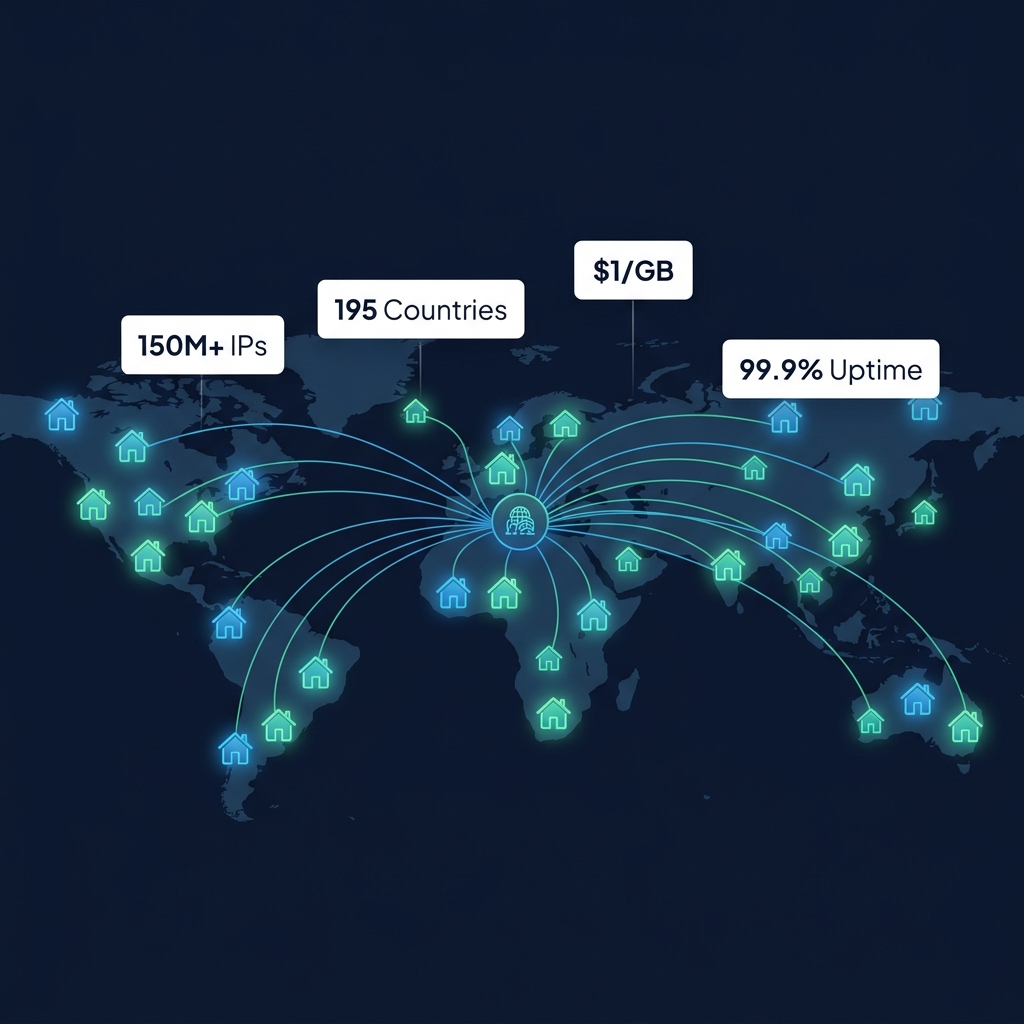
A rotating proxy is a proxy service that automatically cycles through a pool of IP addresses, assigning a different IP address to each outbound request or session. Instead of all requests appearing to come from a single IP (which triggers rate limiting and bans), rotating proxies distribute requests across thousands — sometimes millions — of different IPs, making large-scale web scraping and automation appear as organic traffic from diverse users. Rotating proxies are the operational backbone of professional data collection, competitive intelligence, price monitoring, and ad verification. This 3,000-word guide covers per-request and session rotation strategies, IP pool types, sticky sessions, concurrency architecture, and provider selection for high-volume scraping.
What Is a Rotating Proxy?
A rotating proxy pool is a forward proxy infrastructure where the IP address used for each request is automatically changed according to a defined rotation strategy. Rather than configuring a specific proxy server IP in your client application, you configure a single gateway endpoint provided by the proxy service. The gateway's internal routing layer automatically selects which IP from the pool to use for each forwarded request.
The fundamental problem that rotating proxies solve is IP-based rate limiting: websites limit requests per IP address per time period to prevent automated access. With a single proxy IP, a scraper hitting a target website 10,000 times per hour will quickly be flagged and banned. With a rotating pool of 10,000 IPs, each IP makes only ~1 request per hour — indistinguishable from organic user traffic patterns.
The rotating proxy model is the standard architecture for all major commercial residential proxy networks. When you purchase bandwidth from Bright Data, Oxylabs, Decodo, or similar providers, you're accessing their rotating proxy infrastructure — a single endpoint that transparently routes each request through a different residential IP from their pool.
Figure 1 — Rotating proxy gateway: single endpoint dynamically assigns different IPs per request
Rotation Strategies: Per-Request vs Session-Based
The two primary rotation strategies define how frequently the IP address changes and under what conditions:
Per-Request Rotation (Maximum Anonymity): A new IP address is assigned for every single HTTP request. This provides maximum IP diversity and is the most effective strategy for avoiding rate limiting on targets that track per-IP request frequency. The downside is that stateful workflows (shopping carts, login sessions, multi-page scraping) are impossible because each request appears to come from a different user. Use per-request rotation for: price scraping, product catalog extraction, search result collection, and any single-page stateless data extraction.
Sticky Sessions (Session-Based Rotation): The same IP address is maintained for a configurable duration (typically 1–30 minutes) or until explicitly released. Within the sticky session, all requests use the same IP — preserving cookies, session state, and authentication tokens. When the session expires or is released, the next session gets a new IP. Use sticky sessions for: account-based workflows (login, checkout, form submission), multi-step scraping requiring navigation through pages, social media automation where session consistency is essential.
Most professional rotating proxy providers support both modes and allow configuration per-request via special request headers or port selection. See our detailed guide on rotating vs sticky sessions for configuration examples.
Figure 2 — Per-request vs sticky session rotation: IP assignment timeline and use case selection
IP Pool Types: Residential vs Datacenter Rotating Proxies
The quality and effectiveness of a rotating proxy depends primarily on the type of IPs in the pool:
Rotating Residential Proxies: The IP pool consists of real consumer ISP-assigned addresses (Comcast, Verizon, BT, Deutsche Telekom, etc.). These IPs have clean reputation scores, ISP-assigned ASNs, and appear in geolocation databases as residential addresses — not hosting or datacenter IPs. They are the highest-quality option for scraping sophisticated targets with advanced bot detection. Providers include Bright Data (72M+ IPs), Oxylabs (100M+), and Decodo (55M+). Pricing is per-GB consumed (typically $3–$15/GB).
Rotating Datacenter Proxies: The IP pool consists of IPs hosted in data centers (AWS, DigitalOcean, OVH, etc.). These IPs are faster (lower latency, higher bandwidth) and cheaper than residential IPs, but are easily identified as datacenter/hosting IPs by Maxmind GeoIP and IP reputation databases. Effective for targets without sophisticated bot detection. Pricing is typically per-IP-per-month or per-GB at lower rates than residential. See our best rotating proxy services guide for a full comparison.
Rotating Mobile Proxies: The pool consists of mobile carrier-assigned IPs (4G/5G LTE). Mobile IPs have the highest trust scores in bot detection systems — they're rarely blocked because entire carrier NAT IP addresses are shared by thousands of real mobile users. This makes them extremely effective for the most hardened targets. Pricing reflects the premium — typically $10–$25/GB. See our guide on mobile proxies for automation.
Concurrency and Rate Management in Rotating Proxy Systems
Effective rotating proxy architecture requires careful concurrency management. The relationship between concurrency, rotation speed, and IP pool size determines scraping throughput and success rates:
Concurrency Limits: Most proxy providers enforce concurrent connection limits per subscription tier. At 50 concurrent connections with per-request rotation, you can achieve ~3,000 requests/minute (assuming 1-second average request time). At 500 concurrent connections, 30,000 requests/minute is achievable. Plan your concurrency requirements based on target throughput and provider limits.
Pool Size vs Request Rate: The ratio of requests to pool size determines per-IP request frequency at the target. With 1,000 requests/hour and a 10,000-IP pool, each IP averages 0.1 requests/hour — far below any realistic rate limit. With a 100-IP pool and the same request rate, each IP averages 10 requests/hour — potentially triggering soft rate limiting on sensitive targets.
Geo-Targeting: Rotating proxy pools can be configured to only rotate within a specific country or region. This is essential for scraping geo-localized content (local prices, regional search results, country-specific inventory). Most providers allow specifying the target country via the gateway endpoint or via special request headers (X-Proxy-Country: US).
| Pool Type | IP Trust Score | Latency | Price (approx.) | Best Use Case |
|---|---|---|---|---|
| Residential | ★★★★★ Very High | 100–250ms | $3–$15/GB | Anti-bot targets |
| Mobile (4G/5G) | ★★★★★ Highest | 150–400ms | $10–$25/GB | Sneakers, social |
| ISP / Static Resi | ★★★★☆ High | 30–80ms | $2–$8/GB | Speed + quality |
| Datacenter | ★★☆☆☆ Low | 20–60ms | $0.5–$3/GB | Simple targets |
| Dedicated DC | ★★★☆☆ Medium | 20–50ms | $1–$5/IP/mo | High-volume API |
Implementing a Rotating Proxy in Python
Connecting to a rotating proxy gateway in Python is straightforward — most providers expose a single endpoint that handles rotation internally. The configuration is identical to a standard proxy, with one key difference: the gateway endpoint remains static while the IPs it selects change per request.
Figure 3 — Python rotating proxy configuration: per-request rotation and sticky session patterns
Advanced Rotation Strategies for High-Volume Scraping
Professional scraping infrastructure often goes beyond simple per-request rotation to implement more sophisticated strategies:
Backoff and Retry on 429/403: When a rotating proxy IP receives a rate limit (429) or block (403) response, the scraper should immediately retry the request with a new IP (by creating a new request rather than reusing the connection) and implement exponential backoff. This is standard in production scraping systems and works effectively with per-request rotation because the retry automatically gets a fresh IP.
Geo-Rotation: Rather than globally random rotation, scraping workflows targeting country-specific content benefit from rotation within a specific country's IP pool. This ensures consistent geo-localized content (local pricing, regional search results) while still achieving IP diversity within that country.
Provider Failover: High-availability scraping systems use multiple rotating proxy providers with automatic failover. If Provider A's IPs are achieving a low success rate on a specific target (indicating the target has IP-banned that provider's ranges), the system switches to Provider B's IP pool. This is implemented by configuring multiple proxy endpoints and monitoring per-provider success rates in real time.
IP Reputation Pre-Screening: Some enterprise scraping platforms pre-screen IPs from the rotation pool against IP reputation databases before assigning them to requests, automatically excluding IPs that have been flagged as proxy/hosting by Maxmind or similar databases. This is typically a feature of the proxy provider's gateway rather than something implemented by the scraper.
For a comprehensive guide to rotation strategies and their application to specific use cases, see our guides on proxy rotation strategies for high-volume scraping and best rotating proxy services.
Frequently Asked Questions About Rotating Proxies
How do rotating proxies differ from static proxies?
A static proxy uses the same IP address for every request — it provides IP masking but no IP diversity. Rotating proxies automatically change the IP address per request or session. For scraping at scale, static proxies are quickly rate-limited or banned since all traffic appears to come from a single IP. Rotating proxies avoid this by distributing traffic across thousands of different IPs.
Can rotating proxies be detected?
Rotating proxies using datacenter IPs can often be detected because the rotating IP ranges are owned by known proxy providers. Rotating residential proxies are much harder to detect because each IP looks like a different real user. However, behavioral patterns (request timing, user-agent rotation, browser fingerprints) can still reveal automation even with residential rotating proxies. See our guide on how anti-bot systems detect proxies.
Internal Resources on Rotating Proxy Infrastructure
- Rotating vs Sticky Sessions: Choosing the Right Mode
- Best Rotating Proxy Services With Automatic IP Rotation
- Proxy Rotation Strategies for High-Volume Scraping
- What Is a Forward Proxy? — Architecture Guide
- Residential Proxies in 2026: Complete Guide
- Mobile Proxies: 4G/5G IPs for Automation
- Best Proxies for Web Scraping 2026
- How Anti-Bot Systems Detect Proxies (and How to Adapt)
- What Is an Elite Proxy?
- ISP Proxies (Static Residential) Explained
Written by PROXYIP
Our editorial team consists of network engineers and data scraping experts dedicated to bringing transparency to the proxy market. We specialize in distributed infrastructure and high-scale data acquisition.