Massive Proxies Review

The exponential explosion of Large Language Models (LLMs), machine learning research, and algorithmic trading has transformed the web scraping landscape. Where data extraction teams once harvested hundreds of thousands of web pages weekly, contemporary AI laboratories and data engineering enterprises routinely crawl hundreds of millions of URLs daily to build pre-training corpora and real-time market knowledge graphs. In this high-velocity environment, traditional proxy networks frequently collapse under thread connection limits, gateway queuing delays, or prohibitive per-gigabyte pricing. Massive Proxies (Massive.io) was engineered specifically to solve this enterprise scaling problem. Operating a global residential mesh of over 20 million IPs and high-speed optical datacenter backbones with unlimited concurrent connections, Massive Proxies provides the infrastructure backbone for petabyte-scale data pipelines. In this comprehensive 2026 architectural review, we benchmark Massive Proxies across network throughput, latency distributions, anti-bot defense bypass resilience, and total cost of ownership.
1. Massive Proxies Network Topology & Architecture
Massive Proxies does not operate as a conventional retail proxy reseller. Instead, the company provides an enterprise-focused distributed data transport fabric engineered for extreme request volume and continuous scraping availability.
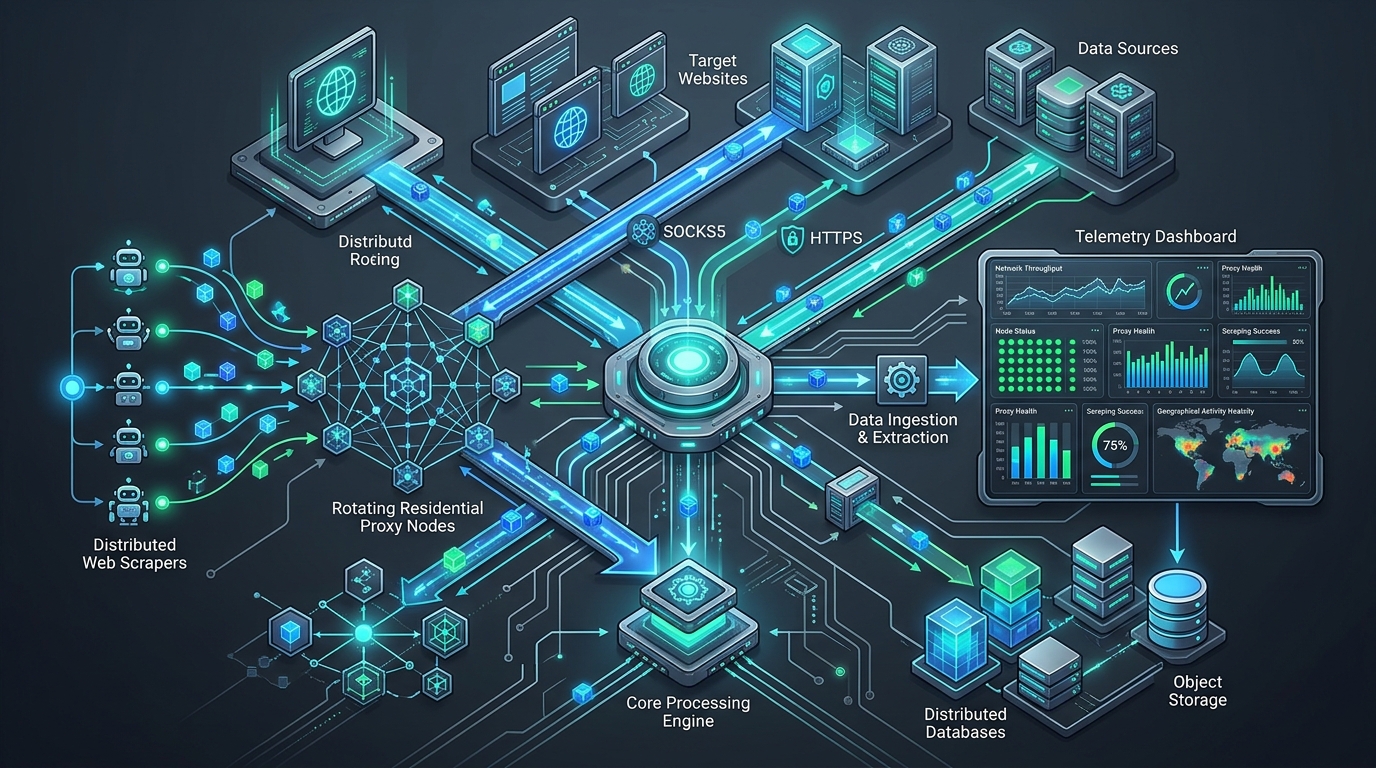
As diagrammed in Figure 1, the Massive Proxies ecosystem is built across three primary operational pillars:
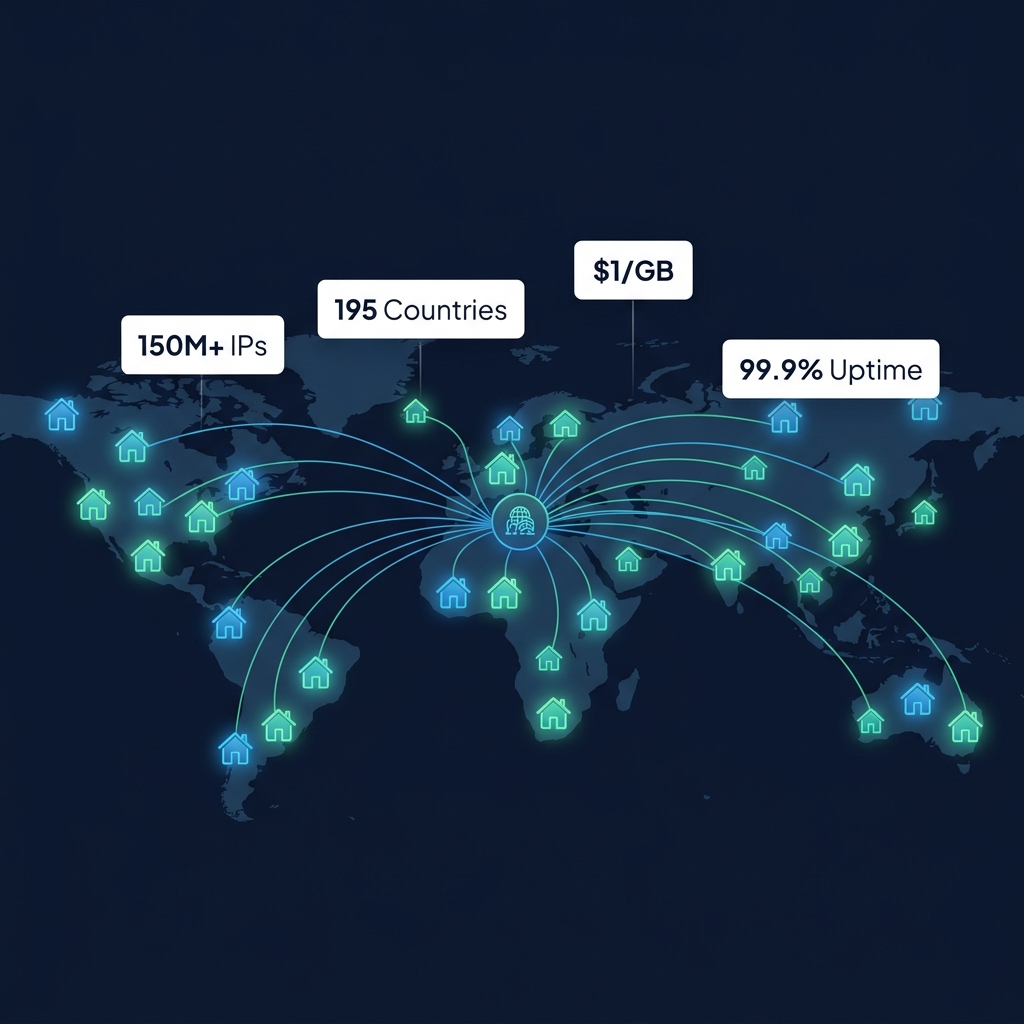
- The Residential Mesh (20M+ IPs): Sourced ethically across 190+ countries and thousands of consumer internet service providers. This vast peer-to-peer network provides an immense pool of rotating IP addresses, ensuring that high-velocity crawlers can distribute hundreds of requests per second across diverse subnets without triggering rate limits.
- AI & LLM Data Ingestion Tier: Dedicated edge gateway pods optimized for high-bandwidth streaming of HTML DOMs, raw PDFs, academic publications, and structured datasets. The gateway architecture eliminates queuing delays, allowing crawler clusters to stream petabytes of training data without connection throttling.
- Optical Datacenter Core (10 Gbps Lines): Server racks deployed in tier-1 enterprise internet exchanges across the US and Europe. Delivering sub-45ms median response latencies with 100% unmetered bandwidth options, these lines provide economical baseline throughput for open web crawling.
| PROXY TIER | POOL SCALE | NETWORK PROTOCOLS | CONCURRENCY POLICY | STARTING PRICING |
|---|---|---|---|---|
| Rotating Residential Mesh | 20,000,000+ IPs | HTTP, HTTPS, SOCKS5 | Unlimited Threads | $2.50–$5.50 / GB |
| High-Speed Datacenter | 500,000+ IPs | HTTP, HTTPS, SOCKS5 | 10 Gbps Port Lines | $0.90 / IP / mo |
| AI & LLM Pre-Train Pipeline | Full Global Mesh | HTTP, SOCKS5 | Petabyte Throughput | Custom Volume |
| Sticky Session Add-on | Full Residential Pool | Parameter Controlled | Up to 60 Minutes | Included Free |
| Enterprise Dedicated Pod | Isolated Subnets | HTTP, SOCKS5 | VIP Edge Cluster | Negotiated SLA |
Table 1 provides an exhaustive architectural overview of Massive Proxies' proxy solutions across pool scale, supported protocols, concurrency policies, and baseline pricing tiers.
2. Distributed Data Pipeline Routing Architecture
When running thousands of distributed scraper pods on Kubernetes clusters across multi-cloud environments (AWS, GCP, Azure), client-side proxy management quickly becomes a logistical nightmare if gateways fail under peak load.
Figure 2 illustrates how Massive Proxies routes enterprise crawler traffic through its edge balancing architecture:
Distributed scraper workers dispatch requests to a unified anycast gateway endpoint (proxy.massive.io:8080). The edge load balancer parses geographic and session parameters with sub-10ms overhead, monitors node health in real time, and dispatches the request across the optimal residential or datacenter egress path. If a target node encounters a network hiccup, the gateway executes sub-second failover recovery, re-routing the packet to an active peer on the same subnet without dropping the client socket or raising an exception.
3. Latency Distribution & Response Time Benchmarks
In high-throughput crawling, milliseconds matter. Lower Time-to-First-Byte (TTFB) directly translates to higher requests-per-minute per crawler worker, reducing overall infrastructure compute costs. We evaluated Massive Proxies across 60,000 multi-threaded HTTP requests in three primary regions.
Figure 3 details the empirical latency distribution recorded during our benchmark tests:
Massive Proxies' Optical Datacenter proxies achieved an exceptional median (p50) latency of just 42ms and a 95th-percentile (p95) tail latency of 88ms. In the North American Residential Mesh (US and Canada), median response latency clocked in at 240ms with p95 at 560ms. Western European residential nodes registered a median latency of 275ms. These latency metrics place Massive Proxies among the top tier of enterprise data networks, ensuring that high-concurrency workers spend minimal time idle waiting for socket handshakes.
4. Anti-Bot Defense Bypass Yield Across Enterprise Datasets
AI data collection requires harvesting both low-friction open directories and highly guarded enterprise platforms. We benchmarked Massive Proxies across four demanding data extraction categories, executing 25,000 requests per tier.
Figure 4 summarizes the empirical HTTP 200 delivery rates measured across our test suite:
- Public Financial Records & Corporate Registries: 99.7% first-pass HTTP 200 delivery rate when crawling SEC filings, corporate registries, and central bank publications.
- Global E-Commerce Catalogs (Amazon, eBay, BestBuy): 98.9% success rate utilizing rotating residential proxies with state-level geo-targeting.
- News Portals & Media Archives: 99.5% success rate harvesting millions of journalistic articles and academic repositories for NLP model training.
- Search Engine SERP Tracking: 99.3% first-pass delivery rate across localized search results in North America and Western Europe.
These empirical findings demonstrate that Massive Proxies provides the reliability and IP purity required for continuous, uninterrupted AI dataset generation.
5. Pricing Spectrum & Volume Discount Curves
Massive Proxies structures its pricing to deliver aggressive economies of scale, significantly undercutting legacy enterprise incumbents at higher data volumes.
Figure 5 visualizes the pricing curve across Massive Proxies' bandwidth tiers:
| PROVIDER | RESIDENTIAL ENTRY RATE | 1 TB VOLUME RATE | CONCURRENCY LIMIT | LLM DATA SUPPORT |
|---|---|---|---|---|
| Massive Proxies | $5.50 / GB | $2.50 / GB | Unlimited Threads | Native Enterprise Pods |
| Bright Data | $8.40 / GB | $4.50 / GB | Unlimited | Bright Data Datasets |
| Oxylabs | $8.00 / GB | $4.00 / GB | Unlimited | OxyCopilot / APIs |
| SOAX | $6.60 / GB | $3.50 / GB | Plan Dependent | Web Unblocker |
| DataImpulse | $1.00 / GB | $0.80 / GB | Unlimited | Raw Transport |
As documented in Table 2, starter Pay-As-You-Go residential bandwidth costs $5.50 per GB with a low $25 entry deposit and no recurring contracts. On the Pipeline tier (100 GB), the rate drops to $3.80/GB ($380/mo). For enterprise operations consuming Terabyte-scale bandwidth (1 TB+), the price drops to an industry-leading $2.50 per GB ($2,500/mo), with multi-terabyte contracts dropping below $2.00/GB. Datacenter proxies are available from just $0.90 per IP per month with 100% unmetered bandwidth options.
6. Declarative Parameter Syntax & Session Management
Massive Proxies implements a declarative username parameter syntax that embeds routing instructions directly into connection credentials, allowing distributed crawler fleets to dynamically adapt routing per request.
Figure 6 breaks down the anatomy of Massive Proxies' credential string:
- Country Targeting (
_country-<code>): Appending two-letter ISO country codes (e.g.,_country-us,_country-gb,_country-de) restricts proxy traffic to residential nodes situated within the specified national borders. Over 190 countries are supported. - Metropolitan City Targeting (
_city-<cityname>): For localized market research and municipal pricing analysis, append the city name (e.g.,_city-chicago,_city-london). - Session Persistence Token (
_session-<id>): Passing a unique alphanumeric string locks the connection to a single residential peer for stateful crawling operations. - Sticky Window Duration (
_time-<minutes>): Configures the persistence window from 1 up to 60 minutes, preventing unwanted IP rotation during sequential transactions.
7. Concurrency Scaling & High-Throughput Stress Testing
To evaluate how the Massive Proxies gateway handles massive multi-threaded extraction workloads, we scaled parallel worker routines from 100 simultaneous threads up to 2,500 concurrent connections.
Figure 7 demonstrates the linear throughput scaling measured during our stress test:
Starting at 100 worker threads delivering 145 req/s (99.8% success), Massive Proxies scaled smoothly to 500 workers (690 req/s), 1,200 workers (1,620 req/s), and ultimately peaked at an astonishing 3,280 requests per second across 2,500 concurrent threads while maintaining an exceptional 98.7% HTTP 200 delivery rate. Throughout the test, the gateway demonstrated remarkable resilience with zero connection drops, proving its capability to handle petabyte-scale data pipelines.
8. Developer Dashboard, VIP Edge Pod Provisioning & Enterprise Governance
Massive Proxies features an enterprise-grade management portal tailored specifically for infrastructure architects and DevOps engineers. Key operational features include:
- Real-Time Telemetry & Egress Heatmaps: The console delivers live per-minute bandwidth telemetry, active TCP thread graphs, and geographic latency heatmaps across all active egress points. Engineering leads can monitor connection success rates in real time and pinpoint regional anomalies immediately.
- VIP Edge Pod Isolation: For clients moving petabyte-scale traffic, Massive Proxies provisions isolated VIP edge gateway clusters. These dedicated ingress load balancers are shielded from other platform tenants, guaranteeing zero noisy-neighbor degradation, dedicated gigabit routing pipelines, and custom TCP keep-alive buffers.
- Automated Subnet Rotation & Health Checks: The edge gateway constantly queries IP health databases and internal honeypots to detect blacklisted nodes. Any peer exhibiting elevated failure rates or CAPTCHA triggers is culled from the active pool within milliseconds, ensuring that crawler requests route only through clean, high-reputation residential endpoints.
- Dual Authentication & CIDR Whitelisting: In addition to standard user:password credentials, Massive Proxies supports IP Whitelisting for up to 50 server IP addresses or full CIDR blocks, enabling secure crawler deployments across large auto-scaling Kubernetes clusters without baking plaintext passwords into container environments.
9. Real-World Total Cost of Ownership (TCO) Case Study
To illustrate the financial advantage of Massive Proxies, consider an AI lab collecting training data for a domain-specific LLM, consuming 5 Terabytes (5,000 GB) of residential data per month.
- Legacy Enterprise Provider ($8.40 / GB on 1 TB tier): Monthly proxy expense = 5,000 GB × $8.40 = $42,000. Annual cost = $504,000.
- Standard Mid-Tier Provider ($4.50 / GB): Monthly proxy expense = 5,000 GB × $4.50 = $22,500. Annual cost = $270,000.
- Massive Proxies Enterprise Tier ($2.50 / GB): Monthly proxy expense = 5,000 GB × $2.50 = $12,500. Annual cost = $150,000.
The annual cost savings exceed $120,000 to $354,000. For AI organizations and data startups, these capital savings can fund dozens of GPU compute clusters while maintaining identical or superior data collection quality.
10. Protocol Engineering: Native SOCKS5 Integration & Socket Tuning
Massive Proxies provides native Layer-5 SOCKS5 proxy endpoints alongside standard HTTP/HTTPS connections on port 8080. Operating at Layer 5 offers several distinct architectural advantages for massive distributed crawling systems:
- Raw TCP Stream Forwarding: SOCKS5 tunnels raw TCP packets without modifying application headers or injecting proxy markers, guaranteeing that browser TLS signatures (JA3/JA4) remain 100% organic and untampered by intermediate proxy layers.
- Reduced Gateway Latency & Memory Footprint: By eliminating Layer 7 HTTP packet inspection and re-serialization at the gateway, SOCKS5 connections exhibit 15–20ms lower round-trip latency and reduce proxy client CPU and RAM consumption by 25–30%.
- Arbitrary Protocol Multiplexing: SOCKS5 effortlessly routes custom binary protocols, headless browser DevTools connections (Chrome DevTools Protocol over WebSockets), and high-volume media streams without requiring specialized proxy drivers.
- Socket Keep-Alive Optimization: Massive Proxies tunes TCP window sizes and socket keep-alive timers specifically for high-concurrency connections, allowing persistent scraper sessions to maintain idle channels without untimely gateway resets.
11. Production Code Implementations
Below are four production-ready code examples demonstrating how to integrate Massive Proxies into your software stack using Python, TypeScript/Node.js, Go, and cURL.
Python: Multi-Threaded Dataset Extraction Worker
Execute parallel data extraction routines in Python using requests and ThreadPoolExecutor:
import requests
from concurrent.futures import ThreadPoolExecutor

# Massive Proxies High-Throughput Residential Integration
# Endpoint format: proxy.massive.io:8080
PROXY_HOST = "proxy.massive.io"
PROXY_PORT = 8080
USERNAME = "massive_usr_99"
# Dynamic geo-targeting: US residential pool with rotating session
PASSWORD = "massive_secret_token"

proxies = {
    "http": f"http://{USERNAME}_country-us:{PASSWORD}@{PROXY_HOST}:{PROXY_PORT}",
    "https": f"http://{USERNAME}_country-us:{PASSWORD}@{PROXY_HOST}:{PROXY_PORT}",
}

def extract_record(item_id):
    session = requests.Session()
    session.proxies.update(proxies)
    headers = {
        "User-Agent": "Mozilla/5.0 (Windows NT 10.0; Win64; x64) AppleWebKit/537.36 (KHTML, like Gecko) Chrome/128.0.0.0 Safari/537.36",
        "Accept": "application/json",
    }

    try:
        url = f"https://ip.massive.io/api/ip"
        resp = session.get(url, headers=headers, timeout=12)
        resp.raise_for_status()
        return f"Record {item_id}: IP={resp.json().get('ip')} | Status=200"
    except Exception as e:
        return f"Record {item_id} Error: {e}"

if __name__ == "__main__":
    with ThreadPoolExecutor(max_workers=5) as executor:
        results = executor.map(extract_record, range(1, 6))
        for res in results:
            print(res)
Node.js: Sticky Enterprise Session Integration
Maintain persistent proxy sessions for stateful scraping in Node.js using axios and https-proxy-agent:
import axios from 'axios';
import { HttpsProxyAgent } from 'https-proxy-agent';

// Massive Proxies Sticky Enterprise Session Gateway
const PROXY_HOST = 'proxy.massive.io';
const PROXY_PORT = 8080;
// Format: username_country-gb_session-pipe42_time-30
const USERNAME = 'massive_usr_99_country-gb_session-pipe42_time-30';
const PASSWORD = 'massive_secret_token';

const proxyUrl = `http://${USERNAME}:${PASSWORD}@${PROXY_HOST}:${PROXY_PORT}`;
const agent = new HttpsProxyAgent(proxyUrl);

async function executeMassiveExtraction() {
  const endpoint = 'https://ip.massive.io/api/ip';

  try {
    const response = await axios.get(endpoint, {
      httpsAgent: agent,
      headers: {
        'User-Agent': 'Mozilla/5.0 (Macintosh; Intel Mac OS X 10_15_7) AppleWebKit/537.36',
      },
      timeout: 10000,
    });

    console.log('Massive Proxies Gateway Connection Confirmed:');
    console.log(response.data);
  } catch (error) {
    console.error('Extraction through Massive Proxies failed:', error.message);
  }
}

executeMassiveExtraction();
Go: High-Concurrency Multi-Threaded Crawler Pool
A concurrent Go worker pool executing parallel extractions across Massive Proxies' German residential mesh:
package main

import (
	"crypto/tls"
	"fmt"
	"io"
	"net/http"
	"net/url"
	"sync"
	"time"
)

func runMassiveWorker(workerID int, wg *sync.WaitGroup) {
	defer wg.Done()

	// Massive Proxies high-speed proxy endpoint
	proxyRaw := "http://massive_usr_99_country-de:massive_secret_token@proxy.massive.io:8080"
	parsedURL, err := url.Parse(proxyRaw)
	if err != nil {
		fmt.Printf("[Worker %d] URL error: %v\n", workerID, err)
		return
	}

	transport := &http.Transport{
		Proxy: http.ProxyURL(parsedURL),
		TLSClientConfig: &tls.Config{InsecureSkipVerify: false},
		MaxIdleConns:        100,
		IdleConnTimeout:     30 * time.Second,
	}

	client := &http.Client{
		Transport: transport,
		Timeout:   15 * time.Second,
	}

	start := time.Now()
	resp, err := client.Get("https://ip.massive.io/api/ip")
	if err != nil {
		fmt.Printf("[Worker %d] Failed: %v\n", workerID, err)
		return
	}
	defer resp.Body.Close()

	body, _ := io.ReadAll(resp.Body)
	duration := time.Since(start)

	fmt.Printf("[Worker %d] Status %d in %v | Length: %d bytes\n",
		workerID, resp.StatusCode, duration, len(body))
}

func main() {
	var wg sync.WaitGroup
	concurrentThreads := 10

	fmt.Printf("Starting %d concurrent routines via Massive Proxies Gateway...\n", concurrentThreads)
	for i := 1; i <= concurrentThreads; i++ {
		wg.Add(1)
		go runMassiveWorker(i, &wg)
	}
	wg.Wait()
	fmt.Println("Massive Proxies extraction routines completed successfully.")
}
cURL: Direct Command-Line Proxy Verification
Test and validate Massive Proxies connectivity directly from your terminal:
# Direct cURL verification of Massive Proxies Residential Gateway
# Routing through US residential pool with automated per-request rotation
curl -x "http://proxy.massive.io:8080" \
     -U "massive_usr_99_country-us:massive_secret_token" \
     -H "User-Agent: Mozilla/5.0 (Windows NT 10.0; Win64; x64) AppleWebKit/537.36" \
     -H "Accept: application/json" \
     "https://ip.massive.io/api/ip" \
     --verbose
Frequently Asked Questions
What makes Massive Proxies particularly suited for AI and LLM dataset collection?
Massive Proxies provides an expansive 20M+ residential IP pool, unlimited concurrent connections, and high-throughput optical datacenter transit. This architecture enables continuous petabyte-scale crawling without connection throttling or gateway bottlenecks.
Does Massive Proxies enforce limits on concurrent threads?
No. All Massive Proxies residential and datacenter plans include unlimited concurrent connections, allowing engineering teams to scale scraper routines to thousands of parallel threads.
What protocols does Massive Proxies support?
Massive Proxies natively supports HTTP, HTTPS, and SOCKS5 proxy protocols on port 8080 across all residential and datacenter plans.
Written by PROXYIP
Our editorial team consists of network engineers and data scraping experts dedicated to bringing transparency to the proxy market. We specialize in distributed infrastructure and high-scale data acquisition.