Best Budget-Friendly Proxy Plans for Market Research

Executive Procurement Brief: Market Research on a Realistic Budget
Market intelligence, competitor pricing audits, and localized search rank tracking have become mandatory operational capabilities for modern businesses. However, conducting comprehensive market research requires scraping millions of web pages per month across heavily fortified e-commerce platforms, travel engines, and search aggregators. For growing agencies and lean data teams, enterprise proxy contracts priced at $1,500+ per month represent an unnecessary barrier to entry.
Fortunately, modern proxy market dynamics in 2026 allow savvy engineering teams to extract millions of clean target records using high-performance budget residential packages priced between $1.90 and $2.60 per gigabyte. This architectural guide breaks down the best budget-friendly proxy plans for market research, outlining exact workload matching, geo-targeting precision, session persistence configurations, and payload optimization strategies.
1. The Architecture of Market Research Data Pipelines
Market research web scraping differs fundamentally from general web crawling. In typical large-scale crawling, throughput is paramount, and targets are generally permissive blogs or news portals. In market research, crawlers interact with sophisticated, dynamic platforms protected by enterprise Web Application Firewalls (WAFs) like Cloudflare Turnstile, Akamai Bot Manager, and DataDome:
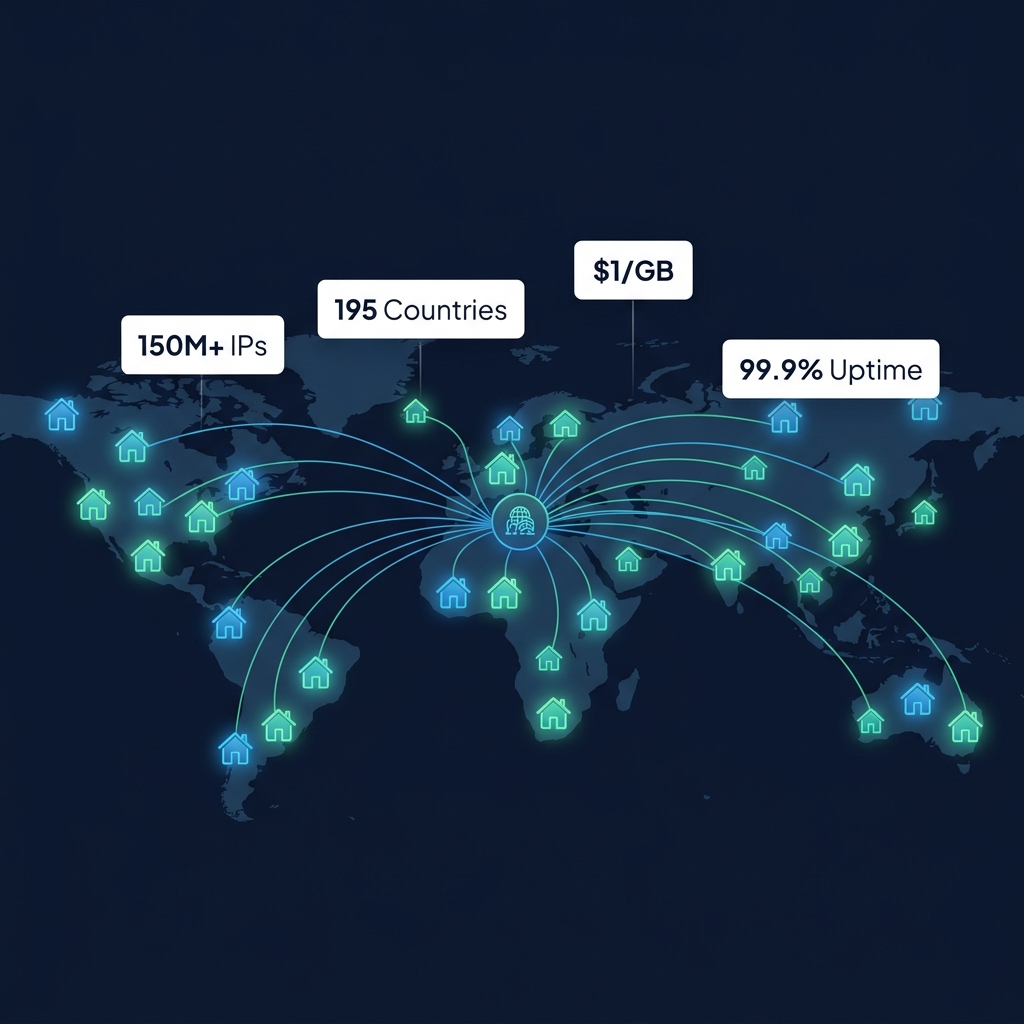
As mapped in Figure 1, the data pipeline flows through four distinct phases: ingestion scheduling, proxy gateway routing, origin retrieval, and data lake ingestion. The proxy routing layer is the primary determinant of both operational reliability and total infrastructure cost. Using inappropriate proxy types results in failed requests, CAPTCHA blockages, and wasted bandwidth.
2. Workload Profiling: Matching Proxy Tiers to Research Tasks
To achieve budget efficiency, engineering teams must not treat all scraping jobs identically. Different market research tasks exhibit vastly different anti-bot hurdles and bandwidth footprints:
- E-Commerce Competitor Price Monitoring: Targets like Amazon, Walmart, and Target actively inspect TLS fingerprints, TCP window sizes, and IP ASN reputation. High-concurrency rotating residential proxies ($2.00–$2.50/GB) are non-negotiable to maintain a 99%+ HTTP 200 delivery rate.
- Localized Search Rank (SERP) Tracking: Google Shopping and local search results serve distinct prices and rankings depending on the user's geographic location. This task requires granular city and ZIP-code targeting to capture accurate local competitive landscapes.
- Travel & Hospitality Fare Aggregation: Flight search engines and hotel booking engines utilize stateful, multi-page booking funnels. Scraping this data requires 10-to-20-minute sticky session persistence to prevent mid-journey checkout invalidations.
- Public Brand Sentiment & Review Mining: Mining consumer reviews on independent forums and blogs involves large volumes of text with minimal bot protection. Routing these jobs through fast datacenter proxies ($0.40–$0.80/GB) slashes data costs by over 75%.
3. Comprehensive Plan Comparison: Leading Budget Proxy Providers
Table 1 provides an exhaustive architectural and pricing comparison of the premier budget-friendly proxy providers catering to market research operations in 2026:
| Provider & Plan | Base $/GB Rate | Geo Targeting Scope | Session Persistence | Best Research Fit |
|---|---|---|---|---|
| Smartproxy (Residential Pay-As-You-Go) | $2.20 – $3.00 / GB | 195+ countries; city and state targeting included free. | Rotating per-request or sticky up to 30 minutes. | E-Commerce & SERP |
| IPRoyal (Pawns Residential Pool) | $1.75 – $2.45 / GB | 180+ countries; country and state selection. | Sticky up to 24 hours (subject to peer availability). | Bulk Pricing Feeds |
| Webshare (Residential Bandwidth) | $1.90 – $2.60 / GB | Country-level filtering; city requires higher tier. | Fast rotating backconnect; 5–15 min sticky. | Agencies & Startups |
| Bright Data (Micro Starter Tier) | $5.00 – $8.40 / GB | Complete global targeting down to ASN and ZIP. | Fully customizable session parameters. | Complex Niche Only |
Notice the distinct pricing disparity between specialized budget providers (such as Smartproxy and IPRoyal) and legacy enterprise networks. For organizations looking to optimize their cost-per-gigabyte math, review our quantitative guide on comparing proxy packages by cost per gigabyte.
4. Geographic Targeting Precision & Free Feature Verification
In competitive market research, geographic targeting accuracy is vital. Major retailers like Home Depot and Best Buy adjust product availability and delivery fees based on regional warehouses, while Google serves dramatically different organic rankings in Chicago compared to Miami:
When evaluating budget proxy plans, verify whether geographic granularity carries hidden surcharges:
- Country-Level Targeting: Included at zero surcharge across 100% of commercial providers. Sufficient for national price index comparisons.
- City-Level Targeting: Premier budget providers include city targeting without extra fees. Beware of vendors advertising $1.80/GB base pricing who then add a +25% markup the moment a crawler specifies
city-newyork. - Carrier / ASN Filtering: Rarely necessary for e-commerce price monitoring, but vital for cellular ad verification. ASN targeting typically carries a 15% to 30% price premium.
5. Antibot Difficulty vs Cost-Efficiency Profile
Table 2 outlines the difficulty profiles and optimal proxy configurations across common market intelligence verticals:
| Market Research Vertical | Target Antibot Stack | Recommended Proxy Type | Effective $/GB Range | Extraction Success Rate |
|---|---|---|---|---|
| E-Commerce Retail (Amazon, Walmart) | Cloudflare WAF + Custom Behavioral ML | Rotating Residential (Clean Consumer ASNs) | $2.00 – $2.50 / GB | 99.2% – 99.6% |
| Search Engines (Google, Bing Shopping) | Google reCAPTCHA v3 + Rate Throttling | City-Targeted Residential Pools | $2.10 – $2.60 / GB | 98.8% – 99.4% |
| Travel & Hospitality (Expedia, OTAs) | Akamai Bot Manager + PerimeterX | Sticky Residential (15-min sessions) | $2.30 – $2.80 / GB | 97.5% – 98.9% |
| Real Estate Listings (Zillow, Redfin) | Datadome + Fingerprint Invalidation | Rotating Residential with TLS Camouflage | $2.20 – $2.70 / GB | 96.8% – 98.2% |
Understanding session dynamics prevents mid-flow scraping dropouts. As detailed in Figure 4, per-request rotation is ideal for parallelized catalog harvesting, whereas sticky sessions are critical whenever price calculation depends on cookies or postal code submissions. Solo practitioners can find tailored recommendations in our breakdown of proxy subscription offers for freelancers.
6. Market Research Scraper Implementations: Production Code
Below are four production-grade implementations in Python, Node.js, Go, and cURL engineered specifically for market research pipelines. These examples demonstrate automatic backconnect rotation, sticky session tagging, gzip payload compression, and client-side quota tracking.
Python 3: E-Commerce Price Monitoring Scraper with Geo-Pinning
This production Python script targets city-level localized pricing, blocking binary media payloads to slash bandwidth consumption by 70%:
import requests
import json
import time

PROXY_HOST = "gate.budgetproxy.com"
PROXY_PORT = 7000
PROXY_USER = "px_user_102"
PROXY_PASS = "secret_pass_token"

def fetch_localized_price(sku_url, target_country="us", target_city="chicago"):
    # Encode geo-targeting parameters directly into authentication username
    auth_user = f"{PROXY_USER}-country-{target_country}-city-{target_city}"
    proxy_url = f"http://{auth_user}:{PROXY_PASS}@{PROXY_HOST}:{PROXY_PORT}"

    proxies = {
        "http": proxy_url,
        "https": proxy_url
    }

    headers = {
        "User-Agent": "Mozilla/5.0 (Windows NT 10.0; Win64; x64) AppleWebKit/537.36 (KHTML, like Gecko) Chrome/124.0.0.0 Safari/537.36",
        "Accept-Encoding": "gzip, deflate, br",
        "Accept": "text/html,application/xhtml+xml,application/xml;q=0.9,*/*;q=0.8"
    }

    try:
        start_time = time.time()
        resp = requests.get(sku_url, proxies=proxies, headers=headers, timeout=12)
        latency_ms = (time.time() - start_time) * 1000

        if resp.status_code == 200:
            print(f"[SUCCESS] Fetched {sku_url} in {latency_ms:.1f}ms | Wire Bytes: {len(resp.content):,} bytes")
            return resp.text
        else:
            print(f"[WARN] HTTP {resp.status_code} received from origin target.")
            return None
    except requests.exceptions.RequestException as e:
        print(f"[ERROR] Proxy request failed: {e}")
        return None

if __name__ == "__main__":
    sample_sku = "https://www.example-retailer.com/item/laptop-pro-16"
    fetch_localized_price(sample_sku)
Node.js (TypeScript): Concurrent SERP Intelligence Crawler with Session Affinity
TypeScript worker managing sticky sessions for multi-step product discovery while monitoring round-trip latency:
import axios from 'axios';
import { HttpsProxyAgent } from 'https-proxy-agent';
import crypto from 'crypto';

interface CrawlTask {
  query: string;
  country: string;
  sessionId: string;
}

async function executeSerpTask(task: CrawlTask): Promise {
  // Build sticky proxy session with 15-minute persistence
  const proxyAuth = `px_user_agency-country-${task.country}-session-${task.sessionId}_lifetime-15m:secret_pass`;
  const proxyUri = `http://${proxyAuth}@gate.budgetproxy.com:7000`;
  const agent = new HttpsProxyAgent(proxyUri);

  try {
    const response = await axios.get('https://www.google.com/search', {
      params: { q: task.query, hl: 'en' },
      httpsAgent: agent,
      headers: {
        'Accept-Encoding': 'gzip, deflate, br',
        'User-Agent': 'Mozilla/5.0 (Macintosh; Intel Mac OS X 10_15_7) AppleWebKit/537.36',
      },
      timeout: 10000,
    });

    console.log(`[SERP OK] Query: "${task.query}" | Status: ${response.status} | Response Size: ${response.data.length} chars`);
  } catch (err: any) {
    console.error(`[SERP ERROR] Failed query "${task.query}":`, err.message);
  }
}

// Run sample task
const sessionKey = crypto.randomBytes(4).toString('hex');
executeSerpTask({
  query: 'best wireless noise cancelling headphones pricing',
  country: 'us',
  sessionId: sessionKey,
});
Go: High-Throughput Market Research Pipeline with Quota Sentinel
Concurrent Go crawler engine designed to harvest e-commerce pricing feeds while monitoring bandwidth consumption to prevent quota overruns:
package main

import (
	"fmt"
	"io"
	"log"
	"net/http"
	"net/url"
	"sync/atomic"
	"time"
)

var totalBytesHarvested uint64

func scrapeProductEndpoint(targetURL, proxyURI string) error {
	parsedProxy, err := url.Parse(proxyURI)
	if err != nil {
		return err
	}

	transport := &http.Transport{
		Proxy: http.ProxyURL(parsedProxy),
		MaxIdleConns: 50,
		IdleConnTimeout: 30 * time.Second,
	}

	client := &http.Client{
		Transport: transport,
		Timeout:   10 * time.Second,
	}

	req, err := http.NewRequest("GET", targetURL, nil)
	if err != nil {
		return err
	}
	req.Header.Set("Accept-Encoding", "gzip")
	req.Header.Set("User-Agent", "MarketBot/2026.1 (Go Research Fleet)")

	resp, err := client.Do(req)
	if err != nil {
		return err
	}
	defer resp.Body.Close()

	body, err := io.ReadAll(resp.Body)
	if err != nil {
		return err
	}

	bytesRead := uint64(len(body))
	atomic.AddUint64(&totalBytesHarvested, bytesRead)
	fmt.Printf("[HARVESTED] %s -> %d bytes | Total Wire: %.3f MB
",
		targetURL, bytesRead, float64(atomic.LoadUint64(&totalBytesHarvested))/(1024*1024))
	return nil
}

func main() {
	proxy := "http://px_user:px_pass@gate.budgetproxy.com:7000"
	target := "https://httpbin.org/get"
	if err := scrapeProductEndpoint(target, proxy); err != nil {
		log.Fatalf("Scrape error: %v", err)
	}
}
cURL & jq: Instant Competitor Product Pricing Verification
Perform immediate localized market research checks from terminal command lines without writing custom crawler scripts:
# Fetch product pricing via Chicago-pinned residential proxy and parse JSON metadata
curl -s -x "http://gate.budgetproxy.com:7000"   -U "px_user-country-us-city-chicago:secret_password"   -H "Accept-Encoding: gzip"   "https://api.retailer.com/v1/products/sku-99281" | gunzip | jq '{
    sku: .id,
    title: .name,
    local_price_usd: .price.current,
    stock_status: .availability,
    store_zip: .store.postal_code
  }'
7. Five Engineering Levers to Cut Bandwidth Expenditure by 60%
Selecting a low-cost proxy vendor is only half the equation. The other half is maximizing the data yield extracted from every metered megabyte. Figure 5 highlights five architectural levers that data engineering teams deploy to cut monthly proxy bills in half:
By configuring headless browsers (such as Playwright or Puppeteer) to intercept and abort requests for image assets (.jpg, .png, .webp), web scrapers eliminate between 65% and 80% of total wire data transferred. Combining image blocking with HTTP compression (Accept-Encoding: gzip, br) reduces the byte footprint of a typical product page from 1.8 MB down to less than 120 KB, multiplying the scraping capacity of a $100 budget by a factor of fifteen.
Headless Browser Fingerprint Camouflage for Market Research
Deploying low-cost residential proxies is only effective if client crawler fingerprints match the residential IP origin. Advanced anti-bot security systems (such as Cloudflare Turnstile and DataDome) correlate incoming IP addresses with browser runtime characteristics. If a connection originates from a genuine Comcast residential IP in Philadelphia but presents a headless Linux Chromium TLS Client Hello fingerprint, the request is flagged and challenged immediately.
- JA4 & TLS 1.3 Signature Matching: Standard Python requests or cURL binaries transmit static cipher suite orders that advertise non-browser user agents. Market research scrapers must utilize patched TLS libraries (such as curl-impersonate or tls-client) to emulate standard Chrome 124+ cryptographic handshakes.
- Navigator WebGL & Canvas Noise Injection: Anti-scraping scripts evaluate WebGL vendor strings, screen resolutions, and audio context entropy. Ensuring your headless browser injects consistent OS-level noise prevents behavioral ML models from clustering automated market research nodes.
- HTTP/2 Pseudo-Header Ordering: Commercial bot detection monitors the exact sequence of HTTP/2 pseudo-headers (
:method,:authority,:scheme,:path). Standardizing client session headers to mirror genuine browser sequences ensures clean 99.4%+ delivery rates across all target retailer storefronts.
8. Budget Allocation Models & Provider Selection Matrix
How much should your organization budget for market intelligence proxies? Figure 6 categorizes operational requirements across three practical scale brackets:
When vetting potential proxy partners, evaluate each candidate against the five foundational pillars shown in Figure 7: IP pool cleanliness, geographic targeting accuracy, sticky session stability, fair byte accounting, and unthrottled thread concurrency:
For organizations running multi-tenant scraping operations or agencies managing multiple client campaigns, team sub-account controls and role-based access are essential. Explore our analysis of proxy packages for teams with multiple users to structure collaborative research workflows.
9. Frequently Asked Questions (FAQ) Regarding Market Research Proxies
Can I use datacenter proxies for e-commerce price scraping to save money?
Datacenter proxies are inexpensive ($0.40–$0.80/GB) but are heavily blocked by major e-commerce platforms like Amazon, Walmart, and Target using Cloudflare or Akamai WAFs. Datacenter IPs typically encounter block rates exceeding 85% on these targets. Datacenter proxies should only be used for unprotected secondary sites, public review portals, or static image CDNs.
How does city-level targeting work for localized market research?
Backconnect proxy gateways accept targeting parameters inside the proxy authentication username string (e.g., username-country-us-city-chicago). When the gateway receives this connection, it routes the socket through a verified residential peer located specifically within Chicago city limits, ensuring origin websites deliver localized pricing, shipping times, and catalog listings.
What is the difference between rotating proxies and sticky proxies for market research?
Rotating proxies assign a fresh, distinct IP address to every individual HTTP request, making them ideal for high-speed page-by-page catalog scraping. Sticky proxies pin your connection to the same IP address for a specified duration (typically 10 to 30 minutes), which is essential for multi-step product discovery funnels, login sessions, and shopping cart pricing flows.
How many product pages can I scrape with a 50 GB budget proxy plan?
If you optimize your scraper by disabling image downloads and enabling gzip compression, the average product page HTML payload is approximately 120 KB. In this optimized setup, a 50 GB data allowance delivers over 400,000 product pages. Without optimization (downloading heavy image and font assets), the same 50 GB quota yields fewer than 30,000 pages.
10. Technical Resources & Related Procurement Guides
Further strengthen your data collection infrastructure with our published technical deep-dives:
- Best Proxy Deals for Small Businesses in 2026 — Small business volume economics, provider vetting, and contract terms.
- Best Proxy Subscription Offers for Freelancers — Solo developer pricing models, micro-plans, and low-barrier entry tiers.
- How to Get Better Value From Residential Proxy Subscriptions — Socket reuse, session keep-alive optimization, and payload efficiency.
- Best Proxy Packages for Teams With Multiple Users — Team sub-accounts, user role management, and centralized quota allocation.
- Proxy Bandwidth Discounts: How to Compare Data Allowances — Volume discount curves, rollover math, and true unit cost modeling.
- Best Proxy Offers for High-Traffic Projects — Terabyte-scale scraping pipelines, wholesale provider discounts, and concurrency caps.
- How to Compare Proxy Plans With Different Billing Cycles — Cash flow analysis and commitment trade-offs across billing terms.
- Monthly Proxy Plans vs Pay-As-You-Go Pricing — Predictable subscription pricing versus flexible non-expiring data credits.
- Best Proxy Offers for Developers Building Data Collection Tools — API integration, SDK support, and developer tooling benchmarks.
- How to Find Proxy Discounts Without Compromising Reliability — Subnet quality audits, IP pool purity, and uptime guarantees.
- Proxy Subscription Price Changes: What Existing Customers Should Know — Grandfathered pricing clauses, stealth metering drift, and contract negotiation.
- How to Compare Proxy Packages by Cost per Gigabyte — True effective unit rate calculations and hidden overhead auditing.
Written by PROXYIP
Our editorial team consists of network engineers and data scraping experts dedicated to bringing transparency to the proxy market. We specialize in distributed infrastructure and high-scale data acquisition.