Are Free Proxies Safe? The Hidden Risks Explained
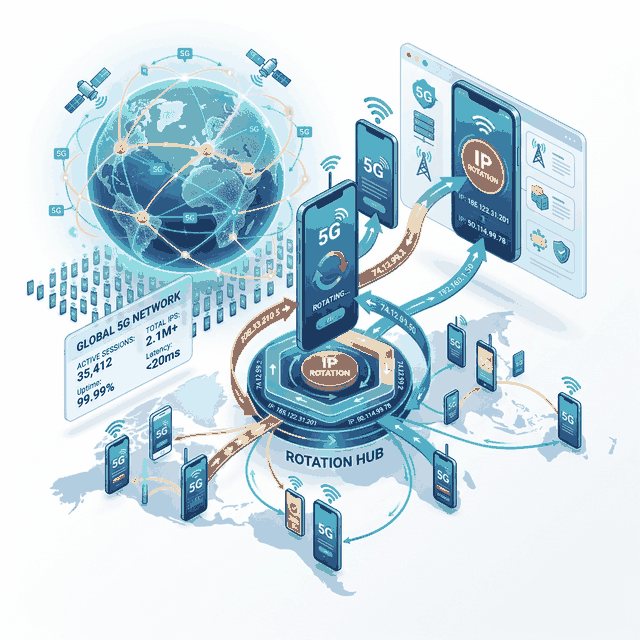
A quick search for "free proxy list" returns thousands of IP addresses, and the price tag of $0 is undeniably tempting, especially for hobbyists and people just starting out. But free proxies carry serious hidden costs that rarely show up until it is too late — from stolen credentials and hijacked sessions to injected malware and dismal performance. The old adage applies: if you are not paying for the product, you may well be the product.
This guide explains the real security and performance risks of free public proxies, when (if ever) they are acceptable to use, and what safer, genuinely affordable alternatives exist. For a fuller cost-benefit breakdown, pair it with our free vs paid proxies comparison.
- Free proxies often log, steal, or inject into unencrypted traffic
- Most free IPs are already blacklisted and painfully slow
- Malicious operators can capture cookies, credentials, and inject malware
- Paid residential proxies are far safer, faster, and more reliable
- Reputable free tiers from real companies are the only safe "free" option
The Security Risks of Free Proxies
Anyone can stand up a free proxy server, including criminals whose entire purpose is to harvest your data. Because all your traffic passes through their machine, a malicious operator can log everything that is not end-to-end encrypted: form submissions, search queries, and any credentials sent over plain HTTP. They can capture session cookies to hijack your logged-in accounts, inject advertisements or tracking scripts into pages, and in the worst cases serve malware disguised as legitimate downloads.
The fundamental problem is trust. With a reputable paid provider you have a company, a contract, and accountability. With an anonymous free proxy you have none of that — you are routing sensitive traffic through a stranger's server with no recourse if something goes wrong. The rule is simple: never send authenticated, financial, or otherwise sensitive traffic through a free proxy, full stop.
The Performance Reality
Even setting security aside, free proxies are a productivity disaster. They are shared by countless anonymous users simultaneously, so they are chronically overloaded, slow, and unstable. Response times of several seconds are normal, and outright timeouts are common. Worse, because they are public and heavily abused, the vast majority are already blacklisted by Cloudflare, Google, Amazon, and every other major target you might actually want to reach.
The practical result is dismal success rates. As our proxy checker demonstrates time and again, most public proxies are simply dead or time out within seconds of testing. For any real project, the hours lost babysitting flaky free IPs cost far more than the modest price of a reliable paid plan. Free proxies are a false economy the moment your time has any value.
When Free Proxies Are Acceptable
There is a narrow set of situations where free proxies are defensible. If you are performing a completely throwaway, non-sensitive task — a one-off geo-check of how a public page looks from another country, for example — where you transmit no credentials, log into nothing, and trust none of the returned data, the security risk is limited because there is nothing valuable to steal.
Even then, treat anything the proxy returns with suspicion, since a malicious operator could alter it. For anything beyond such trivial, stateless checks — scraping, account management, business data collection, or anything touching credentials — a paid residential network is the only responsible choice. The Wikipedia proxy server article covers the underlying security model if you want to understand the mechanics in more depth.
Safer Alternatives That Won't Break the Bank
The good news is that safe proxies no longer require an enterprise budget. Reputable providers now offer genuinely affordable entry tiers, and crucially, some offer accountable free plans. Webshare, for instance, provides a limited free tier where the operator is a real, identifiable company with an incentive to behave — a world apart from an anonymous public list.
For paid options, budget residential traffic starts around $1.75/GB at providers like IPRoyal, and cheap datacenter proxies cost just a few dollars per month with unlimited bandwidth. Compared to the risk of stolen data or a compromised account, these prices are trivial. Choose an accountable provider from our directory, validate the IPs with our checker, and you get speed, reliability, and safety that free lists can never match. Independent reviews on ProxyTrust and 5-Proxy can help you compare affordable options objectively.
Safe, Affordable Paid Alternatives
These providers offer trustworthy IPs at prices that make free proxies pointless.
| Provider | Best For | Entry Price | Network Type |
|---|---|---|---|
| Oxylabs | Enterprise scraping | $8/GB | Residential / DC / Mobile |
| Bright Data | Hard anti-bot targets | $8.40/GB | Residential / ISP / Mobile |
| Smartproxy | Best value all-rounder | $4/GB | Residential / Datacenter |
| IPRoyal | Budget & sneakers | $1.75/GB | Residential / Mobile |
| SOAX | Precise geo-targeting | $12/GB | Residential / Mobile / ISP |
Recommended Providers
Instead of risky free lists, these affordable networks deliver safe, reliable IPs.
- Oxylabs — enterprise-grade network with 100M+ residential IPs and a near-perfect success rate.
- Bright Data — the most advanced unlocking technology for the toughest anti-bot targets.
- Smartproxy — the best balance of price, usability and performance for growing teams.
- IPRoyal — budget-friendly, non-expiring residential traffic.
- SOAX — precise city and carrier-level targeting on a clean pool.
Browse the full directory on our proxy providers page, or grab a discount from the latest coupons.
Frequently Asked Questions
Can free proxies steal my data?
Yes. A malicious free proxy can log unencrypted traffic, capture session cookies, and inject content or malware. Never use one for sensitive or authenticated tasks.
Is there any safe free proxy?
Accountable free tiers from established companies like Webshare are far safer than anonymous public lists, because the operator is identifiable and has a reputation to protect.
Why are free proxies so slow?
They are shared by countless users at once and are heavily abused, leaving them overloaded, unstable, and usually blacklisted by major sites.
How cheap are safe paid proxies?
Budget residential traffic starts around $1.75/GB and datacenter proxies cost just a few dollars per month, making the risk of free proxies pointless to take.
Further Reading & Trusted Resources
To deepen your understanding of free proxies safety, we recommend cross-referencing independent sources. The Wikipedia entry on proxy servers offers a solid technical foundation, while community-driven testing sites such as ProxyTrust and 5-Proxy publish hands-on benchmarks that complement our own findings. For protocol specifics, the SOCKS protocol reference and the web scraping overview are worth bookmarking.
You can validate any IPs you acquire using our own free proxy checker, then compare shortlisted vendors side by side with the PROXYIP comparison tool.
Final Thoughts
Free proxies are rarely worth the risk. The few dollars saved can cost you stolen data, hijacked accounts, wasted hours, and failed projects. Reserve them, if at all, for trivial throwaway checks, and choose an accountable paid provider from our directory for anything that matters. Verify every IP with our checker before you rely on it.
Written by PROXYIP
Our editorial team consists of network engineers and data scraping experts dedicated to bringing transparency to the proxy market. We specialize in distributed infrastructure and high-scale data acquisition.