The Technical Ledger
Deep dives into proxy orchestration, scraping resilience, and data collection at scale. Curated for the modern data engineer.
Latest Technical Publications

Impact of Proxies on Load Times
Factors affecting latency include proxy location, server load, and protocol overhead. Learn how to minimize the performance hit. Additionally, moving...

Scaling Scraping Infrastructure
Using Kubernetes, message queues, and distributed proxy management to handle millions of pages daily across a global network. Additionally, moving in...
Stay Ahead
of the Curve
Join 5,000+ data engineers who receive our bi-weekly proxy intelligence reports.
What are Residential Proxies?
Residential proxies are the gold standard for web scraping because they appear as regular home users. They are IP addresses provided by Internet Servi...

Why Your IP is Getting Blocked
Factors like request frequency, weird header patterns, and poor-quality IP addresses can all lead to your scraper being blocked. Additionally, moving...

Go vs Python for Scraping
Go's concurrency model makes it excellent for high-volume scraping, while Python's libraries are unbeatable for speed of development. Additionally, m...

SOCKS5 vs HTTP/S Protocols
SOCKS5 is more versatile and faster for some tasks, while HTTPS provides encryption and is more widely supported by many targets. Additionally, movin...
Datacenter vs Residential Proxies: Which Should You Use?
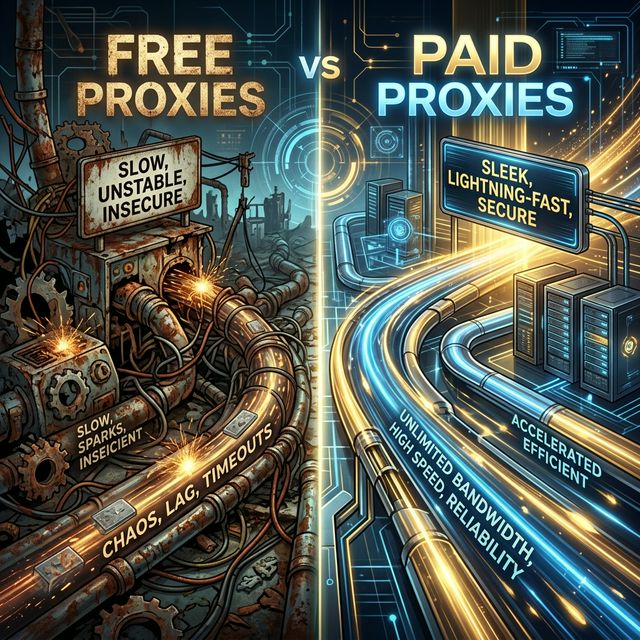
One of the first decisions in any proxy project is whether to use datacenter or residential IPs. It sounds like a minor technical detail, but the wron...
Web Scraping Without Getting Blocked: 12 Proven Techniques
Getting blocked is the number one frustration in web scraping. Modern anti-bot systems analyse dozens of signals — IP reputation, HTTP headers, TLS ...

Mobile Proxies Explained: 4G/5G IPs for Automation
Mobile proxies route your traffic through 3G, 4G, and 5G cellular networks, giving you carrier-assigned IP addresses that are extremely difficult to b...