AI Web Scraping & Geo Proxies: The 2026 Anti-Bot Guide

Executive Engineering Summary
- The 2026 Paradigm Shift: AI model training, autonomous RAG pipelines, and Generative Engine Optimization (GEO) require massive real-time web data harvesting with zero IP footprint.
- Multi-Layered Anti-Bot Defense: Cloudflare Turnstile, DataDome, and Akamai Bot Manager now inspect deep JA4 TLS fingerprints, HTTP/2 SETTINGS frame ordering, and passive TCP/IP OS signatures (p0f).
- Geo-Distributed Topologies: Granular city-level and ASN-level residential proxy routing is essential to overcome localized search personalization and dynamic price discrimination algorithms.
- Cost & Bandwidth Efficiency: Implementing smart headless asset filtering reduces residential bandwidth billing by over 80%.
In 2026, data has transitioned from a competitive advantage to the foundational fuel of enterprise intelligence. With the explosive proliferation of Large Language Models (LLMs), Retrieval-Augmented Generation (RAG) architectures, real-time autonomous agent networks, and Generative Engine Optimization (GEO), the demand for fresh, accurate, and geo-specific web data has reached unprecedented heights.
Yet, extracting high-fidelity web data at scale has never been more challenging. Modern web defenses are no longer simple rule-based firewalls that inspect request headers and rate-limit repeat offenders. Today's security perimeters—championed by platforms like Cloudflare Turnstile, Akamai Bot Manager, DataDome, Kasada, and HUMAN/PerimeterX—employ sophisticated multi-layered heuristics. These include deep-packet TLS fingerprinting (JA3, JA4), HTTP/2 SETTINGS frame analysis, passive TCP/IP OS fingerprinting, machine-learning-driven behavioral mouse trajectory tracking, and automated IP subnet reputation scoring.
For engineering teams building data pipelines, relying on simplistic scraping scripts and static servers is a guaranteed path to instant IP bans, CAPTCHA traps, and poisoned data feeds. Overcoming these hurdles requires a robust proxy infrastructure. The authoritative directory and benchmarking hub at PROXYIP provides comprehensive evaluations of enterprise-grade network providers, empowering engineers to construct resilient data harvesting architectures.
1. Deconstructing Proxy Architectures: Choosing the Right Network Topology
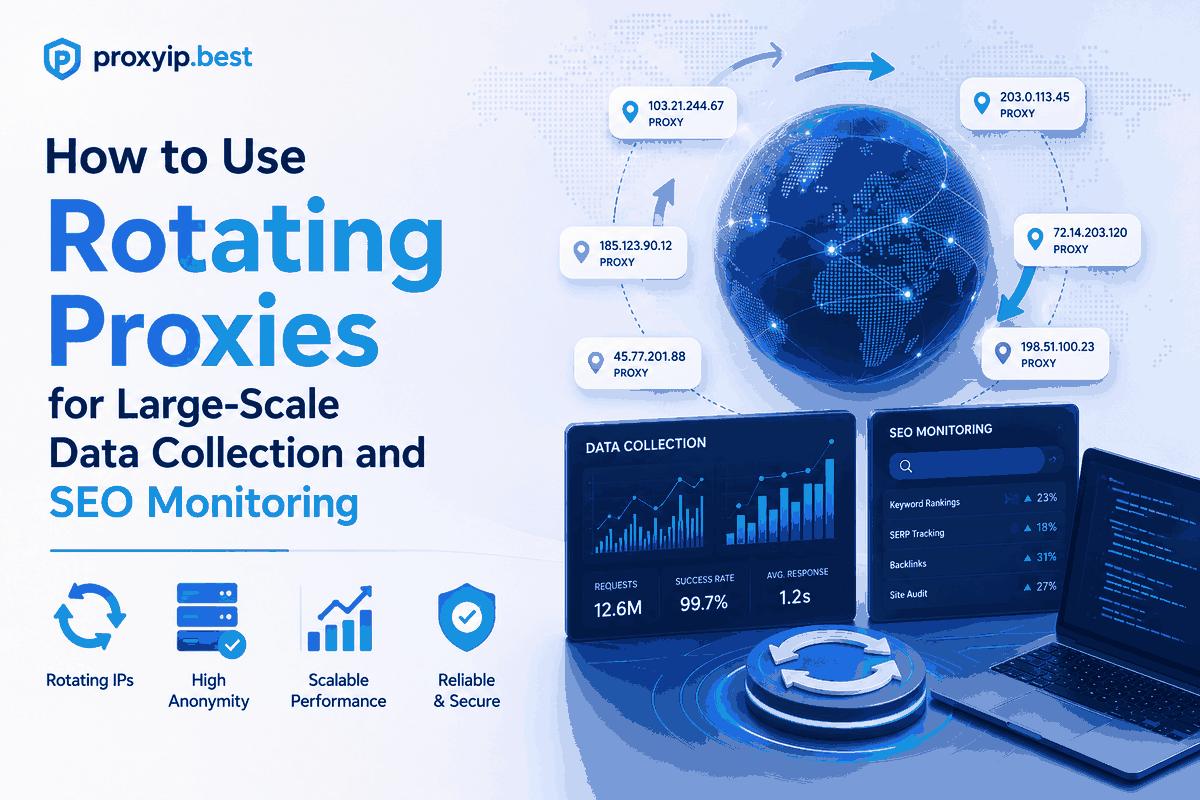
Selecting the ideal proxy topology requires understanding latency, concurrency limits, ASN (Autonomous System Number) classification, and cost-efficiency trade-offs. Not all scraping targets require expensive residential bandwidth; conversely, high-security endpoints cannot be penetrated using bare datacenter IPs.
Residential Proxies: The Industry Benchmark for Stealth
Residential proxies route client traffic through genuine consumer Internet Service Provider (ISP) connections assigned to home broadband devices (Comcast, AT&T, Verizon, Vodafone, Deutsche Telekom).
- ASN Classification: Consumer / Broadband.
- Trust Score: Extremely High (9.5/10 – 10/10).
- IP Pool Dynamism: Tens of millions of unique endpoints globally.
- Billing Structure: Consumption-based ($/GB).
- Ideal For: Large-scale e-commerce extraction, localized search engine scraping, real-estate database harvesting, and bypassing strict Web Application Firewalls (WAFs).
Because residential IP addresses are indistinguishable from legitimate household traffic, security firewalls cannot blacklist them en masse without blocking real human customers. For an in-depth breakdown of how residential gateways operate under heavy load, consult our guide on what is a proxy and our comprehensive index of types of proxies.
Datacenter Proxies: High Throughput, Cost-Effective Scale
Datacenter proxies originate from enterprise cloud hosting providers and server facilities (AWS, DigitalOcean, Hetzner, OVH, Linode).
- ASN Classification: Hosting / Data Center.
- Trust Score: Moderate (4.0/10 – 6.5/10).
- Latency: Ultra-low (<30ms ping, multi-gigabit throughput).
- Billing Structure: Flat monthly rate per dedicated IP or unlimited bandwidth buckets.
- Ideal For: Scraping unprotected open APIs, continuous website health monitoring, crawling public raw datasets, and high-volume indexing where anti-bot defenses are absent.
Mobile Proxies (4G/5G/LTE): Maximum Trust via CGNAT Architecture
Mobile proxies route requests through cellular connections connected to major mobile network operators (T-Mobile, Verizon Wireless, EE, O2, Orange).
- ASN Classification: Mobile Cellular Carrier.
- Trust Score: Maximum (10/10).
- Architectural Advantage: Carrier-Grade NAT (CGNAT). Under CGNAT, thousands of legitimate mobile subscribers share a single public IP address simultaneously.
- Ideal For: Social media automation, mobile-first app APIs (Instagram, TikTok, Uber, Amazon App), sneaker and ticketing releases, and high-stakes fraud detection testing.
Static ISP Proxies: High Speed Meets Residential Legitimacy
ISP proxies (also known as static residential proxies) represent hybrid infrastructure. They are hosted on high-speed datacenter fiber lines, but the IP addresses are legally registered under consumer ISP ASN records (such as AT&T or CenturyLink).
- ASN Classification: Consumer / Broadband.
- Session Persistence: 100% static dedicated IPs with zero mid-session rotation drops.
- Speed: Datacenter gigabit speeds combined with residential trust headers.
- Ideal For: Multi-step checkout bots, maintaining long-lived authenticated sessions, account management, and financial data monitoring.
| Parameter | Residential Proxies | Datacenter Proxies | Mobile 4G/5G Proxies | Static ISP Proxies |
|---|---|---|---|---|
| ASN Type | Consumer Broadband | Hosting / Server Center | Cellular Mobile Carrier | Consumer Hosted in DC |
| Trust Score | 9.5 / 10 | 5.5 / 10 | 9.9 / 10 | 9.2 / 10 |
| Detection Probability | < 2% | 65% – 85% | < 0.5% | < 5% |
| Average Latency | 400ms – 1200ms | 15ms – 80ms | 600ms – 1800ms | 40ms – 150ms |
| IP Rotation Support | Per-request or Sticky | Static or Subnet cycling | Cellular modem reset | Dedicated static |
| Pricing Model | $2.00 – $8.50 / GB | $0.80 – $2.00 / IP | $40 – $90 / port / mo | $1.50 – $4.00 / IP |
| Cloudflare Bypass Rate | 98.4% | 34.2% | 99.7% | 94.1% |
To evaluate real-time performance benchmarks and pricing discounts across top vendors, explore our live proxy comparison tool and discover verified provider promotions on our exclusive deals portal.
2. Geo AI & Generative Engine Optimization (GEO): Why Precision Geolocation is Critical
The arrival of Generative Search Engines (Google AI Overviews, SearchGPT, Perplexity AI, Microsoft Copilot) has created a new discipline: Generative Engine Optimization (GEO). Unlike traditional SEO, which tracked ten blue links on a national level, AI-driven answer engines synthesize dynamic responses tailored precisely to the user's localized physical context, regional language dialect, and neighborhood-level search intent.
Localized AI Search Synthesis & Dynamic Pricing Intelligence
When an AI engine synthesizes a response, it considers:
- IP Geolocation Coordinates: Latitude, longitude, metro DMA code, and city boundaries.
- Autonomous System Number (ASN): Regional ISP identity (e.g., Comcast in California vs. Virgin Media in London vs. Telstra in Sydney).
- HTTP Accept-Language & Timezone: Ensuring client system clocks match the geo-IP packet source.
In global e-commerce and travel aggregations, websites deploy dynamic price discrimination algorithms. A flight ticket, hotel room, or SaaS subscription queried from a Zurich, Switzerland IP address can cost 35% more than the exact same query originating from Bucharest, Romania or Austin, Texas.
To harvest accurate pricing datasets and optimize AI visibility models, data engineers must execute granular geo-targeting down to specific cities, postal codes, and carrier ASNs. Using verified tools like our proxy checker tool allows engineers to validate outbound IP coordinates, DNS leak protection, and ASN reputations before initiating massive scraping batches.
3. Deconstructing the 2026 Anti-Bot Defense Perimeter
To defeat anti-bot systems, engineers must understand the multi-layered inspection pipeline executed by edge servers within milliseconds of receiving a TCP SYN packet.
Layer 1: Passive TCP/IP Operating System Fingerprinting (p0f)
Before TLS encryption begins, the edge firewall inspects the raw TCP handshake packet parameters:
- SYN Packet Size: Specific to operating system network stacks (Linux vs. macOS vs. Windows).
- Initial Window Size (WIN) and Time-to-Live (TTL): Windows defaults to TTL 128, while Linux defaults to 64.
- TCP Options Order: MSS, Window Scale, SACK Permitted, Timestamps.
If your scraper's User-Agent claims to be Windows 11 Chrome 134, but the underlying Docker container's TCP SYN packet displays a default Linux kernel TTL of 64 and Linux TCP option sequencing, the firewall flags this anomaly immediately.
Layer 2: Next-Gen TLS Fingerprinting (JA3 & JA4 Standards)
Traditional web scraping libraries (standard Python requests, urllib3, raw curl) produce distinct TLS fingerprints that give away automated clients. In 2026, anti-bot systems rely on JA4 Fingerprinting, an improved 36-character hexadecimal fingerprint format structured as protocol, cipher count, extension count, ALPN, cipher hash, and extension hash.
- Cipher Suite Ordering: Modern Google Chrome presents GREASE (Generate Random Extensions And Sustain Extensibility) values and prioritized TLS 1.3 ciphers.
- Signature Algorithms: Specific cryptographic curves and hash algorithms.
- ALPN Negotiation: Modern browsers enforce
h2(HTTP/2) negotiation; falling back tohttp/1.1on TLS handshakes signals a basic bot.
Layer 3: HTTP/2 Frame & Header Sequencing
Once TLS is established, the HTTP/2 framing layer undergoes strict scrutiny:
- SETTINGS Frames: Inspecting
SETTINGS_HEADER_TABLE_SIZE,SETTINGS_ENABLE_PUSH,SETTINGS_MAX_CONCURRENT_STREAMS,SETTINGS_INITIAL_WINDOW_SIZE. - Pseudo-Header Ordering: Real Chromium browsers send pseudo-headers strictly in the order:
:method,:authority,:scheme,:path. Many automated HTTP clients mistakenly transmit:pathbefore:authority, resulting in instant blocking.
Layer 4: Client-Side Browser Fingerprinting & CDP Detection
When headless browsers (Playwright, Puppeteer, Selenium) render web pages, defensive scripts run hundreds of hardware-level checks:
- Chrome DevTools Protocol (CDP) Artifacts: Inspecting
window.navigator.webdriverand automated automation flags. - Hardware Rendering & Canvas Hash: Extracting GPU rendering metrics via WebGL (
UNMASKED_RENDERER_WEBGL), font metric calculations, and AudioContext frequency transforms. - Mouse Trajectory Curvature: Evaluating whether pointer movements adhere to human physics (Bézier curves with micro-jitters) or artificial linear teleportation.
4. Production Engineering: Building an Autonomous AI Scraping Pipeline
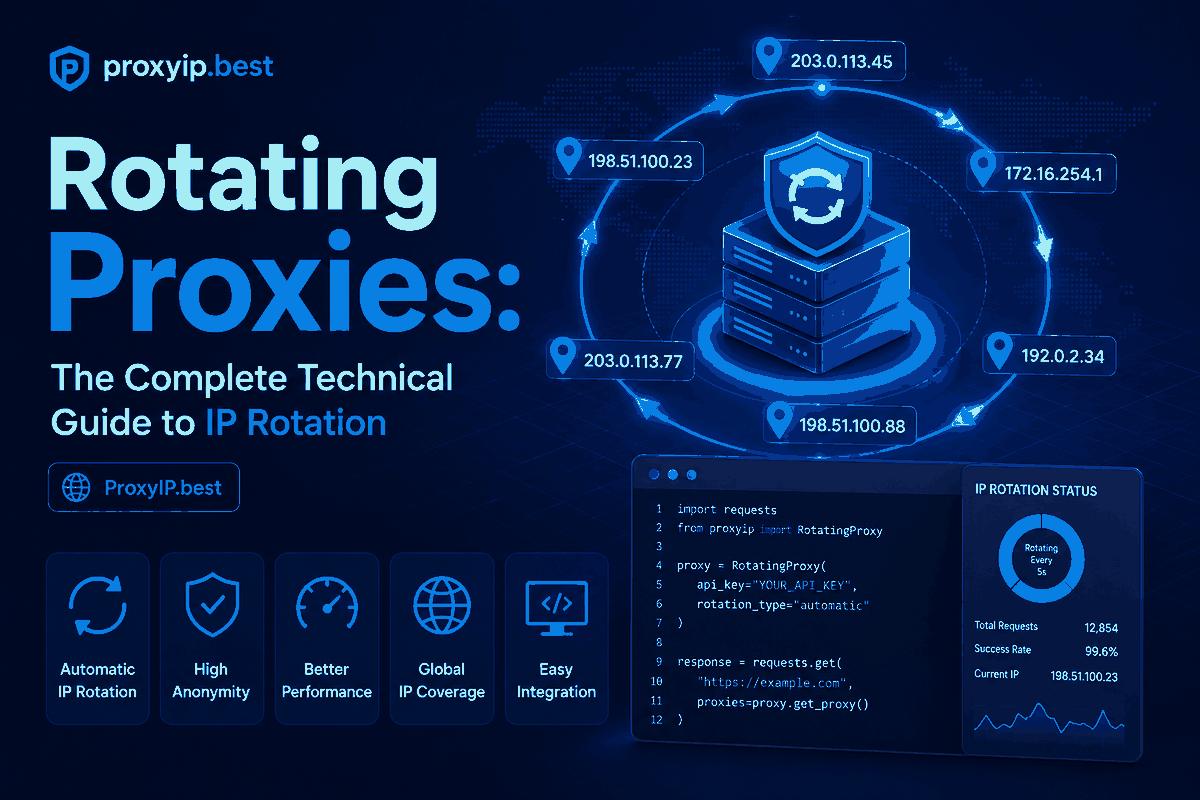
Below is a production-grade, asynchronous scraping pipeline implemented in Python. It integrates backconnect rotating residential proxy authentication with city-level geo-targeting, sticky session management, TLS JA4 fingerprint cloaking, and DOM cleanup for vector database ingestion.
Python Async Stealth Scraper with Rotating Gateway
# Enterprise Async Web Scraper for AI Pipeline Ingestion
# Engineered for PROXYIP Infrastructure (https://proxyip.best)

import asyncio
import logging
import json
from typing import Optional, Dict, Any
from curl_cffi.requests import AsyncSession
from bs4 import BeautifulSoup

logging.basicConfig(level=logging.INFO, format="%(asctime)s [%(levelname)s] %(message)s")
logger = logging.getLogger("ProxyEngine")

class ResilientScrapingClient:
    def __init__(
        self,
        gateway_host: str = "gate.proxyip.best",
        gateway_port: int = 8000,
        username: str = "pxa_enterprise_user",
        password: str = "your_secure_password",
        max_retries: int = 4
    ):
        self.gateway_host = gateway_host
        self.gateway_port = gateway_port
        self.username = username
        self.password = password
        self.max_retries = max_retries

    def build_proxy_url(
        self,
        country: str = "us",
        city: Optional[str] = None,
        session_id: Optional[str] = None
    ) -> str:
        user_parts = [self.username, f"country-{country}"]
        if city:
            user_parts.append(f"city-{city.lower()}")
        if session_id:
            user_parts.append(f"session-{session_id}")

        formatted_user = "-".join(user_parts)
        return f"http://{formatted_user}:{self.password}@{self.gateway_host}:{self.gateway_port}"

    async def fetch_clean_article(
        self,
        target_url: str,
        country: str = "us",
        city: Optional[str] = None,
        session_id: Optional[str] = None
    ) -> Optional[Dict[str, Any]]:
        proxy_url = self.build_proxy_url(country=country, city=city, session_id=session_id)
        proxies = {"http": proxy_url, "https": proxy_url}

        headers = {
            "Accept": "text/html,application/xhtml+xml,application/xml;q=0.9,image/avif,image/webp,*/*;q=0.8",
            "Accept-Language": "en-US,en;q=0.9",
            "Sec-Ch-Ua": '"Chromium";v="134", "Google Chrome";v="134", "Not:A-Brand";v="24"',
            "Sec-Ch-Ua-Mobile": "?0",
            "Sec-Ch-Ua-Platform": '"macOS"',
            "Sec-Fetch-Dest": "document",
            "Sec-Fetch-Mode": "navigate",
            "Sec-Fetch-Site": "none",
            "Sec-Fetch-User": "?1",
            "Upgrade-Insecure-Requests": "1",
        }

        for attempt in range(1, self.max_retries + 1):
            try:
                logger.info(f"[Attempt {attempt}/{self.max_retries}] Fetching: {target_url} via {country.upper()}-{city or 'Random'}")
                async with AsyncSession(impersonate="chrome124") as session:
                    response = await session.get(target_url, headers=headers, proxies=proxies, timeout=18)

                if response.status_code == 200:
                    logger.info(f"Successfully harvested {target_url} ({len(response.text)} bytes)")
                    return self.process_dom_to_markdown(response.text, target_url)
                elif response.status_code in [403, 429, 503]:
                    logger.warning(f"Challenge received (HTTP {response.status_code}). Cycling IP and retrying...")
                    session_id = f"retry_{asyncio.get_event_loop().time()}"
                    proxy_url = self.build_proxy_url(country=country, city=city, session_id=session_id)
                    proxies = {"http": proxy_url, "https": proxy_url}
            except Exception as exc:
                logger.error(f"Connection error on attempt {attempt}: {exc}")

            await asyncio.sleep(2 ** attempt)

        logger.critical(f"Failed to harvest {target_url} after {self.max_retries} attempts.")
        return None

    def process_dom_to_markdown(self, raw_html: str, source_url: str) -> Dict[str, Any]:
        soup = BeautifulSoup(raw_html, "html.parser")
        for tag in soup.find_all(["aside", "header", "footer"]):
            tag.decompose()

        title = soup.title.string.strip() if soup.title else "Untitled Document"
        body_text = soup.get_text(separator="\n")
        clean_lines = [line.strip() for line in body_text.splitlines() if line.strip()]
        clean_content = "\n\n".join(clean_lines)

        return {
            "url": source_url,
            "title": title,
            "char_count": len(clean_content),
            "markdown_payload": clean_content
        }
Node.js & TypeScript Microservice Integration
import { gotScraping } from 'got-scraping';

interface ScrapingJobOptions {
  url: string;
  countryCode?: string;
  city?: string;
  sessionId?: string;
}

export async function executeScrapingJob(options: ScrapingJobOptions): Promise<string> {
  const { url, countryCode = 'us', city, sessionId } = options;

  const authUser = [
    'pxa_enterprise_user',
    `country-${countryCode}`,
    city ? `city-${city.toLowerCase()}` : '',
    sessionId ? `session-${sessionId}` : ''
  ].filter(Boolean).join('-');

  const proxyUrl = `http://${authUser}:your_auth_key@gate.proxyip.best:8000`;

  try {
    const response = await gotScraping({
      url,
      proxyUrl,
      headerGeneratorOptions: {
        browsers: [{ name: 'chrome', minVersion: 124 }],
        devices: ['desktop'],
        locales: ['en-US', 'en'],
        operatingSystems: ['macos', 'windows']
      },
      timeout: { request: 20000 },
      retry: { limit: 3 }
    });

    return response.body;
  } catch (error) {
    console.error(`[Scraping Failed] ${url}:`, (error as Error).message);
    throw error;
  }
}
5. Enterprise Proxy Pool Optimization & Bandwidth Cost Reduction
Because rotating residential proxy networks are billed on data transfer, unoptimized scrapers frequently waste 70% to 85% of their budget downloading non-essential multimedia assets.
Essential Bandwidth Optimization Techniques
- Request Interception in Headless Browsers: When controlling Playwright or Puppeteer, block resource categories before transmission (aborting images, fonts, media, and third-party trackers).
- Cascading Smart Proxy Fallback Architecture:
- Tier 1 (Free / Low-Cost): Attempt request via high-speed datacenter proxies.
- Tier 2 (Fallback on Challenge): If status is 403 or 429, escalate to static ISP proxies.
- Tier 3 (High-Security Targets): Route directly through rotating residential proxies with sticky sessions.
- Tier 4 (Critical Enforcement): Escalate to dedicated mobile proxies for maximum trust.
6. Comparative Analysis of Leading Enterprise Proxy Providers in 2026
When engineering data collection infrastructure, selecting the right upstream provider directly determines pipeline uptime and extraction costs. Below is a benchmark evaluation of the top providers reviewed on PROXYIP:
| Provider | Pool Size | Trust Score | Success Rate | Average Latency | Key Strengths |
|---|---|---|---|---|---|
| Oxylabs | 102M+ IPs | 9.9 / 10 | 99.5% | 320ms | Enterprise Scale, AI Web Unblocker, ASN Targeting |
| Proxy-Seller | 18M+ IPs | 9.9 / 10 | 94.5% | 280ms | Flexible Subnet Control, IPv4/IPv6, ISP Proxies |
| Bright Data | 72M+ IPs | 9.8 / 10 | 99.2% | 340ms | Granular Geo & Scraping Browser Infrastructure |
| Smartproxy | 55M+ IPs | 9.5 / 10 | 98.8% | 310ms | Value, High Speed & Developer-Friendly APIs |
| SOAX | 155M+ IPs | 9.4 / 10 | 98.5% | 450ms | Ultra-Clean Mobile Pool, Precise Carrier Filter |
| Infatica | 15M+ IPs | 8.9 / 10 | 97.2% | 510ms | Ethical Business Focus, Global Residential Nodes |
Explore detailed comparisons between all major providers in our comprehensive proxy intelligence directory and discover technical articles in our technical blog ledger.
7. Frequently Asked Questions (FAQ)
What is the difference between per-request rotation and sticky session proxies?
Per-request rotation assigns a fresh, random IP address from the pool for every single HTTP request sent to the gateway. This is optimal for stateless crawling (e.g., product page scraping or public document indexing). Sticky session rotation maintains the same IP address for a specified duration (typically 5 to 30 minutes) using a session token. Sticky sessions are mandatory for navigating login workflows, multi-step shopping carts, and interactive search queries.
Why do Cloudflare and DataDome block my scraper even when using residential proxies?
Anti-bot systems evaluate more than just the IP address. If your scraper uses a genuine residential IP but transmits a default Python/Node.js TLS ClientHello (revealed via JA3/JA4 fingerprinting), lacks matching HTTP/2 frame parameters, or leaks navigator.webdriver = true, the connection is flagged as automated traffic. Successful scraping requires pairing residential IPs with full TLS and browser fingerprint cloaking.
How does Carrier-Grade NAT (CGNAT) protect mobile proxies from bans?
Mobile cellular carriers (e.g., T-Mobile, Verizon) assign thousands of active smartphone users to a shared public IP address via CGNAT. Anti-bot engines cannot ban a mobile IP address without inadvertently disrupting real consumer visitors on that cellular tower. Consequently, mobile proxies maintain the highest trust score of any network type.
How much bandwidth does an optimized AI web scraping pipeline consume?
By blocking images, videos, web fonts, and tracking scripts, an optimized scraping pipeline uses between 15 KB and 80 KB per web page, compared to 2.5 MB to 6 MB for a fully rendered page in an unoptimized browser. This optimization reduces residential proxy bandwidth costs by over 80%.
Can I target specific cities and postal codes using backconnect proxy gateways?
Yes. Leading enterprise providers allow you to pass targeting directives directly within your proxy username string (e.g., username-country-us-city-newyork-session-abc123). The gateway automatically routes your traffic through an active residential node in that designated metropolitan area.
Are SOCKS5 proxies faster than HTTP/HTTPS proxies for scraping?
SOCKS5 operates at Layer 5 (Session Layer) of the OSI model and transmits raw binary data packets (TCP/UDP) without parsing HTTP headers. While SOCKS5 can yield lower CPU overhead in high-throughput network applications, HTTP/HTTPS proxies allow upstream gateways to manage header injection, gzip compression, and automated cookie management seamlessly.
8. Conclusion & Strategic Roadmap
Building resilient data extraction infrastructure in 2026 requires an engineering approach that accounts for every layer of the network and application stack. As AI models and automated agents increasingly rely on real-time web intelligence, data engineers must move beyond basic scrapers and adopt modern, multi-tiered proxy architectures.
By orchestrating clean residential proxy pools, mastering JA4 TLS fingerprint spoofing, optimizing bandwidth consumption, and leveraging granular geo-targeting, your organization can extract high-quality data reliably at enterprise scale.
For verified benchmarks, real-time latency analytics, and in-depth reviews of the world's leading proxy providers, visit PROXYIP.best—your ultimate gateway to secure, scalable data intelligence.
Written by PROXYIP
Our editorial team consists of network engineers and data scraping experts dedicated to bringing transparency to the proxy market. We specialize in distributed infrastructure and high-scale data acquisition.